 뒤로
뒤로Chapter 3: Cells – Structure, Function, and Membrane Transport
스터디 가이드 - 스마트 노트
 자료에 맞춘 맞춤형 노트, 핵심 정의, 예시, 맥락을 확장해 제공합니다.
Cell Theory and Cell Structure
Cell Theory
Cell theory is a foundational concept in biology that describes the properties of cells, the basic unit of life.
All organisms are composed of cells.
Cells are the smallest living things.
Cells arise only from pre-existing cells by cellular division.
Cell Size and Surface Area-to-Volume Ratio
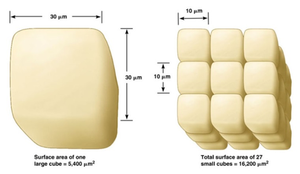
Cells are typically small, ranging from 0.1–0.5 µm in prokaryotes and 10–100 µm in eukaryotes. The small size of cells is advantageous because it allows for a high surface area-to-volume (SA:V) ratio, which facilitates efficient exchange of materials with the environment.
High SA:V ratio: More surface area relative to volume allows for more efficient movement of substances across the cell membrane.
Shorter distances: Substances and wastes travel shorter distances within small cells, increasing efficiency.
Specialized Cell Types
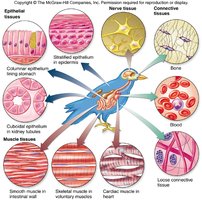
Multicellular organisms have many specialized cell types, each with a structure suited to its function. This concept is summarized as structure equals function.
Basic Cell Structures and Organelles
Overview of Cell Structures
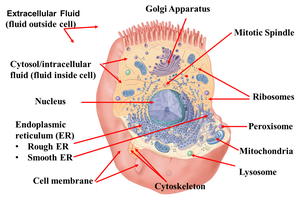
Cells contain various organelles, each with specific functions essential for cell survival and activity. Membrane-bound organelles are surrounded by membranes similar to the cell membrane.
Cell membrane: Encloses the cell and regulates entry and exit of materials.
Extracellular fluid: Fluid outside the cell.
Cytosol (intracellular fluid): Fluid inside the cell.
Nucleus: Contains DNA and controls cell activities.
Ribosomes: Sites of protein synthesis, composed of RNA and protein.
Endoplasmic reticulum (ER): Network of membranes for protein and lipid synthesis.
Rough ER: Studded with ribosomes; synthesizes proteins.
Smooth ER: Lacks ribosomes; synthesizes lipids and detoxifies substances.
Golgi apparatus: Modifies, sorts, and packages proteins and lipids for transport.
Mitochondria: Site of ATP production via cellular respiration.
Peroxisomes: Carry out oxidative reactions for metabolism.
Lysosomes: Contain digestive enzymes to break down waste.
Mitotic spindle: Part of the cytoskeleton, moves chromosomes during cell division.
Cell Membrane Appendages
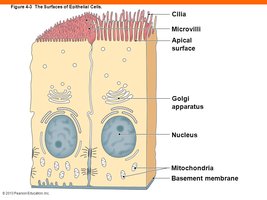
Some cells have specialized extensions of the cell membrane:
Microvilli: Increase surface area for absorption (e.g., in intestines).
Cilia: Propel materials across the cell surface.
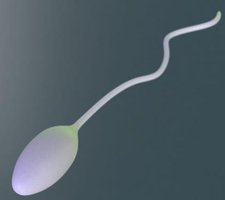
Flagella: Enable locomotion (e.g., sperm cells).
Cytoskeleton
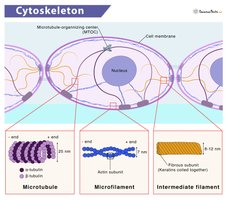
The cytoskeleton is a network of protein fibers that provides structural support, maintains cell shape, and enables movement.
Microtubules: Hollow tubes that help with cell shape, transport, and division.
Microfilaments: Thin filaments involved in cell movement and shape changes.
Intermediate filaments: Provide mechanical support for the cell.
Fluid Compartments
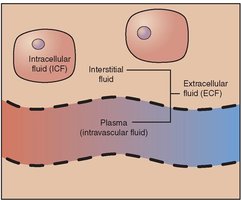
Body fluids are divided into intracellular fluid (ICF) and extracellular fluid (ECF). ECF is further subdivided into interstitial fluid (between cells) and plasma (within blood vessels). These compartments exchange contents over time.
Structure of the Cell Membrane
Phospholipid Bilayer
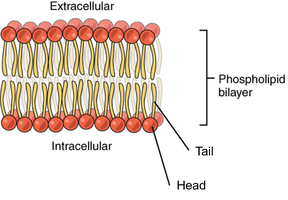
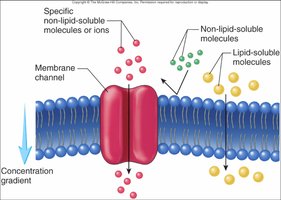
The cell membrane is composed of a phospholipid bilayer, with hydrophilic (polar) heads facing outward and hydrophobic (nonpolar) tails facing inward. This structure creates a selective barrier between the cell and its environment.
Selective Permeability
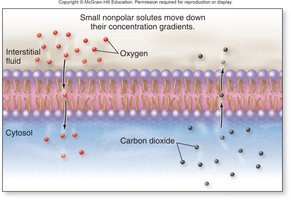
The cell membrane is selectively permeable, allowing some substances to cross more easily than others. Small, nonpolar molecules pass through readily, while large or polar molecules require transport proteins.
"Like dissolves like": Nonpolar molecules pass through the nonpolar membrane; polar molecules are repelled.
Transport proteins: Facilitate movement of specific substances across the membrane (can be passive or active).
Membrane Transport Mechanisms
Passive Transport
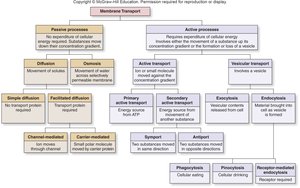
Passive transport does not require energy and moves substances down their concentration gradients.
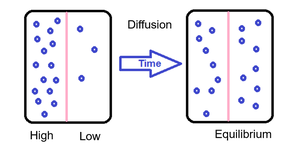
Diffusion: Movement of particles from high to low concentration due to random motion (Brownian motion) until equilibrium is reached.
Simple diffusion: Small, nonpolar molecules move directly through the membrane.
Facilitated diffusion: Large or polar molecules move through membrane proteins (channels or carriers).
Osmosis: Diffusion of water across a selectively permeable membrane, often through aquaporins.
Osmosis and Tonicity
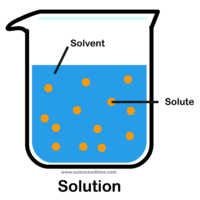
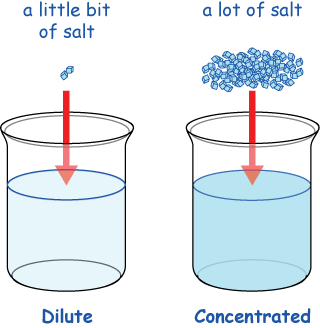
Tonicity describes the relative concentration of solutes in solutions separated by a membrane, affecting cell volume:
Isotonic: Equal solute concentration; no net water movement; cell size remains constant.
Hypotonic: Lower solute concentration outside; water enters cell; cell swells or lyses.
Hypertonic: Higher solute concentration outside; water leaves cell; cell shrinks (crenation).
Active Transport
Active transport requires energy (usually ATP) to move substances against their concentration gradients.
Primary active transport: Direct use of ATP to pump substances across the membrane.
Secondary active transport: Uses energy from the movement of one substance down its gradient to move another substance up its gradient (does not use ATP directly).
Bulk (Vesicular) Transport
Bulk transport moves large particles or volumes via vesicles:
Endocytosis: Uptake of materials by vesicle formation.
Phagocytosis: "Cell eating" of large particles.
Pinocytosis: "Cell drinking" of fluid droplets.
Receptor-mediated endocytosis: Triggered by specific molecules binding to receptors.
Exocytosis: Export of materials via vesicle fusion with the membrane.
Mitosis
Overview of Mitosis
Mitosis is the process of cell division that produces two genetically identical daughter cells from one parent cell. It is essential for growth, repair, and maintenance in multicellular organisms.
Stages of mitosis: Prophase, metaphase, anaphase, telophase, and cytokinesis.
Purpose: Ensures equal distribution of chromosomes to daughter cells.
Summary Table: Cell Structures and Functions
Organelle/Structure | Function |
|---|---|
Cell membrane | Regulates entry/exit of materials |
Nucleus | Contains DNA, controls cell activities |
Ribosome | Protein synthesis |
Rough ER | Protein synthesis and transport |
Smooth ER | Lipid synthesis, detoxification |
Golgi apparatus | Modifies, sorts, packages proteins/lipids |
Mitochondria | ATP production (cellular respiration) |
Lysosome | Digestion of waste |
Peroxisome | Oxidative metabolism |
Cytoskeleton | Support, shape, movement |
Key Equations
Surface Area of a Cube:
Volume of a Cube:
Surface Area to Volume Ratio:
Additional info: These equations explain why smaller cells have a higher SA:V ratio, facilitating efficient exchange of materials.
