 뒤로
뒤로Introduction to Human Biology: Properties and Organization of Life & The Scientific Method
스터디 가이드 - 스마트 노트
 자료에 맞춘 맞춤형 노트, 핵심 정의, 예시, 맥락을 확장해 제공합니다.
Major Properties of Life
Cellular Organization
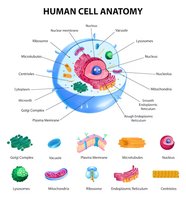
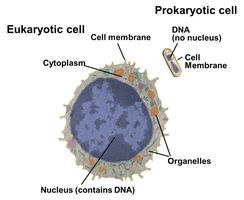
All living things are composed of cells, which are the smallest structural and functional units of life. Cells can exist as single-celled (unicellular) organisms or as part of multicellular organisms. Each cell contains a cell membrane, cytoplasm, and various organelles that perform specialized functions.
Prokaryotic cells: Simple, always unicellular, lack a nucleus, and are generally smaller (e.g., bacteria, archaea).
Eukaryotic cells: More complex, can be unicellular or multicellular, contain a nucleus and organelles (e.g., plants, fungi, animals).
Energy Utilization
Living organisms require energy to power cellular processes such as growth and movement. The sum of all chemical reactions in an organism is called metabolism. Organisms are classified by how they obtain energy:
Autotrophs: Produce their own energy (e.g., photosynthetic plants).
Heterotrophs: Obtain energy by consuming other organisms (e.g., animals, fungi).
Response to Stimuli
Organisms detect and respond to changes in their environment, known as stimuli. Specialized cell structures called receptors facilitate these responses. For example, plants grow toward sunlight, and animals react to temperature changes.
Homeostasis
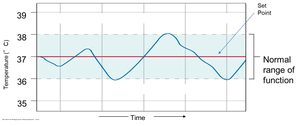
Homeostasis is the ability of an organism to maintain a stable internal environment despite external changes. Variables such as temperature, water concentration, and pH are regulated around a set point, often oscillating within a normal range.
Growth and Reproduction
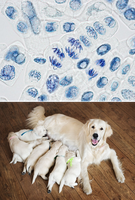
Growth involves an increase in cell number or size, while development refers to changes in cell structure and function over time. Reproduction is the process by which organisms produce offspring, ensuring the continuation of the species.
Contain DNA as the Molecule of Inheritance
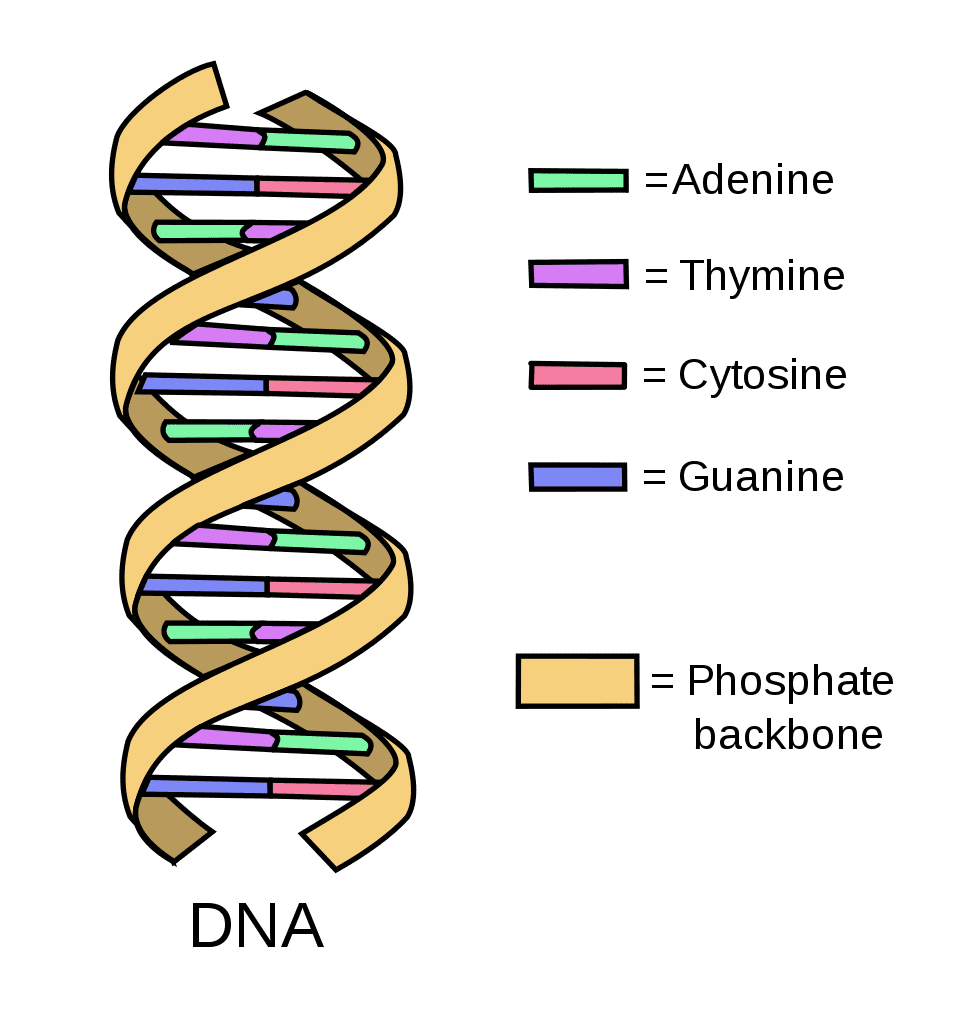
All living things contain DNA (deoxyribonucleic acid), a double-stranded molecule that encodes genetic information. DNA is composed of four bases: adenine, thymine, cytosine, and guanine. It serves as the blueprint for constructing cellular components and is inherited from parent to offspring.
Organizational Levels of Life
Hierarchy of Biological Organization
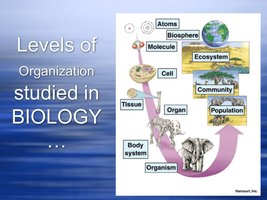
Life is organized into a hierarchy, from the smallest chemical units to the entire biosphere. Each level increases in complexity and includes the previous level:
Atom: Smallest unit of matter.
Molecule: Combination of atoms bonded together.
Organelle: Specialized structures within cells.
Cell: Basic unit of life.
Tissue: Group of similar cells performing a function.
Organ: Group of tissues working together.
Organ system: Group of organs performing related functions.
Organism: Individual living entity.
Population: Group of organisms of the same species in an area.
Community: Different populations living together.
Ecosystem: Community plus nonliving environment.
Biosphere: All ecosystems on Earth.
The Scientific Method
Steps of the Scientific Method
The scientific method is a systematic approach to investigating questions and testing hypotheses in science. The main steps include:
Observation: Noticing phenomena or patterns.
Hypothesis: A testable, proposed explanation for an observation (often in "if, then" format).
Experiment: Testing the hypothesis by manipulating variables and collecting data.
Results: Analyzing data, often using graphs or tables.
Conclusion: Interpreting results, stating whether the hypothesis was supported, and suggesting further research.
Variables in Experiments
Independent variable: The factor changed by the researcher.
Dependent variable: The factor measured in response to changes in the independent variable.
Control group: The group not receiving the experimental treatment, used as a baseline.
Controlled factors: Variables kept constant to ensure validity.
Reproducibility and Ethics
Scientific experiments must be reproducible, meaning they yield consistent results when repeated. Ethical conduct is essential in research, ensuring honesty, integrity, and respect for subjects and the environment.
Testability and Refutability of Hypotheses
A valid hypothesis must be testable and refutable, meaning it can be supported or disproven by experimental evidence. Opinions and untestable beliefs are not scientific hypotheses.
Scientific Method: Historical Example
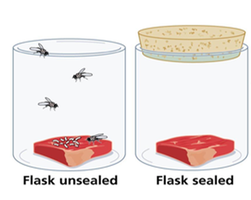
The theory of spontaneous generation was tested by Redi's experiment in the 1600s. He hypothesized that maggots on meat came from fly eggs, not from the meat itself. By comparing sealed and unsealed jars, he demonstrated that maggots only appeared when flies could access the meat, supporting his hypothesis.
Key Terms: Hypothesis, Theory, and Law
Hypothesis: A proposed, testable explanation for an observation.
Theory: A well-supported explanation of how or why phenomena occur, based on extensive evidence.
Law: A well-supported scientific pattern that predicts what will happen, often described mathematically.
Comparison: Laws describe what happens; theories explain why it happens.
