 뒤로
뒤로Urinary System: Medical Terminology and Anatomy Study Guide
스터디 가이드 - 스마트 노트
 자료에 맞춘 맞춤형 노트, 핵심 정의, 예시, 맥락을 확장해 제공합니다.
Urinary System Overview
Concept and Function
The urinary system is responsible for filtering metabolic waste from the bloodstream and eliminating it through excretion. It plays a crucial role in maintaining homeostasis by regulating fluid and electrolyte balance, removing toxins, and controlling blood pressure.
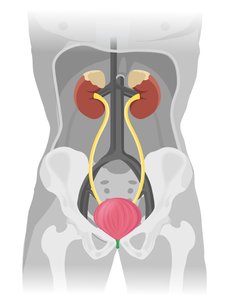
Key Organs: Kidneys, ureters, urinary bladder, and urethra.
Filtration: Kidneys filter blood to produce urine.
Excretion: Urine is transported and stored before being expelled from the body.
External Anatomy of the Kidney
Location and Structure
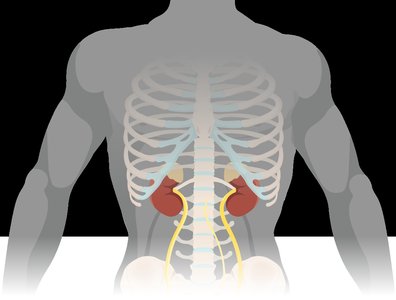
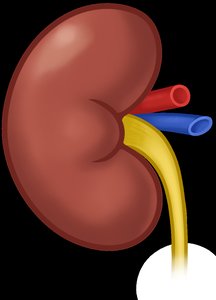
The kidneys are located in the lumbar region above the waist, on either side of the vertebral column. The renal hilum is a concave area on the medial surface, giving the kidney its bean shape. The renal artery enters, while the renal vein and ureter exit through the hilum.
Renal Hilum: Entry/exit point for vessels and ureter.
Kidney Location: Retroperitoneal, protected by ribs and muscles.
Internal Anatomy of the Kidney
Main Regions and Structures
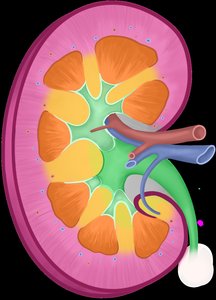
The kidney is divided into three main regions: the renal cortex (outermost), renal medulla (inner, containing renal pyramids), and renal pelvis (collects urine). Calyces are funnel-shaped tubes continuous with the pelvis, collecting urine from the pyramids.
Renal Cortex: Outermost region, site of filtration.
Renal Medulla: Contains renal pyramids; pyramids end in renal papillae pointing toward the pelvis.
Renal Pelvis: Central collecting area for urine; ureter arises from it.
Calyx: Collects urine from papillae.
Structure of the Nephron
Functional Unit of the Kidney
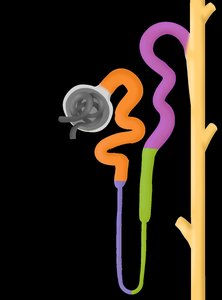
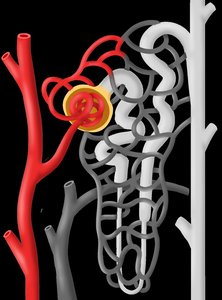
The nephron is the functional unit of the kidney, responsible for filtering blood and forming urine. It consists of the renal corpuscle and renal tubule.
Renal Corpuscle: Includes the glomerular (Bowman's) capsule and glomerulus (capillary cluster).
Renal Tubule: Reabsorbs water, electrolytes, and nutrients; removes waste. Divided into proximal convoluted tubule, nephron loop (Loop of Henle), distal convoluted tubule, and collecting tubule.
Afferent Arteriole: Brings blood to glomerulus.
Efferent Arteriole: Carries blood away from glomerulus.
Urinary Bladder Anatomy
Structure and Function
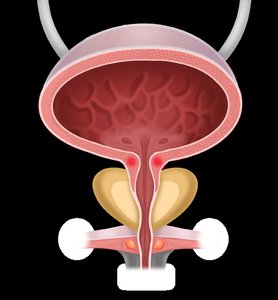
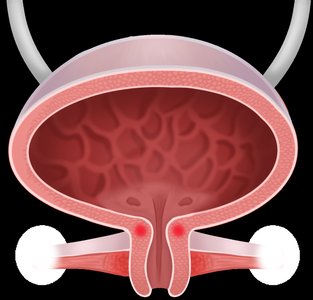
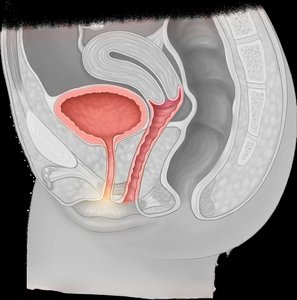
The urinary bladder is an elastic, muscular sac located in the anterior pelvic cavity. It stores urine until excretion and is composed of three layers of smooth muscle lined with mucous membrane containing rugae.
Rugae: Allow expansion as bladder fills.
Internal Sphincter: Smooth muscle, involuntary control.
External Sphincter: Skeletal muscle, voluntary control.
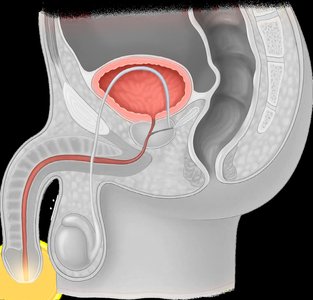
Male Anatomy: Prostate located inferior to bladder.
Urethra Anatomy
Female and Male Differences
The urethra is a tubular structure that carries urine from the bladder to the outside. The urinary meatus is the external opening. The female urethra is shorter and only carries urine, while the male urethra is longer and carries both urine and semen.
Female Urethra: Anterior to vagina, shorter, only urine.
Male Urethra: Passes through prostate, longer, carries urine and semen.
Urinary Meatus: External opening for urine excretion.
Urinary System: Word Building
Combining Forms and Suffixes
Medical terminology for the urinary system uses combining forms and suffixes to describe components, functions, and pathology.
Combining Form | Definition | Memory Tool |
|---|---|---|
vesic/o | Urinary bladder | Vessel |
pyel/o | Renal pelvis | Kidney Pilot Elf |
azot/o | Nitrogenous waste | No No risotto! |
contin/o | To hold, contain | Contain it! |
noct/o | Night | Nocturnal owl |
olig/o | Few in number | Oligarchy |
spadias/o | Cut, tear, slit | Split card |
idi/o | Distinctive, unknown | ID badge |
-tripsy | Crushing | Trip to Italy (grape crushing) |






Urinary System: Vocabulary
Pharmacology and Pathology
Key medical terms describe clinical disorders and treatments related to the urinary system.
Medical Term | Definition | Memory Tool |
|---|---|---|
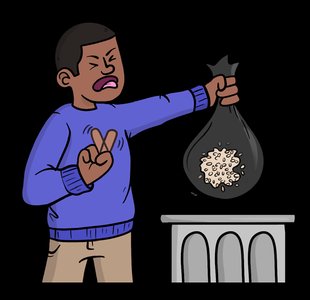
Enuresis | Involuntary urination (bedwetting) | In Your PJs |
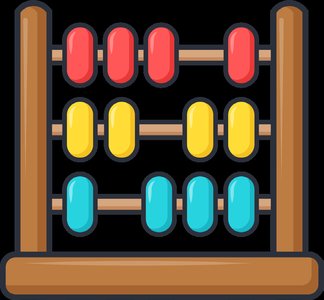
Calculus | Small stone from mineral salts | Calculating Abacus |
Stricture | Abnormal narrowing of passageway | Strictly narrowed structure |
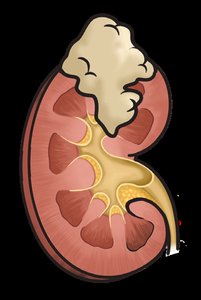
Wilms Tumor | Malignant kidney tumor in children | Welling up Kid-ney |
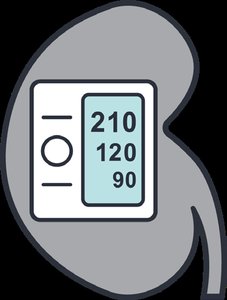
Thiazide | Diuretic for distal tubule, treats high BP/edema | Edemic THIgh |
Potassium-Sparing | Diuretic increases urine, spares K+ | K stays |
Renin | Kidney enzyme, controls BP | Raises Readings |




Urinary Diagnostic and Laboratory Terms
Diagnostic Procedures and Tests
Medical terms related to diagnostic and laboratory procedures are essential for identifying urinary system disorders.
Medical Term | Definition | Memory Tool |
|---|---|---|
Albumin/Creatinine Ratio (ACR) | Screening test for kidney disease; high ratio indicates albumin leakage | Albumin Creates Risks |
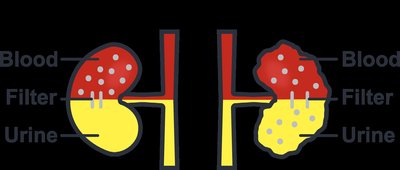
Estimated Glomerular Filtration Rate (eGFR) | Measures kidney filtration efficiency | Filter Rate |
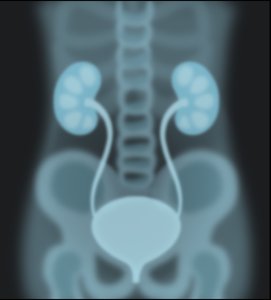
Retrograde Pyelography (RP) | X-ray with contrast dye injected against urine flow to visualize urinary tract | Renally Precise Imaging |
Summary Table: Urinary System Structures and Functions
Structure | Function |
|---|---|
Kidney | Filters blood, produces urine |
Ureter | Transports urine to bladder |
Urinary Bladder | Stores urine |
Urethra | Expels urine from body |
Example: The kidneys filter blood to remove waste, which is then transported by the ureters to the bladder for storage and expelled via the urethra.
Additional info: Academic context was added to clarify anatomical terms, physiological processes, and medical terminology for completeness and exam preparation.
