Which of the following is the best definition of the Krebs cycle? a. The oxidation of pyruvic acid b. The way cells produce CO2 c. A series of chemical reactions in which NADH is produced from the oxidation of pyruvic acid d. A method of producing ATP by phosphorylating ADP e. A series of chemical reactions in which ATP is produced from the oxidation of pyruvic acid
검증된 단계별 안내
1
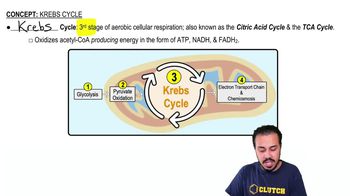
Step 1: Understand the context of the Krebs cycle, also known as the citric acid cycle or TCA cycle, which is a key metabolic pathway in cellular respiration.
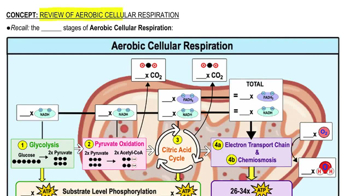
Step 2: Recall that the Krebs cycle involves a series of chemical reactions that take place in the mitochondrial matrix, where acetyl-CoA (derived from pyruvic acid) is oxidized.
Step 3: Identify the main products of the Krebs cycle, which include NADH, FADH₂, ATP (or GTP), and CO₂ as a byproduct.
Step 4: Note that the Krebs cycle's primary role is to generate high-energy electron carriers (NADH and FADH₂) by oxidizing acetyl-CoA, which then feed into the electron transport chain for further ATP production.
Step 5: Compare the given options to this understanding, focusing on the description that best captures the series of chemical reactions producing NADH from the oxidation of pyruvic acid derivatives.
비슷한 문제에 대한 검증된 영상 답변:
이 영상 해법은 위 문제에 도움이 된다고 튜터들이 추천한 것입니다.
영상 길이:
3m
영상 재생:
0 댓글
주요 개념
질문에 올바르게 답하기 위해 반드시 이해해야 하는 핵심 개념들은 다음과 같습니다.
Krebs Cycle Overview
The Krebs cycle, also known as the citric acid cycle, is a series of enzyme-catalyzed chemical reactions in the mitochondrial matrix that oxidize acetyl-CoA derived from pyruvic acid. It plays a central role in cellular respiration by generating electron carriers like NADH and FADH2, which are essential for ATP production.
NADH is a key electron carrier produced during the Krebs cycle by the oxidation of substrates like pyruvic acid. It transports high-energy electrons to the electron transport chain, where these electrons help drive the production of ATP through oxidative phosphorylation.
ATP is the primary energy currency of the cell, produced mainly through oxidative phosphorylation in the electron transport chain. While the Krebs cycle generates some ATP (or GTP) directly, its main function is to produce NADH and FADH2, which fuel the larger ATP production process.

 3:02분
3:02분 검증된 단계별 안내
 01:37
01:37