Skip to main content
Microbiology
나의 코스
배우기
시험 준비
AI 튜터
학습 가이드
교과서적 해결책
플래시카드
탐험해 보세요
앱을 사용해 보세요
나의 코스
배우기
시험 준비
AI 튜터
학습 가이드
교과서적 해결책
플래시카드
탐험해 보세요
앱을 사용해 보세요
뒤로
Atoms- Smallest Unit of Matter definitions
카드를 뒤집기 위해 탭할 수 있습니다.
Atom
카드를 뒤집기 위해 탭할 수 있습니다.
👆
Atom
Smallest unit of matter, forming both living and nonliving things, and composed of subatomic particles.
진행 상황 추적
컨트롤 버튼이 '내비게이션' 모드로 변경되었습니다.
1/17
관련 플래시카드
관련 실천
추천 영상
Atoms- Smallest Unit of Matter quiz
Atoms- Smallest Unit of Matter
15 용어
Atoms- Smallest Unit of Matter 
3. Chemical Principles of Microbiology
7 문제점
주제
Brendan
Isotopes
3. Chemical Principles of Microbiology
4 문제점
주제
Brendan
3. Chemical Principles of Microbiology
7 주제
12 문제점
장
Nicole
02:13
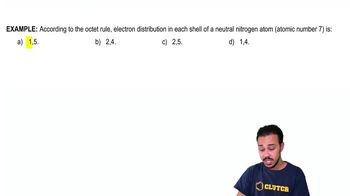
Atoms- Smallest Unit of Matter Example 1
28793
views
756
rank
03:51
Atoms- Smallest Unit of Matter Example 3
18630
views
402
rank
09:44
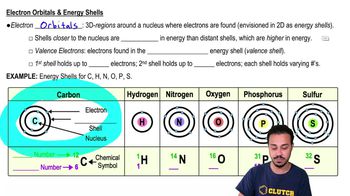
Electron Orbitals & Energy Shells
26014
views
551
rank
이 집합의 용어 (17)
하이드의 정의
Atom
Smallest unit of matter, forming both living and nonliving things, and composed of subatomic particles.
Matter
Anything that occupies space and has mass, including all living and nonliving substances.
Chemical Element
Pure substance made of only one type of atom, defining the basic building blocks of matter.
Proton
Positively charged subatomic particle located in the nucleus, determining the identity of an element.
Neutron
Electrically neutral subatomic particle found in the nucleus, contributing to atomic mass.
Electron
Negatively charged subatomic particle orbiting the nucleus in energy shells, involved in chemical bonding.
Nucleus
Central region of an atom containing protons and neutrons, accounting for most of its mass.
Atomic Number
Total number of protons in the nucleus, uniquely identifying each chemical element.
Mass Number
Sum of protons and neutrons in the nucleus, representing the mass of a single atom.
Atomic Mass
Average mass of all atoms of an element, reflecting natural isotope abundance.
Electron Orbital
Three-dimensional region around the nucleus where electrons are likely to be found.
Energy Shell
Layer surrounding the nucleus where electrons reside, with each shell holding a set number of electrons.
Valence Shell
Outermost energy shell of an atom, containing electrons that determine chemical reactivity.
Valence Electron
Electron located in the outermost energy shell, crucial for forming chemical bonds.
Octet Rule
Principle stating atoms are most stable when their valence shell holds eight electrons.
Bulk Element
Element required in large amounts for life, such as those remembered by the acronym CHNOPS.
Trace Element
Element essential for life but needed only in very small quantities.
 뒤로뒤로
뒤로뒤로
 02:13
02:13