 뒤로
뒤로A Brief History of Microbiology: Foundations, Classification, and Key Discoveries
스터디 가이드 - 스마트 노트
 자료에 맞춘 맞춤형 노트, 핵심 정의, 예시, 맥락을 확장해 제공합니다.
A Brief History of Microbiology
Introduction to Microorganisms
Microorganisms are found everywhere life exists, but their microscopic size makes them invisible to the naked eye. They play both beneficial and detrimental roles in nature and human society.
Detriments: Disease, bio-terrorism, decay
Benefits: Support for plants and animals, ecosystem recycling, decay (as a recycling process)
Despite their negative impacts, microorganisms are essential for life, contributing more benefits than detriments.
The Early Years of Microbiology
Microbiology began with the observation of microscopic life. Antoni van Leeuwenhoek used simple lenses to discover "beasties," now known as microorganisms. His work established the existence of life forms invisible to the naked eye.
Classification of Microbes
After Leeuwenhoek, Carolus Linnaeus developed taxonomy, grouping organisms based on physical characteristics. Modern taxonomy uses more categories and characteristics, including cell type.
Eukaryotic cells: Complex, with a nucleus and membrane-bound organelles
Prokaryotic cells: Simple, lacking a nucleus and membrane-bound organelles
Microorganisms are grouped into six basic categories: fungi, protozoans, algae, bacteria, archaea, and small animals. Eukaryotic organisms belong to the domain Eukarya, while prokaryotic organisms are classified into Bacteria and Archaea.
Major Groups of Microorganisms
Fungi
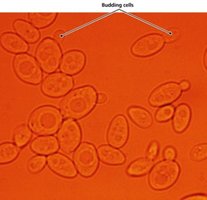
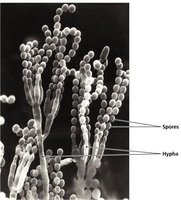
Fungi are eukaryotic organisms, either multicellular (molds) or unicellular (yeasts). They are heterotrophic, have cell walls containing chitin, and reproduce both sexually and asexually. Fungi are important in food production and organic waste decomposition.
Examples: Candida albicans (causes Thrush and vaginitis), Penicillium chrysogenum (produces penicillin), Saccharomyces cerevisiae (used in bread and fermentation)
Unicellular yeast cells:
Multicellular molds:
Protozoans
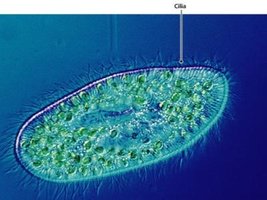
Protozoans are eukaryotic, unicellular organisms. Some are phototrophic, others heterotrophic. They move using cilia, flagella, or pseudopodia, and are often classified by their locomotion structures. Most reproduce asexually, but some can reproduce sexually.
Example: Giardia intestinalis (causes gastroenteritis)
Locomotion structures:
Bacteria and Archaea
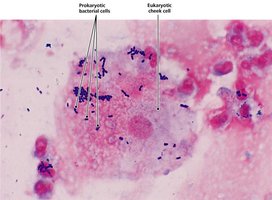
Bacteria and Archaea are prokaryotic, unicellular organisms that reproduce by binary fission. They can be heterotrophic or phototrophic. Bacteria have cell walls containing peptidoglycan, while Archaea lack peptidoglycan. Most bacteria are beneficial, and no Archaea are known to cause disease.
Example: Bacillus subtilis (used as a fungicide for plants)
Comparison of prokaryotic and eukaryotic cells:
Other Organisms of Importance
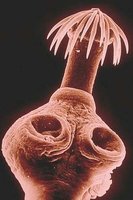
Parasitic worms (helminths) are studied in microbiology due to their microscopic structures. They are eukaryotic, multicellular, and heterotrophic, often reproducing via eggs.
Example: Taenia solium (pork tapeworm, causes gastrointestinal diseases)
Viruses
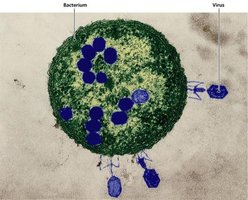
Viruses are acellular, obligate parasites composed of nucleic acids in a protein coat. They are not cells and were only observed after the invention of the electron microscope.
Example: Rhinovirus (causes the common cold)
The Golden Age of Microbiology
Key Questions and Experiments
Four major questions shaped the field:
Is Spontaneous Generation of Microbial Life Possible?
What Causes Fermentation?
What Causes Disease?
How Can We Prevent Infection and Disease?
Spontaneous Generation
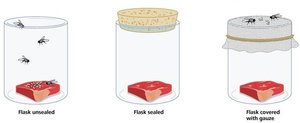
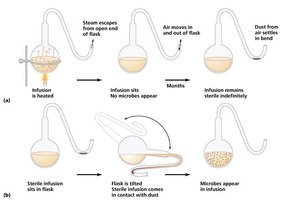
Aristotle proposed spontaneous generation, but experiments by Redi and Pasteur disproved it.
Redi’s Experiment: Meat in jars, only open jars developed maggots.
Pasteur’s Experiment: Swan-neck flasks prevented microbial growth unless exposed to dust.
The Scientific Method
The debate over spontaneous generation led to the scientific method, a standardized process for inquiry:
Observation
Hypothesis
Experiment
Analysis and Conclusion
Fermentation
Pasteur showed that microorganisms cause fermentation, leading to pasteurization and industrial microbiology. Buchner’s work began the field of biochemistry.
Germ Theory of Disease
The germ theory states that diseases are caused by microorganisms (pathogens). Etiology is the study of disease causation.
Koch's Experiments and Postulates
Robert Koch developed methods for identifying pathogens and established Koch’s Postulates:
Pathogen found in every case of disease
Pathogen isolated and grown in pure culture
Healthy host becomes sick when exposed
Pathogen re-isolated from newly diseased host
Gram’s Stain
Developed by Hans Christian Gram, the Gram stain is a differential technique dividing bacteria into two groups, aiding identification.
Preventing Infection and Disease
Key figures and their contributions:
Semmelweis: Handwashing reduces disease
Lister: Antiseptic surgery
Nightingale: Cleanliness and antiseptic technique in nursing
Snow: Infection control and epidemiology
Jenner: Vaccination and immunology
Ehrlich: Chemotherapy ("Magic Bullets")
The Modern Age of Microbiology
Current Questions and Fields
Biochemistry: Basic chemical reactions of life
Microbial Genetics & Molecular Biology: How genes work, recombinant DNA technology, gene therapy
Environmental Microbiology: Bioremediation, recycling, disease
Immunology & Chemotherapy: Defense against disease
Summary Table: Classification of Microorganisms
Group | Cell Type | Domain | Example | Key Feature |
|---|---|---|---|---|
Fungi | Eukaryotic | Eukarya | Candida albicans | Chitin cell wall, heterotrophic |
Protozoans | Eukaryotic | Eukarya | Giardia intestinalis | Motility structures (cilia, flagella, pseudopodia) |
Bacteria | Prokaryotic | Bacteria | Bacillus subtilis | Peptidoglycan cell wall |
Archaea | Prokaryotic | Archaea | None known to cause disease | No peptidoglycan in cell wall |
Helminths | Eukaryotic | Eukarya | Taenia solium | Multicellular, complex structure |
Viruses | Acellular | None | Rhinovirus | Obligate parasite, protein coat |
