 뒤로
뒤로A Little History of Microbiology: Key Discoveries, People, and Ideas
스터디 가이드 - 스마트 노트
 자료에 맞춘 맞춤형 노트, 핵심 정의, 예시, 맥락을 확장해 제공합니다.
Introduction to Microbiology
Overview of Microbiology's Historical Development
Microbiology is the study of microscopic organisms, including bacteria, viruses, fungi, and protozoa. The field has evolved through centuries of observation, experimentation, and discovery, fundamentally changing our understanding of disease and health.
Evolutionary Timeline and Early Human Understanding
Timeline of Life and Early Disease Concepts
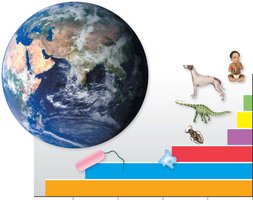
Prokaryotes (bacteria and archaea) are the earliest forms of life, appearing over 3.5 billion years ago.
Eukaryotes (cells with nuclei) evolved later, followed by multicellular organisms, plants, animals, and humans.
Prehistoric humans attempted to treat illnesses with natural remedies and isolation practices.
Ancient texts, such as the Bible, reference quarantine for infectious diseases like leprosy.
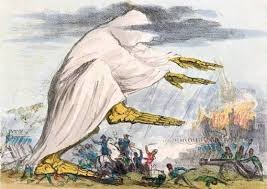
Greek physicians believed diseases were caused by "miasmatic odors" or bad air (miasma theory).

Historical Uses of Microbes by Humans
Early Applications of Microorganisms
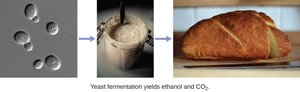
Microbes have been used for thousands of years in bread, alcohol, and cheese production through fermentation.
Microorganisms were also used in the treatment of wounds and for cleaning up contamination (bioremediation).
The First Observations of Microorganisms
Development of Microscopy and Discovery of Microbes
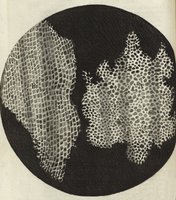
Robert Hooke (1665): Published Micrographia, described "cells" in cork tissue.
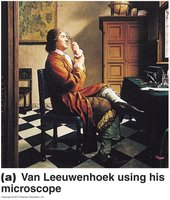
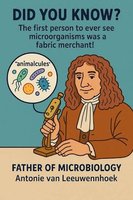
Anton van Leeuwenhoek (1673–1723): First to observe and describe live microorganisms, which he called "animalcules." He is often called the "Father of Microbiology." His observations laid the foundation for the field.
Disproving Spontaneous Generation
The Debate: Spontaneous Generation vs. Biogenesis
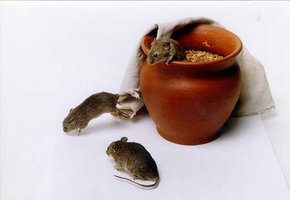
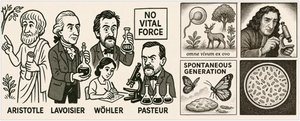
Spontaneous generation: The hypothesis that living organisms arise from nonliving matter, driven by a "vital force."
Biogenesis: The hypothesis that living organisms arise only from preexisting life.
Key Experiments Disproving Spontaneous Generation
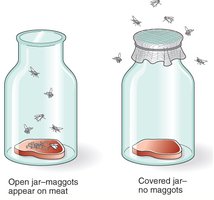
Francesco Redi (1668): Showed that maggots only appeared in meat when flies could lay eggs, disproving spontaneous generation for larger organisms.
John Needham vs. Lazzaro Spallanzani: Needham claimed microbes appeared spontaneously in broth; Spallanzani showed that sealed, boiled broth remained sterile, but critics argued sealing excluded the "vital force."
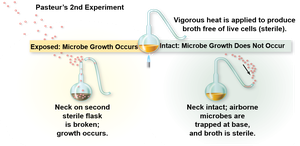
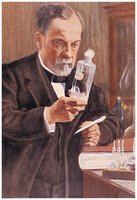
Louis Pasteur (1861): Used swan-neck flasks to show that boiled broth remained sterile unless exposed to airborne microbes, conclusively disproving spontaneous generation and supporting biogenesis.
The Golden Age of Microbiology (1854–1914)
Major Discoveries and Innovations
Pasteurization: Louis Pasteur developed a process to kill spoilage microbes in food and beverages by heating (pasteurization).
Fermentation: Pasteur demonstrated that microbes are responsible for fermentation and food spoilage.
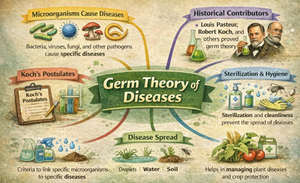
Germ Theory of Disease: Pasteur proposed that specific microorganisms cause specific diseases, revolutionizing medicine and public health.
Germ Theory and Koch's Postulates
Establishing the Microbial Cause of Disease
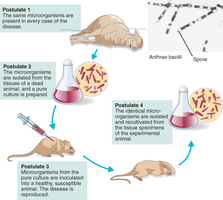
Robert Koch: Studied anthrax, cholera, and tuberculosis. He proved that a specific bacterium causes anthrax and developed Koch's postulates—criteria to establish a causative relationship between a microbe and a disease.
Koch's Postulates:
The same microorganism must be present in every case of the disease.
The microorganism must be isolated from the diseased host and grown in pure culture.
The cultured microorganism must cause the disease when introduced into a healthy host.
The microorganism must be reisolated from the experimentally infected host.
Antiseptics, Handwashing, and Infection Control
Joseph Lister and Antiseptic Surgery
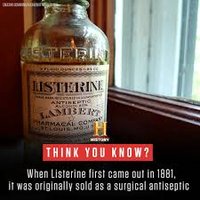
Applied germ theory to surgery by introducing carbolic acid (phenol) as an antiseptic for wounds, instruments, and hands.
Resulted in a dramatic reduction in surgical infections and mortality.
Ignaz Semmelweis and Hand Hygiene
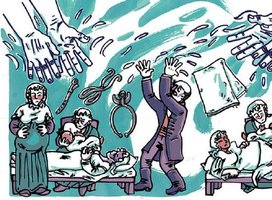
Demonstrated that handwashing by physicians greatly reduced deaths from childbed fever (puerperal fever) in maternity wards.
Hand hygiene remains a cornerstone of infection prevention in healthcare today.
Vaccination and Immunity
Variolation and the Birth of Vaccination
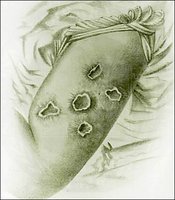
Variolation: Early method of inducing immunity by exposing individuals to material from smallpox lesions.
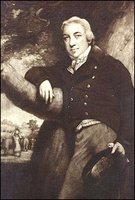
Edward Jenner: Developed the first true vaccine by inoculating individuals with cowpox to protect against smallpox, introducing the concept of immunity.
Discovery of Antibiotics
A Fortunate Accident: Penicillin
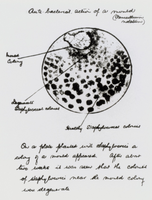
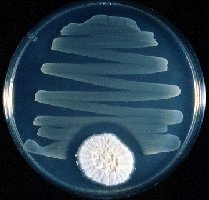
Alexander Fleming (1928): Discovered penicillin, the first true antibiotic, produced by the mold Penicillium. Penicillin killed Staphylococcus aureus and revolutionized the treatment of bacterial infections.
Penicillin was mass-produced and clinically tested in the 1940s, saving countless lives.
Modern Developments in Microbiology
Immunology and Bacterial Classification
Immunology: The study of the immune system and its role in defending against infectious diseases.
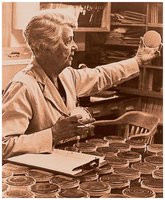
Rebecca Lancefield (1933): Used immunological methods to classify streptococci based on antigen-antibody specificity.
Summary and Impact on Modern Healthcare
Legacy of Early Microbiologists
Early scientists such as Hooke and Leeuwenhoek revealed the existence of a microscopic world.
Experiments by Redi, Spallanzani, and Pasteur disproved spontaneous generation and established biogenesis.
Germ theory, Koch's postulates, and the discovery of antiseptics, vaccines, and antibiotics transformed medicine and public health.
Modern practices such as handwashing, vaccination, sterilization, and antibiotic therapy are rooted in these historical discoveries.
