뒤로
뒤로Antimicrobial Drugs: Mechanisms, Spectrum, and Resistance
스터디 가이드 - 스마트 노트
 자료에 맞춘 맞춤형 노트, 핵심 정의, 예시, 맥락을 확장해 제공합니다.
Antimicrobial Drugs
Overview of Antimicrobials
Antimicrobial drugs are agents that interfere with the growth and survival of microbes, including bacteria, fungi, protozoa, and viruses. These drugs may be synthetic or derived from other microorganisms (biologics). The term chemotherapy refers to the use of chemicals to treat disease, while antibiotics are drugs specifically intended to halt or eliminate bacteria. A key property of effective antimicrobials is selective toxicity, which means they target pathogens without causing significant harm to the host.
Sources of Antibiotics
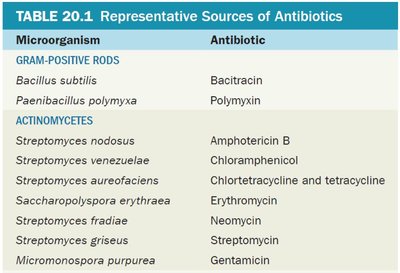
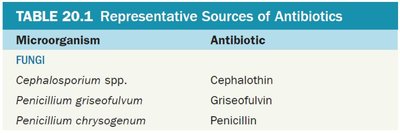
Antibiotics are produced by a variety of microorganisms, including bacteria and fungi. The following tables summarize representative sources of antibiotics:
Microorganism | Antibiotic |
|---|---|
Gram-Positive Rods | |
Bacillus subtilis | Bacitracin |
Paenibacillus polymyxa | Polymyxin |
Actinomycetes | |
Streptomyces nodosus | Amphotericin B |
Streptomyces venezuelae | Chloramphenicol |
Streptomyces aureofaciens | Chlortetracycline, Tetracycline |
Saccharopolyspora erythraea | Erythromycin |
Streptomyces fradiae | Neomycin |
Streptomyces griseus | Streptomycin |
Micromonospora purpurea | Gentamicin |
Fungi | |
Cephalosporium spp. | Cephalothin |
Penicillium griseofulvum | Griseofulvin |
Penicillium chrysogenum | Penicillin |
Spectrum of Antimicrobial Activity
Narrow vs. Broad Spectrum
Antimicrobial drugs vary in the range of organisms they affect:
Narrow-spectrum antibiotics target a limited group of microbes, such as only gram-positive bacteria.
Broad-spectrum antibiotics affect a wide range of bacteria, including both gram-positive and gram-negative species.
Superinfection can occur when broad-spectrum antibiotics eliminate normal microbiota, allowing resistant organisms (e.g., Clostridioides difficile) to proliferate.
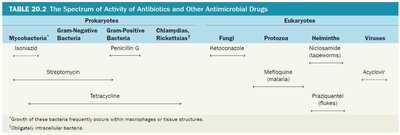
The following table summarizes the spectrum of activity for various antimicrobial drugs:
Mycobacteria | Gram-Negative Bacteria | Gram-Positive Bacteria | Chlamydias, Rickettsias | Fungi | Protozoa | Helminths | Viruses | |
|---|---|---|---|---|---|---|---|---|
Isoniazid | — | |||||||
Streptomycin | — | — | ||||||
Tetracycline | — | — | — | — | ||||
Penicillin G | — | |||||||
Ketoconazole | — | |||||||
Mefloquine (malaria) | — | |||||||
Niclosamide (tapeworms) | — | |||||||
Praziquantel (flukes) | — | |||||||
Acyclovir | — |
Mechanisms of Action of Antimicrobial Drugs
Bactericidal vs. Bacteriostatic
Bactericidal drugs kill bacteria directly.
Bacteriostatic drugs inhibit bacterial growth, allowing the immune system to eliminate the pathogen.
Major Mechanisms
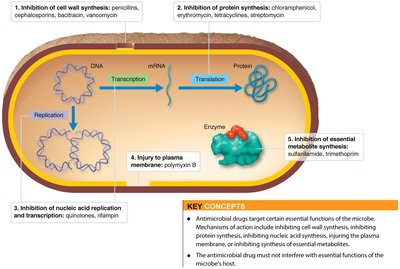
Inhibition of cell wall synthesis: Prevents the formation of peptidoglycan, weakening the cell wall and causing lysis (e.g., penicillins, cephalosporins).
Inhibition of protein synthesis: Targets bacterial 70S ribosomes, affecting either the 30S or 50S subunits (e.g., chloramphenicol, erythromycin, tetracyclines, streptomycin).
Injury to plasma membrane: Alters membrane permeability, leading to cell death (e.g., polymyxin B, antifungal drugs).
Inhibition of nucleic acid synthesis: Interferes with DNA replication or transcription (e.g., quinolones, rifampin).
Inhibition of synthesis of essential metabolites: Antimetabolites compete with normal substrates for enzymes (e.g., sulfonamides inhibit folic acid synthesis).
Inhibition of Cell Wall Synthesis
Penicillins and Related Drugs
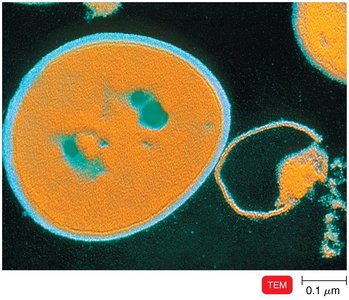
Penicillins contain a β-lactam ring and prevent the cross-linking of peptidoglycans, interfering with cell wall construction, especially in gram-positive bacteria. Types include:
Natural penicillins: Penicillin G (injected), Penicillin V (oral); narrow spectrum, susceptible to β-lactamases.
Semisynthetic penicillins: Modified to resist β-lactamases or broaden spectrum (e.g., oxacillin, ampicillin).
Penicillinase-resistant penicillins: Methicillin, oxacillin.
Extended-spectrum penicillins: Aminopenicillins (ampicillin, amoxicillin) effective against gram-negatives.
Penicillins plus β-lactamase inhibitors: Combined with clavulanic acid to inhibit penicillinase.
Other β-lactam antibiotics include carbapenems, monobactams, and cephalosporins, each with structural variations and spectrum differences.
Inhibition of Protein Synthesis
Mechanisms and Examples
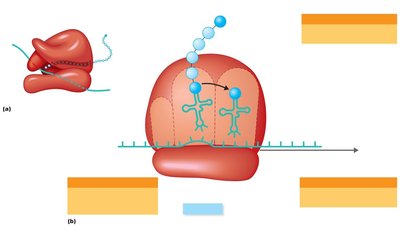
Antibiotics that inhibit protein synthesis target the bacterial ribosome, which differs from the eukaryotic ribosome, allowing selective toxicity. Key examples include:
Chloramphenicol: Binds to the 50S subunit and inhibits peptide bond formation.
Streptomycin: Changes the shape of the 30S subunit, causing mRNA to be read incorrectly.
Tetracyclines: Interfere with tRNA attachment to the mRNA-ribosome complex.
Injury to the Plasma Membrane
Mechanism
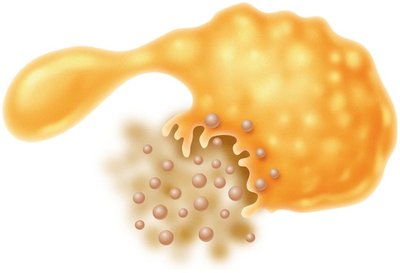
Some antibiotics, such as polymyxin B, disrupt the structure or function of the plasma membrane, leading to leakage of cell contents and cell death. Antifungal drugs often target membrane sterols, which are unique to fungi.
Summary Table: Antibacterial Drugs by Mode of Action
Drug | Mode of Action | Comments |
|---|---|---|
Penicillins | Inhibit cell wall synthesis | Effective against gram-positive bacteria |
Cephalosporins | Inhibit cell wall synthesis | Grouped by generation; broader spectrum in later generations |
Bacitracin | Inhibit cell wall synthesis | Topical use |
Vancomycin | Inhibit cell wall synthesis | Used for MRSA |
Chloramphenicol | Inhibit protein synthesis | Broad spectrum, potentially toxic |
Streptomycin | Inhibit protein synthesis | Broad spectrum, includes mycobacteria |
Tetracyclines | Inhibit protein synthesis | Broad spectrum, includes chlamydias and rickettsias |
Polymyxin B | Injury to plasma membrane | Topical use, effective against gram-negatives |
Rifampin | Inhibit nucleic acid synthesis | Inhibits mRNA synthesis, used for tuberculosis |
Sulfonamides | Inhibit synthesis of essential metabolites | Broad spectrum, often used in combination |
Key Concepts in Antimicrobial Resistance
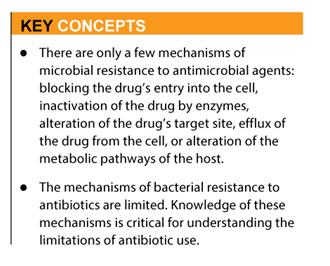
Microbial resistance mechanisms include blocking drug entry, enzymatic inactivation, alteration of the drug's target site, and efflux of the drug from the cell.
Understanding these mechanisms is critical for effective antibiotic use and combating resistance.