 뒤로
뒤로Biomolecules and Cellular Structure: Foundations of Microbiology
스터디 가이드 - 스마트 노트
 자료에 맞춘 맞춤형 노트, 핵심 정의, 예시, 맥락을 확장해 제공합니다.
Biomolecules: The Building Blocks of Cells
The Four Major Classes of Biomolecules
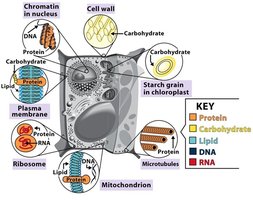
Cells are composed of four major classes of organic macromolecules, each with distinct structures and functions. These macromolecules are essential for cellular structure, function, and information storage.
Lipids: Hydrophobic molecules, not always composed of regular subunits. Major types include fats, phospholipids, waxes, and steroids. Functions include energy storage, membrane structure, and signaling.
Carbohydrates: Hydrophilic molecules composed of carbon, hydrogen, and oxygen. They exist as monosaccharides, disaccharides, and polysaccharides. Functions include energy storage, structural support, and cell recognition.
Proteins: Polymers of amino acids with diverse functions such as catalysis (enzymes), structure, transport, regulation, and defense. Their structure is determined by the sequence and interactions of their amino acids.
Nucleic Acids: Polymers of nucleotides (DNA and RNA) that store and transmit genetic information and participate in protein synthesis.
Hydrophilic vs. Hydrophobic
Hydrophobic: Molecules that do not dissolve in water (e.g., oils, many lipids).
Hydrophilic: Molecules that dissolve in water (e.g., sugars, salts, many carbohydrates).
Lipids
Types and Functions of Lipids
Lipids are a diverse group of hydrophobic molecules that play critical roles in energy storage, membrane structure, and signaling.
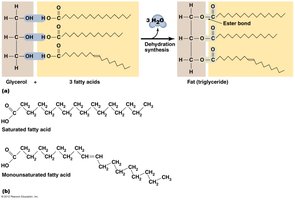
Fats (Triglycerides): Composed of glycerol and three fatty acids, formed by dehydration synthesis. Serve as long-term energy storage molecules.
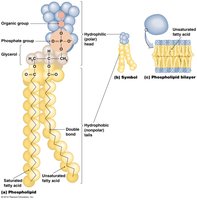
Phospholipids: Similar to fats but contain two fatty acids and a phosphate group. Major component of cellular membranes, forming bilayers due to their amphipathic nature.
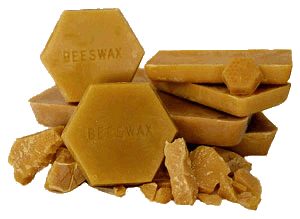
Waxes: Consist of one long-chain fatty acid linked to a long-chain alcohol. Used for protection and energy storage; completely insoluble in water.
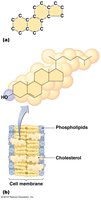
Steroids: Characterized by a structure of four fused carbon rings. Function as hormones and membrane components (e.g., cholesterol in animals, ergosterol in fungi).
Carbohydrates
Structure and Function
Carbohydrates are organic molecules that serve as energy sources, structural components, and recognition molecules. They are classified based on the number of monomer units.
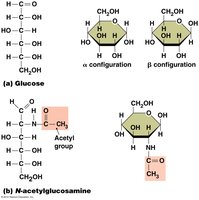
Monosaccharides: Simple sugars (e.g., glucose) that serve as energy sources and building blocks for larger carbohydrates.
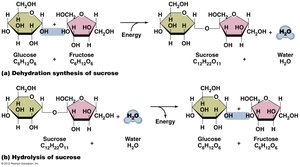
Disaccharides: Formed by linking two monosaccharides via dehydration synthesis (e.g., lactose, maltose).
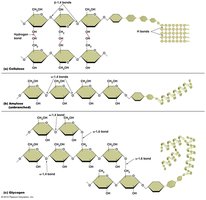
Polysaccharides: Long chains of monosaccharides (e.g., cellulose in plants, glycogen in animals, peptidoglycan in bacteria).
Proteins
Structure and Function
Proteins are polymers of amino acids and are the most functionally diverse biomolecules in cells. Their structure determines their function, which includes catalysis, structure, transport, regulation, and defense.
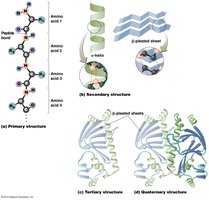
Primary Structure: Sequence of amino acids in a polypeptide chain.
Secondary Structure: Local folding into alpha-helices and beta-sheets, stabilized by hydrogen bonds.
Tertiary Structure: Overall three-dimensional shape of a single polypeptide.
Quaternary Structure: Association of multiple polypeptide chains.
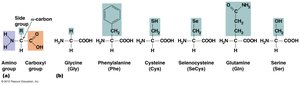
Amino Acids: The monomers of proteins, each with a central carbon, amino group, carboxyl group, and variable side chain (R group). There are 21 amino acids used in protein synthesis.
Nucleic Acids
Structure and Function
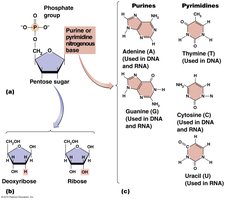
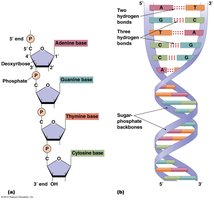
Nucleic acids (DNA and RNA) are polymers of nucleotides that store and transmit genetic information. Each nucleotide consists of a phosphate group, a pentose sugar (deoxyribose or ribose), and a nitrogenous base.
DNA: Double-stranded in most cells, stores genetic information, composed of adenine (A), thymine (T), cytosine (C), and guanine (G).
RNA: Single-stranded, involved in protein synthesis, contains uracil (U) instead of thymine.
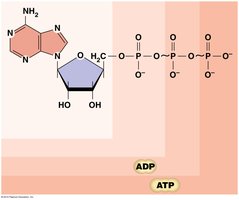
ATP: Adenosine triphosphate, a nucleotide used as a short-term energy carrier in cells.
Cell Structure: Prokaryotes vs. Eukaryotes
Comparison of Prokaryotic and Eukaryotic Cells
Cells are classified as prokaryotic or eukaryotic based on their structural features.
Feature | Prokaryotic Cells | Eukaryotic Cells |
|---|---|---|
Nucleus | Absent | Present |
Membrane-bound Organelles | Absent | Present |
Size | ~1.0 µm | 10–100 µm |
Examples | Bacteria, Archaea | Fungi, Animals, Plants, Protists |
Prokaryotic Cell Structure
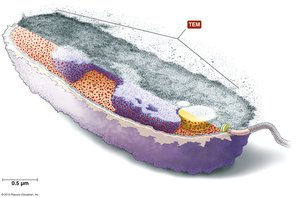
Cell Wall: Provides structure and protection; composed of peptidoglycan in bacteria.
Cytoplasmic Membrane: Phospholipid bilayer controlling entry and exit of substances.
Glycocalyx: Gelatinous outer layer for protection and attachment.
Flagella: Used for motility; structure includes filament, hook, and basal body.
Fimbriae and Pili: Proteinaceous projections for attachment and DNA transfer.
Ribosomes: Sites of protein synthesis (70S in prokaryotes).
Nucleoid: Region containing the cell's DNA.
Inclusions: Storage granules for nutrients.
Endospores: Dormant, resistant structures formed by some bacteria for survival.
Eukaryotic Cell Structure
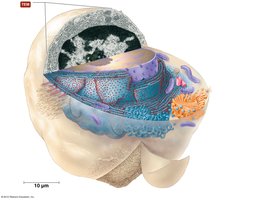
Nucleus: Contains genetic material, surrounded by nuclear envelope.
Membrane-bound Organelles: Includes mitochondria (energy production), endoplasmic reticulum (protein and lipid synthesis), Golgi apparatus (modification and packaging), lysosomes (digestion), and chloroplasts (photosynthesis in plants and algae).
Cytoskeleton: Network of fibers for shape, support, and movement.
Cell Wall: Present in plants, fungi, and some protists; composition varies (cellulose, chitin, etc.).
Flagella and Cilia: Used for movement; structurally distinct from prokaryotic flagella.
Summary Table: Major Biomolecules and Their Functions
Biomolecule | Monomer | Key Functions | Examples |
|---|---|---|---|
Lipids | Fatty acids (not always regular) | Energy storage, membranes, signaling | Triglycerides, phospholipids, steroids, waxes |
Carbohydrates | Monosaccharides | Energy, structure, recognition | Glucose, cellulose, glycogen, peptidoglycan |
Proteins | Amino acids | Catalysis, structure, transport, regulation, defense | Enzymes, antibodies, structural proteins |
Nucleic Acids | Nucleotides | Genetic information, protein synthesis | DNA, RNA, ATP |
Key Takeaways
All cells are composed of four major types of biomolecules: lipids, carbohydrates, proteins, and nucleic acids.
Prokaryotic and eukaryotic cells differ in complexity, size, and internal organization.
Cellular structures are specialized for various functions, including energy production, genetic information storage, and interaction with the environment.
