 뒤로
뒤로Classification and Identification of Microorganisms: Taxonomy, Phylogeny, and Molecular Methods
스터디 가이드 - 스마트 노트
 자료에 맞춘 맞춤형 노트, 핵심 정의, 예시, 맥락을 확장해 제공합니다.
Classification and Phylogeny in Microbiology
Introduction to Taxonomy and Systematics
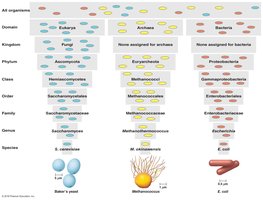
Taxonomy is the science of classifying organisms, providing a universal framework for naming and grouping organisms based on similarities and evolutionary relationships. Systematics, or phylogeny, is the study of the evolutionary history and relationships among organisms, often visualized as a branching tree.
Taxonomic hierarchy: Domain → Kingdom → Phylum → Class → Order → Family → Genus → Species
Systematics: Focuses on evolutionary lineage and genetic relationships.
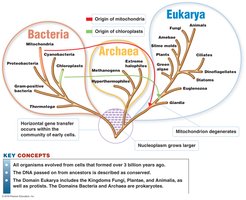
The Three-Domain System
Overview of Domains
The three-domain system, developed by Carl Woese in 1978, is based on differences in ribosomal RNA (rRNA) sequences. It divides all cellular life into three domains: Bacteria, Archaea, and Eukarya.
Bacteria: Includes most prokaryotes, such as Escherichia coli.
Archaea: Prokaryotes distinct from bacteria, often extremophiles (e.g., methanogens, halophiles, hyperthermophiles).
Eukarya: All eukaryotic organisms, including animals, plants, fungi, and protists.
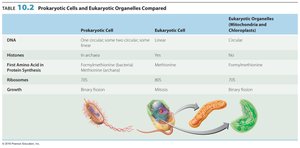
Origin of Eukaryotes
Eukaryotes are believed to have originated from infoldings of prokaryotic plasma membranes, with endosymbiotic bacteria evolving into organelles such as mitochondria and chloroplasts.
Endosymbiotic theory: Explains the origin of mitochondria and chloroplasts from ancestral prokaryotes.
Classification of Eukaryotes
Kingdoms in Domain Eukarya
Eukaryotes are classified into several kingdoms based on cellular organization, nutritional mode, and genetic relationships.
Protista: Diverse group, both autotrophic and heterotrophic, classified by rRNA and motility.
Fungi: Chemoheterotrophic, cell walls of chitin, reproduce via spores or hyphal fragments.
Plantae: Multicellular, cellulose cell walls, photosynthetic.
Animalia: Multicellular, no cell walls, chemoheterotrophic.
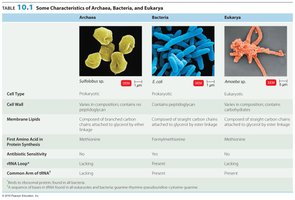
Prokaryotic Differences and Classification
Archaea vs. Bacteria
Archaea are more closely related to eukaryotes than to bacteria, as shown by rRNA analysis and other molecular features.
Cell wall: Archaea lack peptidoglycan; bacteria have peptidoglycan.
Metabolism: Archaea can utilize nutrients and survive in environments that bacteria cannot.
Pathogenicity: No known archaea are pathogenic.
Classification of Prokaryotes
Prokaryotes are classified based on cell wall characteristics and other molecular and physiological traits.
Major groups: Gram-negative, Gram-positive, Mycoplasmas (no cell wall), Archaea (unique structures).
Species concept: In prokaryotes, a species is a population of cells with similar characteristics; further divided into clones and strains.
Bergey’s Manual: Authoritative reference for prokaryote classification.
Scientific Nomenclature
Binomial Nomenclature
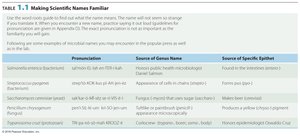
Organisms are named using a two-part system: Genus and species. This system ensures consistency and accuracy in scientific communication.
Genus: Capitalized, italicized or underlined.
Species: Lowercase, italicized or underlined.
Example: Escherichia coli
Classification of Viruses
Viruses and Taxonomy
Viruses are not classified within the three domains because they are not composed of cells and are not considered alive. Viral species are defined by shared characteristics and ecological niche.
Obligate intracellular parasites: Require a host cell for replication.
Methods of Classifying and Identifying Microorganisms
Overview of Methods
Microorganisms are classified and identified using a combination of morphological, biochemical, serological, and molecular methods.
Morphological characteristics: Cell shape, arrangement, presence of structures like endospores or flagella.
Differential staining: Gram stain, acid-fast stain.
Biochemical tests: Detection of specific enzymes and metabolic pathways.
Biochemical Tests
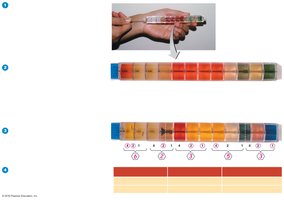
Biochemical tests identify bacteria based on their enzymatic activities. Rapid identification methods can test for multiple enzymes simultaneously, providing results within hours.
Examples: Fermentation of sugars, production of gas, utilization of specific substrates.
Limitations: Mutations and plasmid acquisition can lead to atypical results.
Serological Methods
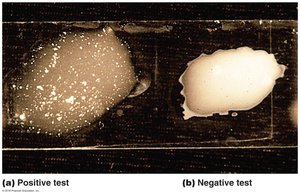
Serology involves the use of antibodies to detect specific antigens in microorganisms. These tests are rapid and can differentiate between species and strains.
Slide agglutination test: Detects antigen-antibody reactions by visible clumping.
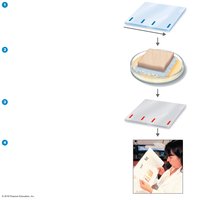
Western blotting: Separates proteins and detects specific antigens or antibodies using labeled probes.
Phage Typing
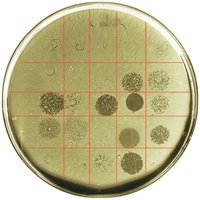
Phage typing uses bacteriophages to identify bacterial strains based on their susceptibility to specific viruses. This method is especially useful in epidemiology and food safety.
Plaques: Clear zones on a bacterial lawn where phages have lysed cells indicate susceptibility.
Molecular Methods for Classification
Overview of Molecular Methods
Molecular techniques provide precise tools for classifying and identifying microorganisms by analyzing their genetic material or proteins.
Amino acid sequencing: Compares protein sequences to infer genetic relationships.
DNA base composition: Measures the percentage of guanine and cytosine in DNA.
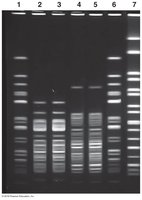
DNA fingerprinting: Uses restriction enzymes and electrophoresis to compare DNA fragment patterns.
Fatty acid profiles: Analyzes types and proportions of fatty acids in cell membranes.
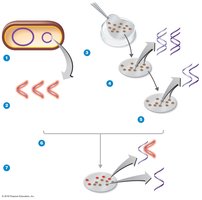
rRNA sequencing: Compares conserved and variable regions of ribosomal RNA genes.
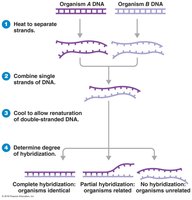
Nucleic acid hybridization: Measures the ability of DNA from different organisms to hybridize, indicating relatedness.
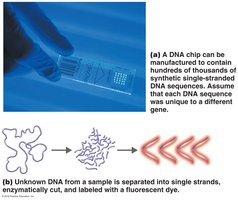
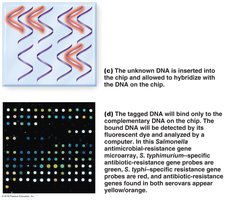
Dichotomous Keys and Integrated Identification
Dichotomous Keys
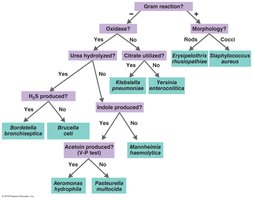
Dichotomous keys are tools that use a series of yes/no questions to identify organisms. They integrate multiple identification methods and are widely used in clinical and research laboratories.
Process: Begins with broad characteristics and narrows down to specific traits.
Summary Table: Key Differences Among Domains
Feature | Bacteria | Archaea | Eukarya |
|---|---|---|---|
Cell Type | Prokaryotic | Prokaryotic | Eukaryotic |
Cell Wall | Peptidoglycan | No peptidoglycan | Varies (cellulose, chitin, none) |
Membrane Lipids | Ester-linked | Ether-linked | Ester-linked |
rRNA | 70S | 70S | 80S |
Pathogenicity | Many pathogens | No known pathogens | Some pathogens |
