 뒤로
뒤로Genetics and Genetic Mechanisms in Microbiology
스터디 가이드 - 스마트 노트
 자료에 맞춘 맞춤형 노트, 핵심 정의, 예시, 맥락을 확장해 제공합니다.
Genetics: The Science of Heredity
Overview of Genetics
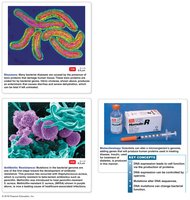
Genetics is the study of heredity, focusing on the structure and function of genes, their transmission to offspring, and their expression in all organisms. Alterations in bacterial genes and gene expression can cause diseases, be used in disease prevention and treatment, or be manipulated for human benefit.
Gene: A segment of DNA encoding a functional product, usually a polypeptide.
Genome: All genetic information in a cell.
Genetic code: Sequence of DNA bases coding for amino acids.
Flow of Genetic Information
Expression, Recombination, and Replication
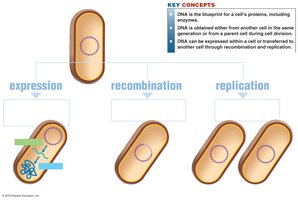
Genetic information in cells is used for protein synthesis (expression), can be transferred between cells (recombination), and is passed to offspring (replication). These processes are fundamental to cell function and genetic diversity.
Expression: Using genetic information to produce proteins.
Recombination: Exchange of genetic material between cells.
Replication: Duplication of DNA for cell division.
Structure and Function of Genetic Material
Chromosomes and DNA
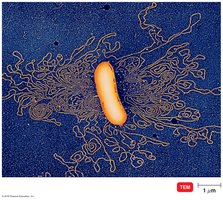
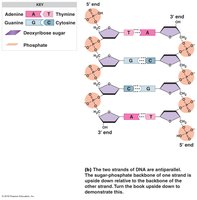
Chromosomes are structures containing DNA that carry hereditary information. In prokaryotes, a single circular chromosome contains essential genes. DNA is composed of nucleotides, each consisting of a sugar, phosphate, and one of four nitrogenous bases (adenine, thymine, cytosine, guanine).
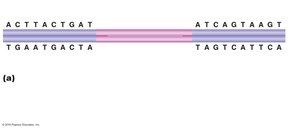
Complementary base pairing: Adenine pairs with thymine, cytosine pairs with guanine.
Antiparallel strands: DNA strands run in opposite directions.
DNA Replication
Mechanism of DNA Replication
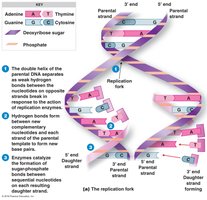
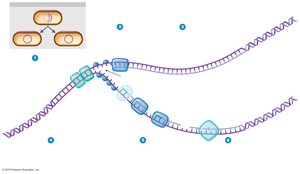
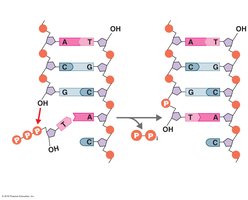
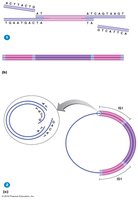
DNA replication is a highly regulated process ensuring genetic fidelity. The double helix unwinds, and each strand serves as a template for the synthesis of a new complementary strand. Replication is semiconservative, meaning each new DNA molecule contains one original and one new strand.
Replication fork: The site where DNA unwinds and replication occurs.
Leading strand: Synthesized continuously toward the replication fork.
Lagging strand: Synthesized discontinuously in fragments (Okazaki fragments).
Key enzymes: DNA polymerase (synthesizes DNA), primase (creates RNA primer), DNA ligase (joins fragments).
Genotype and Phenotype
Definitions and Relationships
The genotype is the genetic makeup of an organism, while the phenotype is the observable expression of those genes, often influenced by environmental factors. Proteins, either enzymes or structural components, largely determine phenotype.
Genotype: DNA sequence of an organism.
Phenotype: Observable traits resulting from gene expression.
RNA and Protein Synthesis
Types of RNA and Their Functions
RNA is a single-stranded molecule with ribose sugar and uracil instead of thymine. Three main types of RNA are involved in protein synthesis:
rRNA: Integral part of ribosomes.
tRNA: Transports amino acids during translation.
mRNA: Carries genetic information from DNA to ribosomes.
Transcription
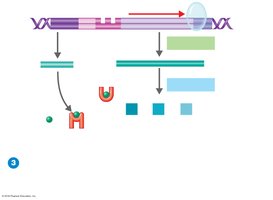
Transcription is the process of copying a gene's information onto mRNA. RNA polymerase binds to the promoter, synthesizes mRNA by complementary base pairing, and stops at the terminator.
Promoter: DNA sequence where transcription begins.
Terminator: DNA sequence where transcription ends.
Translation
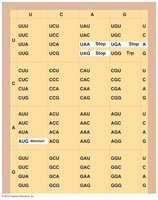
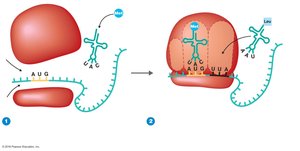
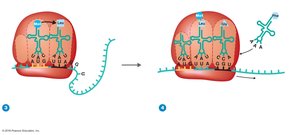
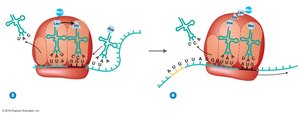
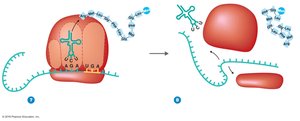
Translation is the process by which ribosomes synthesize polypeptides from mRNA. Codons (three-base sequences) specify amino acids or signals to start/stop translation. The process begins at the start codon (AUG) and ends at a stop codon (UAA, UAG, UGA).
Codon: Three-base sequence in mRNA coding for an amino acid.
Anticodon: Three-base sequence in tRNA complementary to mRNA codon.
Peptide bond: Joins adjacent amino acids.
Gene Expression Regulation
Operon Model
Gene expression is regulated to conserve energy and resources. The operon model describes how groups of genes are controlled together. Inducible operons (e.g., lac operon) are turned on by inducers, while repressible operons (e.g., trp operon) are turned off by corepressors.
Promoter: Site for RNA polymerase binding.
Operator: Site for repressor binding.
Inducible operon: Transcription occurs only when an inducer is present.
Repressible operon: Transcription occurs until a corepressor turns it off.
Mutations and Genetic Variation
Types of Mutations
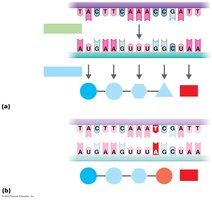
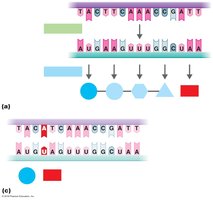
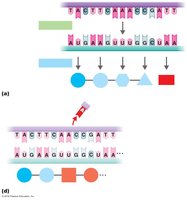
Mutations are permanent changes in DNA sequence. They can be neutral, beneficial, or harmful. Types include base substitutions (point mutations), missense mutations, nonsense mutations, and frameshift mutations.
Base substitution: Change in a single base.
Missense mutation: Substitution results in a different amino acid.
Nonsense mutation: Substitution creates a stop codon.
Frameshift mutation: Insertion/deletion shifts reading frame.
Mutagens
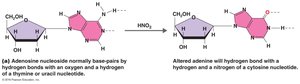
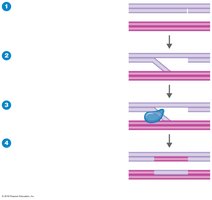
Mutagens are environmental agents that increase mutation rates. Radiation and chemicals can alter DNA structure, leading to mutations.
Ionizing radiation: Causes DNA strand breaks.
UV radiation: Causes thymine dimers.
Chemicals: Alter or replace DNA bases.
Genetic Transfer and Recombination in Bacteria
Mechanisms of Genetic Transfer
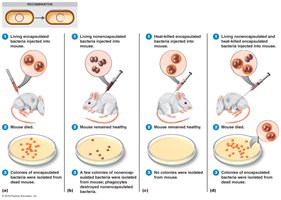
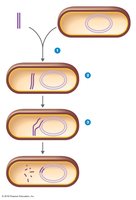
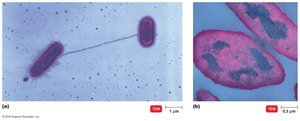
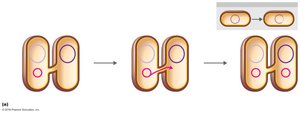
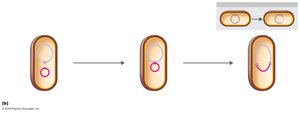
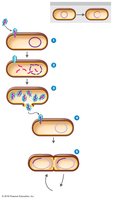
Bacteria can exchange genetic material through vertical and horizontal gene transfer, increasing genetic diversity. Horizontal transfer includes transformation, conjugation, and transduction.
Transformation: Uptake of naked DNA from environment.
Conjugation: Transfer of plasmids via cell-to-cell contact.
Transduction: Transfer of DNA via bacteriophage.
Transposons: Mobile Genetic Elements
Transposon Structure and Function
Transposons are DNA segments that can move within and between DNA molecules. They contain insertion sequences coding for transposase, and complex transposons may carry additional genes, such as antibiotic resistance.
Transposase: Enzyme that catalyzes transposition.
Insertion sequence (IS): Simple transposon with only transposase gene.
Complex transposon: Carries other genes in addition to transposase.
Summary Table: Types of Genetic Transfer in Bacteria
Mechanism | Description | Key Features |
|---|---|---|
Transformation | Uptake of naked DNA from environment | Requires competent cells |
Conjugation | Transfer of plasmids via sex pilus | F factor, R factor, Hfr cells |
Transduction | Transfer of DNA via bacteriophage | Generalized and specialized |
Transposons | Mobile DNA segments | Transposase, antibiotic resistance |
