 뒤로
뒤로Introduction to Microbiology: Foundations, Microbial Diversity, and Human Impact
스터디 가이드 - 스마트 노트
 자료에 맞춘 맞춤형 노트, 핵심 정의, 예시, 맥락을 확장해 제공합니다.
Introduction to Microbiology
Definition and Scope
Microbiology is the scientific study of microorganisms, which are organisms too small to be seen with the unaided eye. These include bacteria, archaea, fungi, protozoa, algae, viruses, and some multicellular parasites. Microbiology is a specialized branch of biology that investigates the structure, function, classification, and roles of these microscopic life forms in nature and human health.
Microorganisms (or microbes) can be unicellular, multicellular, or acellular.
Sub-disciplines include virology (viruses), mycology (fungi), parasitology (protozoa and helminths), and bacteriology (bacteria).
Microbes are sometimes called 'germs' or 'bugs,' but these terms are not scientifically precise.
Microbes in Our Lives
Roles and Importance
Microorganisms have profound effects on our lives, both beneficial and harmful. They are essential for ecosystem function, biotechnology, and human health, but some can cause disease.
Beneficial actions:
Decompose organic waste
Generate oxygen via photosynthesis
Produce chemicals (e.g., ethanol, acetone, vitamins)
Ferment foods (e.g., vinegar, cheese, bread)
Used in manufacturing (e.g., cellulose) and medicine (e.g., insulin)
Destructive actions: Food spoilage and pathogenic diseases
Understanding microbes helps prevent food spoilage, control disease, and prevent epidemics.
The Microbiome
Normal Microbiota and Human Health
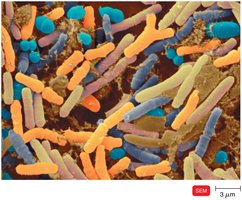
The microbiome refers to the community of microbes that live stably on and in the human body. These microbes play crucial roles in maintaining health, preventing pathogen colonization, and training the immune system.
Normal microbiota: Microbes acquired at birth and throughout life, which may colonize the body permanently or transiently.
Colonization depends on suitable nutrients and environmental conditions.
The Human Microbiome Project (2007) and the National Microbiome Initiative (2016) aim to understand the composition and function of human and environmental microbiomes.
Naming and Classifying Microorganisms
Scientific Nomenclature
Microorganisms are named using a binomial system established by Carolus Linnaeus in 1735. Each organism has a two-part name: the genus (capitalized) and the specific epithet (lowercase), both italicized or underlined.
Escherichia coli: Honors Theodor Escherich; found in the colon.
Staphylococcus aureus: Describes clustered, spherical, gold-colored cells.
After first use, names may be abbreviated (e.g., E. coli).
Classification: The Three Domains
Developed by Carl Woese in 1978, all life is classified into three domains based on cellular organization:
Bacteria: Prokaryotic, peptidoglycan cell walls, diverse metabolism.
Archaea: Prokaryotic, lack peptidoglycan, often extremophiles.
Eukarya: Eukaryotic; includes protists, fungi, plants, and animals.
Types of Microorganisms
Bacteria
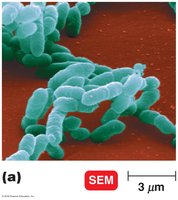
Bacteria are single-celled prokaryotes with peptidoglycan cell walls. They reproduce by binary fission and may be motile via flagella. Nutrition can be derived from organic/inorganic chemicals or photosynthesis.
Archaea
Archaea are prokaryotes that lack peptidoglycan and may live in extreme environments (e.g., methanogens, halophiles, thermophiles). They are not known to cause human disease.
Fungi
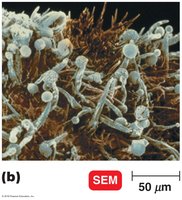
Fungi are eukaryotes with chitin cell walls. They absorb organic nutrients. Yeasts are unicellular; molds and mushrooms are multicellular, with molds forming mycelia composed of hyphae.
Protozoa
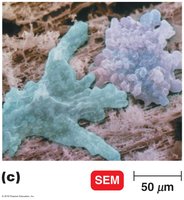
Protozoa are unicellular eukaryotes that ingest or absorb organic chemicals. They may move via pseudopods, cilia, or flagella, and can be free-living or parasitic. Some are photosynthetic.
Algae
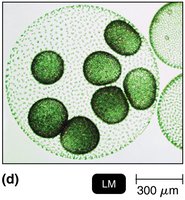
Algae are eukaryotes with cellulose cell walls, found in aquatic and terrestrial environments. They use photosynthesis for energy, producing oxygen and carbohydrates. Reproduction can be sexual or asexual.
Viruses
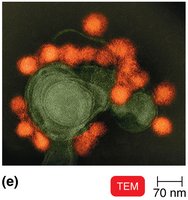
Viruses are acellular entities consisting of a DNA or RNA core surrounded by a protein coat, sometimes with a lipid envelope. They replicate only inside living host cells and are inert outside hosts.
Multicellular Animal Parasites
These include eukaryotic helminths (parasitic flatworms and roundworms). While not strictly microorganisms, some life stages are microscopic.
History of Microbiology
Early Observations and Cell Theory
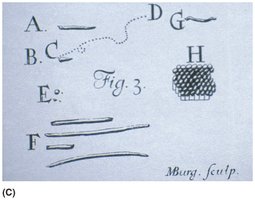
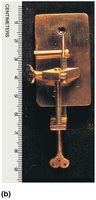
Robert Hooke (1665) observed cells in cork, marking the beginning of cell theory. Anton van Leeuwenhoek (1623–1673) was the first to observe microbes ('animalcules') using simple microscopes.
Disproving Spontaneous Generation
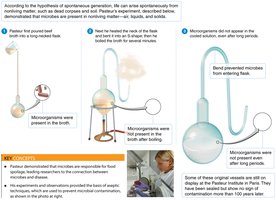
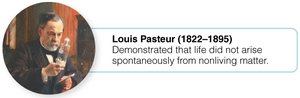
The spontaneous generation hypothesis posited that life could arise from nonliving matter. Experiments by Redi, Needham, Spallanzani, and Pasteur tested this idea. Pasteur's swan-neck flask experiment definitively showed that microorganisms arise from other microbes, not spontaneously.
The Golden Age of Microbiology
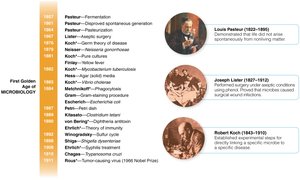
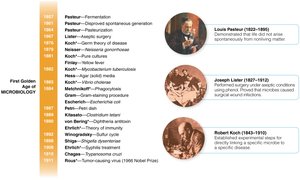
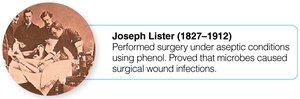
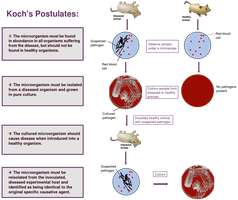
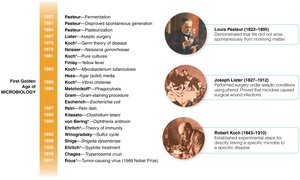
From 1857 to 1914, major discoveries linked microbes to fermentation, disease, and immunity. Pasteur developed pasteurization and disproved spontaneous generation. Lister introduced antiseptic surgery. Koch established experimental steps (Koch's postulates) to link specific microbes to diseases.
Vaccination and Chemotherapy
Jenner's work with cowpox led to the first vaccine (against smallpox). Chemotherapy, the use of chemicals to treat disease, began with Ehrlich's 'magic bullet' (salvarsan for syphilis) and Fleming's discovery of penicillin.
Modern Developments in Microbiology
Sub-disciplines
Bacteriology: Study of bacteria
Mycology: Study of fungi
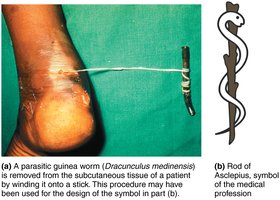
Parasitology: Study of protozoa and parasitic worms
Immunology: Study of immunity
Virology: Study of viruses
Molecular Genetics and Genomics
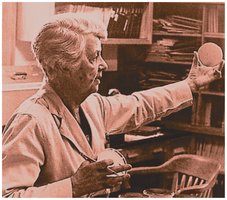
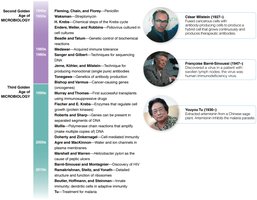
Microbial genetics explores how microbes inherit traits. Molecular biology studies how DNA directs protein synthesis. Genomics analyzes the complete genetic content of organisms, aiding classification and biotechnology.
Microbes and Human Welfare
Beneficial Activities
Recycle vital elements (carbon, nitrogen, sulfur, phosphorus)
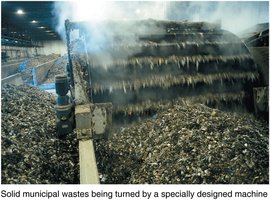
Sewage treatment and water recycling
Bioremediation: cleaning up pollutants (e.g., oil spills, mercury)
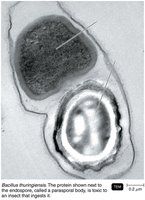
Insect pest control (e.g., Bacillus thuringiensis)
Biotechnology and recombinant DNA technology for producing proteins, vaccines, and gene therapy
Microbes and Human Disease
Normal Microbiota, Resistance, and Biofilms
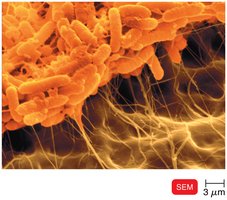
Normal microbiota are microbes that inhabit the human body without causing disease, providing protection and producing essential vitamins. Resistance is the body's ability to ward off disease, involving barriers like skin and immune factors. Biofilms are communities of microbes attached to surfaces, often resistant to antibiotics and causing persistent infections.
Emerging Infectious Diseases (EIDs)
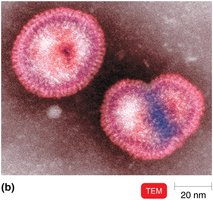
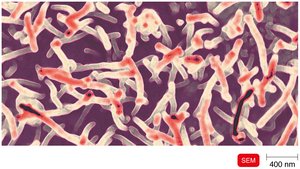
EIDs are diseases that are new or increasing in incidence. Examples include Zika virus, MERS, H1N1 influenza, avian influenza, MRSA, Ebola, and Marburg virus. Factors contributing to EIDs include microbial evolution, environmental changes, and increased human-animal contact.
Summary Table: Major Groups of Microorganisms
Group | Cell Type | Cell Wall | Reproduction | Examples |
|---|---|---|---|---|
Bacteria | Prokaryotic | Peptidoglycan | Binary fission | Escherichia coli |
Archaea | Prokaryotic | None or pseudomurein | Binary fission | Methanogens |
Fungi | Eukaryotic | Chitin | Spores, budding | Yeasts, molds |
Protozoa | Eukaryotic | None | Sexual/asexual | Amoeba |
Algae | Eukaryotic | Cellulose | Sexual/asexual | Volvox |
Viruses | Acellular | Protein coat (sometimes lipid envelope) | Host-dependent | Zika virus |
Helminths | Eukaryotic | None | Complex life cycles | Roundworms, flatworms |
Key Equations and Concepts
Pasteurization: Application of high heat for a short time to kill harmful microbes in beverages.
Koch's Postulates: Experimental steps to prove a specific microbe causes a specific disease.
Additional info:
Modern microbiology integrates molecular biology, genetics, and genomics for advanced research and applications.
Emerging infectious diseases highlight the importance of surveillance, vaccination, and public health measures.
