 뒤로
뒤로Introduction to Microbiology: Humans and the Microbial World
스터디 가이드 - 스마트 노트
 자료에 맞춘 맞춤형 노트, 핵심 정의, 예시, 맥락을 확장해 제공합니다.
Chapter 1: Humans and the Microbial World
A Glimpse of History
The science of microbiology began in the late 17th century with the pioneering work of Antonie van Leeuwenhoek and Robert Hooke. Their observations laid the foundation for the study of microorganisms, which are organisms too small to be seen with the naked eye.
Antonie van Leeuwenhoek: Developed a simple magnifying glass and was the first to observe and describe microorganisms, which he called "animalcules." He studied samples from lake water.
Robert Hooke: Also credited with the discovery of microbes, describing the structure of common bread mold as a "microscopical mushroom" in 1665.


Microorganisms and Their Importance
Microorganisms, or microbes, include both cellular and acellular entities. They are the foundation for all life on Earth, having existed for approximately 3.5 billion years. All plants, animals, and modern microorganisms evolved from ancestral bacteria, and human life depends on their activities.
Microbes are essential for nutrient cycling, decomposition, and various ecological processes.
Acellular members include viruses, viroids, and prions.
The Dispute Over Spontaneous Generation
Spontaneous generation was the belief that life could arise from non-living matter. This idea was debated for centuries until a series of experiments disproved it.
Francesco Redi (1668): Showed that maggots on meat came from fly eggs, not spontaneous generation.
John Needham (1749): Claimed boiled broths still produced microorganisms, supporting spontaneous generation.
Father Spallanzani (1776): Contradicted Needham by boiling broths longer and sealing flasks, preventing microbial growth.
Louis Pasteur: Demonstrated that air contains microorganisms using swan-necked flasks, which kept broths sterile unless exposed to airborne microbes.
John Tyndall: Explained conflicting results by discovering heat-resistant endospores in some broths.
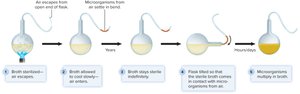
Biogenesis is the principle that living things arise only from other living things, not spontaneously from non-living material.
The Golden Age of Microbiology
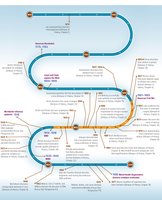
With the rejection of spontaneous generation, microbiology entered a period of rapid discovery known as the Golden Age. The Germ Theory of Disease emerged, establishing that microorganisms can cause diseases.
Major advances included the development of pure culture techniques, the Gram stain, and the discovery of antibiotics and vaccines.
The Scientific Method
The scientific method is a systematic approach to scientific inquiry:
Make an observation and ask a question.
Develop a testable hypothesis.
Design and conduct experiments, including controls.
Collect and analyze data.
Draw conclusions and communicate findings.
A scientific theory is a well-supported explanation based on extensive evidence.
The Human Microbiome
The human body hosts a vast population of microorganisms known as the normal microbiota. These microbes play essential roles in health:
Prevent disease by outcompeting pathogens
Aid in digestion
Promote immune system development
May influence allergies, asthma, brain chemistry, and body weight
The Human Microbiome Project (2007) used DNA sequencing to characterize these communities. The microbiome refers to both the genetic content and the community of microbes themselves.
Commercial Benefits of Microorganisms
Microorganisms are used in various industries:
Food production: Yeast for bread, fermentation for beer, yogurt, and cheese
Biodegradation: Breakdown of pollutants, bioremediation of oil spills
Biotechnology: Production of antibiotics, biofuels, dietary supplements, insecticides, and genetically engineered products (e.g., insulin, Bt corn)
Microbes and Disease
While most microbes are harmless or beneficial, some are pathogens that cause disease by damaging tissues or triggering harmful immune responses. Advances in sanitation, vaccination, and antibiotics have greatly reduced infectious disease rates.
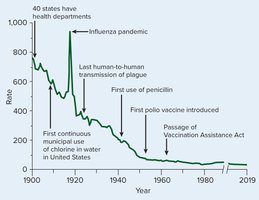
Smallpox: Eradicated globally by vaccination
Plague: Controlled by antibiotics and public health measures
Polio: Nearly eliminated by vaccination
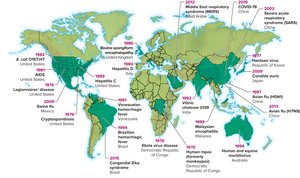
Emerging Infectious Diseases
New and re-emerging diseases continue to pose challenges due to evolving pathogens, antibiotic resistance, and societal changes such as increased travel and urbanization.
Members of the Microbial World
Microorganisms are classified based on cell structure and genetics:
Prokaryotes: Bacteria and Archaea (no membrane-bound nucleus)
Eukaryotes: Eukarya (membrane-bound nucleus and organelles; includes fungi, algae, protozoa, and helminths)
Acellular infectious agents: Viruses, viroids, prions (non-living, not composed of cells)
Sizes in the Microbial World
Microorganisms vary greatly in size, from nanometers (viruses) to millimeters (helminths). The unit of measurement is typically the micrometer (μm) or nanometer (nm).
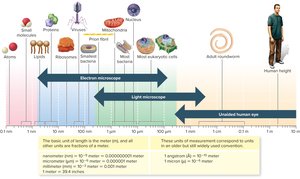
Atoms: ~0.1 nm
Viruses: ~100 nm
Bacteria: 1–10 μm
Eukaryotic cells: 10–100 μm
Shapes and Arrangements of Bacteria
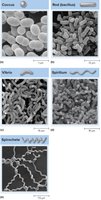
Bacteria exhibit a variety of shapes and arrangements, which are important for identification and classification.
Coccus (cocci): Spherical
Bacillus (bacilli): Rod-shaped
Vibrio: Short, curved rod
Spirillum: Spiral-shaped
Spirochete: Long, flexible spiral
Pleomorphic: Variable shape
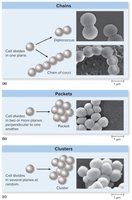
Common Cell Arrangements
Diplococcus: Pairs
Chains: Streptococcus
Packets: Sarcina
Clusters: Staphylococcus
Archaea
Archaea are single-celled prokaryotes similar to bacteria but differ in key aspects:
Cell walls lack peptidoglycan
Distinct ribosomal RNA sequences
Many are extremophiles, thriving in high salt or temperature environments
Eukarya
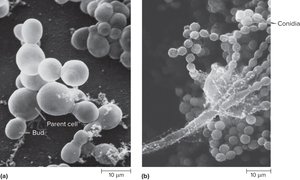
Eukaryotes include both unicellular and multicellular organisms. Microbiologists study fungi, algae, protozoa, and helminths. Algae and protozoa are collectively called protists.
Acellular Infectious Agents
Viruses, viroids, and prions are not composed of cells and are considered non-living. They require host cells for replication and can cause a variety of diseases in humans, animals, and plants.
Scientific Names
The binomial system of nomenclature assigns each organism a two-part scientific name:
Genus: Capitalized (e.g., Escherichia)
Species: Lowercase (e.g., coli)
Both names are italicized or underlined (e.g., Escherichia coli)
Strain designations may be added for important variants (e.g., E. coli K12)
