 뒤로
뒤로Introduction to Microbiology: The Microbial World and You
스터디 가이드 - 스마트 노트
 자료에 맞춘 맞춤형 노트, 핵심 정의, 예시, 맥락을 확장해 제공합니다.
Introduction to Microbiology
The Microbial World and Its Importance
Microbiology is the study of organisms too small to be seen with the unaided eye, known as microorganisms or microbes. These include bacteria, fungi, protozoa, microscopic algae, viruses, and prions. Microbes play essential roles in ecosystems, industry, and human health, but some are pathogenic and cause disease.
Decomposition: Microbes decompose organic waste, recycling nutrients in the environment.
Producers: Many microbes, especially algae and cyanobacteria, are primary producers via photosynthesis.
Industrial Applications: Microbes are used to produce chemicals (e.g., ethyl alcohol, acetone), fermented foods (e.g., cheese, bread), and pharmaceuticals (e.g., insulin).
Pathogenicity: A minority of microbes are pathogenic, causing diseases in humans, animals, and plants.
Knowledge of Microorganisms
Understanding microbes helps prevent food spoilage and disease outbreaks.
Development of aseptic techniques in medicine and laboratories prevents contamination and infection.
The Microbiome
Definition and Significance
The microbiome (or microbiota) refers to the community of microbes that live stably on and in the human body. An adult human harbors about 40 trillion bacterial cells, in addition to 30 trillion human cells. The microbiome is crucial for health, helping to prevent colonization by pathogens and training the immune system.
Normal microbiota: Microbes that are consistently present in or on the human body.
Transient microbiota: Microbes that temporarily colonize the body.
Colonization depends on suitable nutrients and environmental conditions.
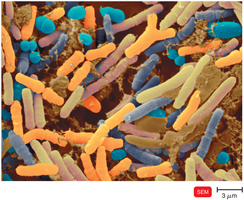
Human Microbiome Projects
Human Microbiome Project (2007–2016): Mapped typical microbiota in various body regions and explored links to disease.
National Microbiome Initiative (2016–): Studies the role of microbes in diverse ecosystems.
Naming and Classifying Microorganisms
Scientific Nomenclature
Microorganisms are named using the binomial system established by Linnaeus in 1735. Each organism has a genus and a specific epithet (species), both italicized or underlined. The genus is capitalized, and the species is lowercase. Names may be descriptive or honor scientists.
Escherichia coli: Honors Theodor Escherich; found in the colon.
Staphylococcus aureus: Describes clustered, spherical cells with gold-colored colonies; commonly found on skin.
After first use, names may be abbreviated (e.g., E. coli, S. aureus).
Classification Systems
Early classification divided life into animal and plant kingdoms. In 1978, Carl Woese introduced the three-domain system based on ribosomal RNA sequences:
Bacteria: Pathogenic and nonpathogenic prokaryotes.
Archaea: Prokaryotes in extreme environments (methanogens, halophiles, thermophiles).
Eukarya: Protists, fungi, plants, and animals.
Types of Microorganisms
Overview
Microorganisms are classified into several major groups based on cellular structure, metabolism, and genetics.
Bacteria
Archaea
Fungi
Protozoa
Algae
Viruses
Multicellular Animal Parasites
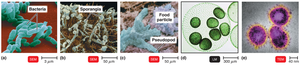
Bacteria
Bacteria are unicellular prokaryotes with peptidoglycan cell walls. They reproduce by binary fission and obtain energy from organic or inorganic chemicals or photosynthesis. Bacteria have three basic shapes: cocci (spherical), bacilli (rod-shaped), and spiral. Some are motile via flagella.
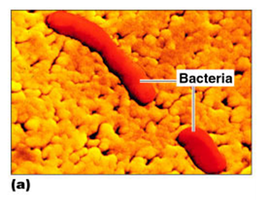
Archaea
Archaea are prokaryotes that lack peptidoglycan in their cell walls and may lack cell walls entirely. They often inhabit extreme environments, such as high-salt (halophiles), high-temperature (thermophiles), or methane-rich (methanogens) habitats. Archaea are not known to cause human disease.
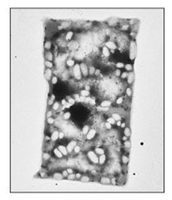
Fungi
Fungi are eukaryotes with chitin cell walls. They absorb organic chemicals for energy. Yeasts are unicellular, while molds and mushrooms are multicellular. Molds consist of mycelia made of hyphae (filaments). Fungi reproduce sexually or asexually via spores.
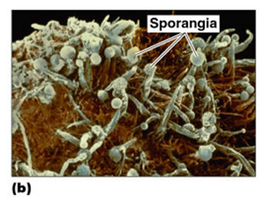
Protozoa
Protozoa are unicellular eukaryotes that absorb or ingest organic chemicals. They may be motile via pseudopods, cilia, or flagella. Protozoa can be free-living or parasitic and reproduce sexually or asexually. Some are photosynthetic.
Algae
Algae are eukaryotes with cellulose cell walls, found in aquatic and terrestrial environments. They use photosynthesis for energy, producing oxygen and carbohydrates. Most algae are unicellular, and only a few species cause human disease.
Viruses
Viruses are acellular entities consisting of a DNA or RNA core surrounded by a protein coat, sometimes enclosed in a lipid envelope. Viruses can only replicate inside living host cells.
Multicellular Animal Parasites
These are eukaryotic multicellular organisms, such as flatworms and roundworms (helminths), with some microscopic life stages. They are not strictly microorganisms but are studied in microbiology due to their parasitic nature.
History of Microbiology
Early Discoveries
1665: Robert Hooke observed cells in cork tissue.
1673: Antony van Leeuwenhoek observed microorganisms with microscopes.
1858: Rudolf Virchow proposed that cells arise from preexisting cells (cell theory).
Debate over Spontaneous Generation
Two hypotheses explained the origin of life:
Spontaneous generation: Life arises from nonliving matter.
Biogenesis: Life arises only from preexisting life.
Key experiments:
1668: Redi's meat jar experiment challenged spontaneous generation.
1745: Needham's broth experiment supported spontaneous generation.
1765: Spallanzani's improved broth experiment supported biogenesis.
1861: Pasteur's S-shaped flask experiment definitively disproved spontaneous generation, supporting biogenesis.
The Golden Age of Microbiology
Major Discoveries (1857–1914)
Pasteur demonstrated the role of microbes in fermentation and spoilage.
Pasteurization was developed to kill spoilage microbes in beverages.
Germ theory of disease established links between microbes and disease.
Koch's postulates provided a framework for identifying disease-causing microbes.
Vaccination and Immunity
1796: Jenner's cowpox vaccination protected against smallpox.
Pasteur expanded the concept of vaccination in the 1880s.
Chemotherapy and Antibiotics
Paul Ehrlich developed the first synthetic drug (salvarsan) for syphilis.
1930s: Sulfonamides were synthesized.
1928: Fleming discovered penicillin, the first antibiotic.
1940s: Penicillin was mass-produced.
Modern Developments in Microbiology
Subfields and Advances
Bacteriology: Study of bacteria.
Mycology: Study of fungi.
Parasitology: Study of protozoa and parasitic worms.
Virology: Study of viruses.
Immunology: Study of immunity.
Genomics: Study of organismal genes, enabling new classification and understanding of microbiomes.
Recombinant DNA technology: Combining DNA from different sources for biotechnology applications.
Microbes and the Environment
Recycling Vital Elements
Microbial ecology studies the interactions between microbes and their environment. Bacteria play key roles in cycling carbon, nitrogen, sulfur, phosphorus, and oxygen, making these elements available to plants and animals.
Sewage Treatment and Bioremediation
Microbes are used to treat sewage by breaking down organic matter and recycling water.
Bioremediation uses microbes to degrade or detoxify pollutants such as oil and heavy metals.
Insect Pest Control
Microbes like Bacillus thuringiensis are used as biological insecticides, producing toxins harmful to insects but safe for plants and animals.
Genetically modified crops may carry microbial genes for pest resistance.
Biotechnology and Genetic Engineering
Microbes are used to produce foods, chemicals, vaccines, and enzymes.
Gene therapy and genetically modified organisms (GMOs) are applications of recombinant DNA technology.
