 뒤로
뒤로Introduction to Microbiology: The Microbial World and You
스터디 가이드 - 스마트 노트
 자료에 맞춘 맞춤형 노트, 핵심 정의, 예시, 맥락을 확장해 제공합니다.
The Microbial World and You
Overview of Microbiology and Its Relevance to Human Health
Microbiology is the study of microbes, including their roles in infectious diseases, control, growth, genetics, identification, and interactions with host defenses and pathology. Understanding microbes is essential for grasping the causes, prevention, and treatment of diseases.
Microbes are organisms too small to be seen with the naked eye, including bacteria, viruses, fungi, protozoa, and algae.
Microbiology covers five main areas: infectious disease causation, microbial control, microbial growth/genetics/identification, host defenses, and pathology/transmission/avoidance of infection.
Impact of Infectious Diseases on Human Health
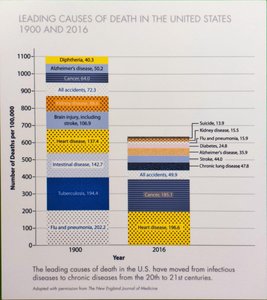
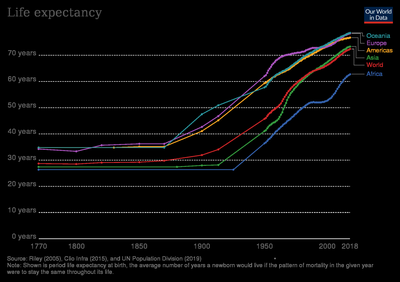
Infectious diseases have historically been a major cause of morbidity and mortality. Advances in technology and public health have significantly reduced their impact over the past century.
Life expectancy in the U.S. has increased by about 30 years in the past 100 years.
Death rates have decreased by nearly 50% due to improved control of infectious diseases.
Infectious diseases have moved from the top 3 causes of death to the 9th in the U.S.
Historical Developments in Infectious Disease Control
Several key historical developments have greatly impacted infection control and public health.
Sanitation: Hygienic means of preventing contact with waste, including trash containment, sewage control, and vector control.
Hygiene: Practices that decrease disease spread, such as washing, drying, and heat treatment.
Antimicrobial Chemotherapeutics: Use of chemicals to control microbes within the body.
Immunization: Enhances immunity and decreases disease spread.
History of Microbiology
Early Concepts and Discoveries
The concept of contagion and the discovery of microorganisms laid the foundation for modern microbiology.
Contagion: The idea of "seeds of disease" (1500s).
1665: Robert Hooke observed "cells" using a simple microscope, leading to the Cell Theory.
1673-1723: Antoni van Leeuwenhoek observed living microorganisms (animalcules) through magnifying lenses.

Spontaneous Generation vs. Biogenesis
Early theories debated whether life could arise from nonliving matter (spontaneous generation) or only from preexisting life (biogenesis).
Spontaneous Generation: Proposed by Aristotle; lifeless substances could give rise to living organisms.
Biogenesis: Life must arise from preexisting life.
Francesco Redi's Maggot Experiment: Demonstrated that maggots arise from flies, not spontaneous generation.
Miasma Theory and Germ Theory of Disease
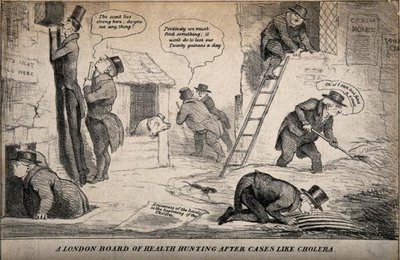
The miasma theory suggested diseases came from 'bad air' or decaying matter. The germ theory, developed later, established that microorganisms cause infectious diseases.
Miasma Theory: Germs thought to originate from decaying matter or bad air.
Germ Theory: Infectious diseases are caused by microorganisms.
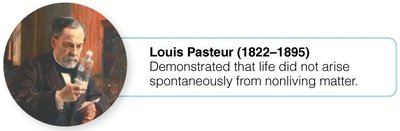
1861: Louis Pasteur showed microbes are present in air, liquids, and solids.
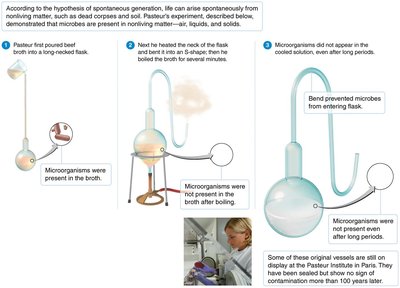
Pasteur's Experiments and Germ Theory
Pasteur's experiments with yeast and bacteria provided evidence for the germ theory of disease.
Yeast cells are necessary for fermentation (wine production).
Bacterial contamination causes souring of wine.
Koch's Postulates
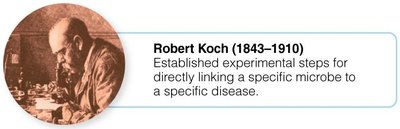
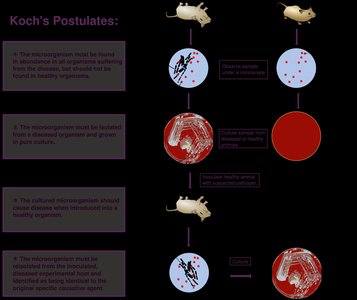
Robert Koch established experimental steps for directly linking a specific microbe to a specific disease, known as Koch's Postulates.
The microorganism must be present in every case of the disease and not in healthy animals.
The microorganism must be isolated and grown in pure culture.
The same disease must be produced when the microbe is introduced into a healthy host.
The same microorganism must be isolated from the newly infected host.
Immunization and Public Health
Immunization and hygiene have played crucial roles in controlling infectious diseases.
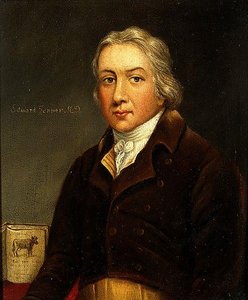
1796: Edward Jenner developed the smallpox vaccine.
Vaccination: Provides protection or immunity to a disease.
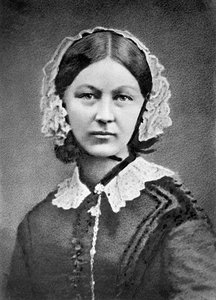
1850s: Florence Nightingale set hygiene standards in military hospitals, advocating for nursing education and hospital reform.
Fields and Types of Microbes
Fields of Study in Microbiology
Microbiology encompasses several specialized fields:
Bacteriology: Study of bacteria
Virology: Study of viruses
Mycology: Study of fungi
Parasitology: Study of parasites
Immunology: Study of immune responses
Pathology: Study of disease mechanisms
Epidemiology: Study of disease spread and control
Alternate Terms and Classification of Microbes
Microbes are also referred to as germs, pathogens, causative agents, or bugs. They are classified by size and type.
Groups by size (smallest to largest): Viruses, Bacteria, Eukaryotes (Fungi, Protozoa)









Microbes in the Environment
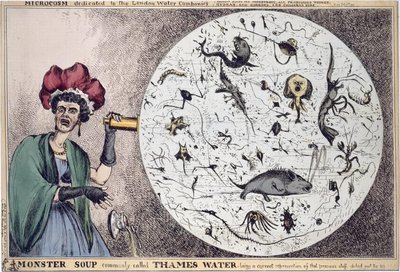
Microbes are ubiquitous in water, soil, air, and living organisms. Their presence in water was illustrated in the mid-19th century.
Size Range of Microbes
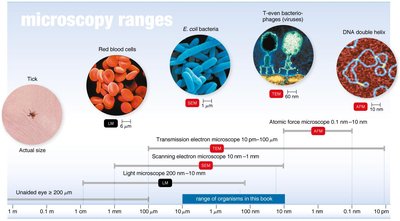
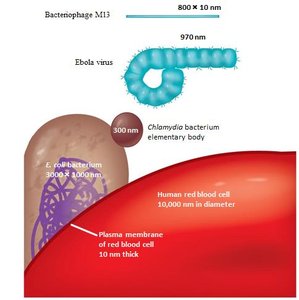
Microbes range from ultra-small (nanometers) to large (micrometers). This size range determines the type of microscopy required for observation.
Viruses: nanometer scale
Bacteria: micrometer scale
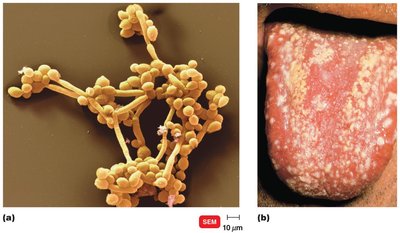
Fungi and protozoa: larger, visible under light microscopes
Cell Theory and Organization of Life
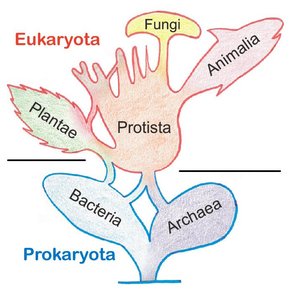
Cell Theory states that cells are the smallest unit of life. All living things are composed of cells, which can reproduce and metabolize.
Types of cellular organisms: Animals, Plants, Fungi, Protists, Bacteria
Organization: Atomic, Molecular, Organelle, Cellular, Tissues, Organs, Organ systems, Multi-system organisms



Acellular Microbes
Acellular microbes lack the ability to reproduce and metabolize independently. They are obligate intracellular parasites and are not considered living organisms.
Viruses: Largest acellular microbe; cause diseases in all cell types
Viroids: Nucleic acid fragments; mostly plant diseases
Prions: Protein molecules; cause central nervous system pathology (e.g., mad cow disease, Creutzfeldt-Jakob disease)
Infectious vs. Chronic Diseases
Comparison and Pathology
Diseases are classified as infectious (transmissible) or non-infectious (non-transmissible). Pathology refers to tissue inflammation and damage caused by microbes and immune responses.
Infectious Disease: Caused by transmissible microbes; can lead to chronic conditions
Non-infectious Disease: Not caused by microbes; includes organ failures, cardiovascular disease, cancer, diabetes, genetic diseases
Pathology terms are based on the tissue or organ affected (e.g., pneumonia, hepatitis, dermatitis, meningitis, gingivitis, arthritis)
Laboratory vs. Clinical Identification
Microbiologists identify causative agents in the lab, while clinicians diagnose diseases based on symptoms and pathology.
Causative Agent: The microbe responsible for the disease
Disease: The clinical manifestation resulting from infection
Additional info: These notes provide foundational concepts for understanding the microbial world, infectious disease mechanisms, and the historical context of microbiology. They are suitable for exam preparation and further study in college-level microbiology.
