 뒤로
뒤로Microbial Cell Structure and Function: Cell Surface Structures, Inclusions, Motility, and Eukaryotic Organelles
스터디 가이드 - 스마트 노트
 자료에 맞춘 맞춤형 노트, 핵심 정의, 예시, 맥락을 확장해 제공합니다.
Microbial Cell Structure and Function: Study Notes
2.6 Cell Surface Structures
Capsules and Slime Layers
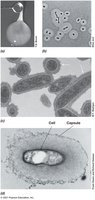
Capsules and slime layers are sticky polysaccharide coats outside the cell envelope, found in many bacteria. These structures play a crucial role in microbial survival and pathogenicity.
Capsule: A tightly attached, dense matrix, visible under special stains, that protects bacteria from phagocytosis and desiccation.
Slime Layer: A loosely attached, easily deformed layer, often washed away during sample preparation.
Capsules and slime layers assist in attachment to surfaces, contribute to infectivity, and prevent dehydration/desiccation.
Fimbriae and Pili
Fimbriae are short, hair-like appendages that mediate attachment to surfaces, while pili are longer, filamentous structures that can conduct electrons and facilitate motility.
2.7 Cell Inclusions
Energy Reserves and Storage Polymers
Cell inclusions are specialized structures that store energy and nutrients for microbial cells. These include:
Glycogen: A glucose polymer that stores energy for microbial cells.
Polyphosphate: A polymer of phosphate groups that stores energy for microbial cells.
Cell inclusions are enclosed by a thin protein membrane, which reduces osmotic stress and allows for efficient storage and utilization of energy.
2.8 Endospores
Endospore Formation and Germination
Endospores are specialized, dormant cells that are resistant to heat, radiation, and chemical exposure. They are formed by the differentiation of vegetative cells and are ideal for dispersal via wind, water, or animal gut.
Endospore: A highly differentiated, dormant cell that is resistant to heat, radiation, and chemical exposure.
Endospores are present only in some gram-positive bacteria, such as Bacillus and Clostridium.
2.9 Flagella, Archaella, and Swimming Motility
Flagella and Archaella
Flagella and archaella are specialized structures that assist in swimming motility. They are present in both bacteria and archaea, and are responsible for the movement of cells and the formation of biofilms.
Flagella: A long, thin appendage that assists in swimming motility.
Archaella: A short, thick appendage that assists in swimming motility.
Flagella and archaella are present in both bacteria and archaea, and are responsible for the movement of cells and the formation of biofilms.
2.10 Chemotaxis
Measuring Chemotaxis
Chemotaxis is the directed movement of cells in response to chemical or physical stimuli. It is measured by inserting a capillary tube containing an attractant or a repellent in a suspension of motile bacteria.
2.13 The Nucleus and Cell Division
Nucleus and Cell Division
The nucleus is the central organelle of the cell, containing the chromosomes and responsible for cell division. It is present in both bacteria and archaea.
2.14 Mitochondria and Chloroplasts
Mitochondria and Chloroplasts
Mitochondria and chloroplasts are specialized organelles that are responsible for energy metabolism and photosynthesis. They are present in both bacteria and archaea.
2.15 Other Eukaryotic Cell Structures
Other Eukaryotic Cell Structures
Other eukaryotic cell structures include the cytoskeleton, endoplasmic reticulum, Golgi complex, and lysosomes. These structures are responsible for maintaining cell shape and position, and for the synthesis of proteins and other molecules.
