 뒤로
뒤로Microbial Growth and Its Control: Temperature Effects and Adaptations
스터디 가이드 - 스마트 노트
 자료에 맞춘 맞춤형 노트, 핵심 정의, 예시, 맥락을 확장해 제공합니다.
Microbial Growth and Its Control
Temperature Effects on Microbial Growth
Temperature is a critical environmental factor influencing microbial growth. Each microorganism has a specific range of temperatures at which it can grow, with defined minimum, optimum, and maximum values known as cardinal temperatures.
Minimum temperature: The lowest temperature at which growth is possible; below this, cellular processes slow or stop due to membrane gelling.
Optimum temperature: The temperature at which growth rate is highest; enzymatic reactions occur at maximal rates.
Maximum temperature: The highest temperature at which growth is possible; above this, protein denaturation and membrane collapse occur, leading to cell death.
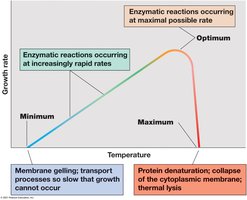
Example: At the optimum temperature, all or most cellular components function at their maximum rate, but this range is typically less than 40°C for a given species.
Temperature Classes of Microorganisms
Microorganisms are classified into four broad groups based on their temperature optima. These classes reflect adaptations to different environmental niches.
Psychrophiles: Grow optimally at ≤ 15°C, maximum < 20°C, minimum ≤ 0°C. Found in cold environments such as polar regions and glaciers.
Mesophiles: Grow optimally at midrange temperatures (20–45°C). Most commonly studied; includes many human-associated microbes.
Thermophiles: Grow optimally at 45–80°C. Found in hot environments like compost piles and hot springs.
Hyperthermophiles: Grow optimally above 80°C. Inhabit extremely hot environments such as deep-sea hydrothermal vents and boiling hot springs.
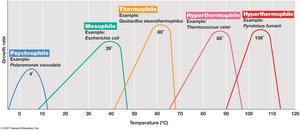
Example: Escherichia coli is a mesophile, while Pyrolobus fumarii is a hyperthermophile.
Microbial Life in the Cold
Extremophiles and Cold Environments
Extremophiles are organisms that thrive in extreme conditions, including very low temperatures. Much of Earth's surface, such as the oceans (average 5°C) and polar regions, is cold. These environments can be constantly or seasonally cold.
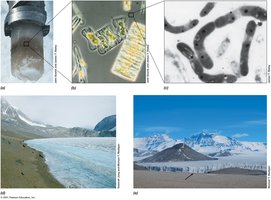
Psychrophilic and Psychrotolerant Microorganisms
Microorganisms adapted to cold environments are divided into two groups:
Psychrophiles: True cold-loving microbes with optimal growth at ≤ 15°C. Found in permanently cold habitats.
Psychrotolerant: Can grow at 0°C but have optima of 20–40°C. More widely distributed, found in soils, water, and refrigerated foods.
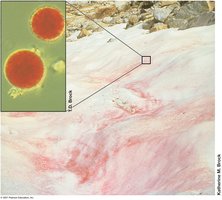
Example: Snow algae are psychrophiles that color snowfields red or green.
Molecular Adaptations to Life in the Cold
Cold-adapted microorganisms possess several molecular adaptations:
Enzymes with more α-helices than β-sheets, providing greater flexibility for catalysis at low temperatures.
Increased proportion of polar and fewer hydrophobic amino acids in proteins.
Fewer weak bonds (hydrogen and ionic bonds) in proteins, enhancing flexibility.
Cytoplasmic membranes with higher unsaturated and shorter-chain fatty acids, maintaining fluidity at low temperatures.
Some produce polyunsaturated fatty acids for membrane flexibility.
Production of cold shock proteins (chaperones) and cryoprotectants (e.g., antifreeze proteins) to prevent ice crystal formation.
Exopolysaccharide cell surface slime for additional protection.
Microbial Life at High Temperatures
Thermal Environments and Thermophiles
Thermophiles and hyperthermophiles are adapted to high-temperature environments:
Thermophiles: Optimum growth between 45°C and 80°C. Found in hot springs and compost heaps.
Hyperthermophiles: Optimum growth above 80°C, some up to 122°C. Inhabit boiling hot springs and deep-sea hydrothermal vents. Above 65°C, only prokaryotic life forms (Bacteria and Archaea) thrive.
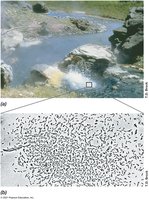
Example: Methanopyrus is the most thermophilic known organism, growing up to 122°C.
Protein and Membrane Stability at High Temperatures
High-temperature adaptation involves increased stability of proteins and membranes:
Enzymes and proteins have subtle amino acid substitutions that resist denaturation.
Increased ionic bonding and highly hydrophobic interiors in proteins.
Production of stabilizing solutes (e.g., di-inositol phosphate, diglycerol phosphate, mannosylglycerate).
Thermophilic and hyperthermophilic enzymes are valuable in biotechnology (e.g., Taq polymerase for PCR).
Bacterial membranes are rich in long-chain and saturated fatty acids, with fewer unsaturated fatty acids for heat stability.
Most hyperthermophilic Archaea have C40 hydrocarbons made of repeating isoprene units bonded by ethers to glycerol phosphate, forming a lipid monolayer rather than a bilayer.
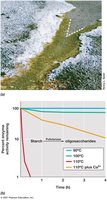
Example: The enzyme Taq polymerase, derived from thermophilic bacteria, is essential for the polymerase chain reaction (PCR) due to its heat stability.
Table: Presently Known Upper Temperature Limits for Growth of Living Organisms
Organism Type | Upper Temperature Limit (°C) |
|---|---|
Mesophiles | ~45 |
Thermophiles | ~80 |
Hyperthermophiles (Bacteria) | ~100 |
Hyperthermophiles (Archaea) | ~122 |
Additional info: Values inferred from context and literature. |
