 뒤로
뒤로Microbial Growth: Principles, Environmental Factors, and Laboratory Measurement CH4
스터디 가이드 - 스마트 노트
 자료에 맞춘 맞춤형 노트, 핵심 정의, 예시, 맥락을 확장해 제공합니다.
Principles of Microbial Growth
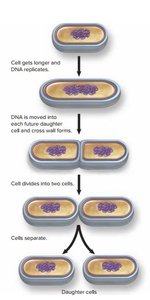
Binary Fission and Exponential Growth
Microbial growth refers to the increase in the number of cells in a population. Most prokaryotic cells divide by binary fission, a process in which one cell splits into two, and this doubling continues exponentially. The generation time is the period required for a population to double, and it varies by species and environmental conditions.
Binary fission: Cell elongates, DNA replicates, cross wall forms, and cells separate.
Exponential growth: Population doubles with each division.
Growth calculation formula:
Example: If 10 cells with a 20-minute generation time undergo 12 generations, cells.
Microbial Growth in Nature
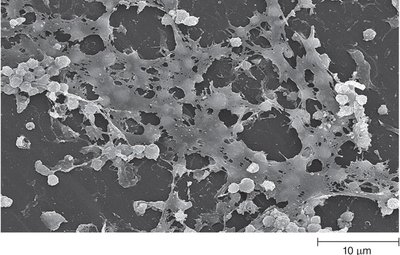
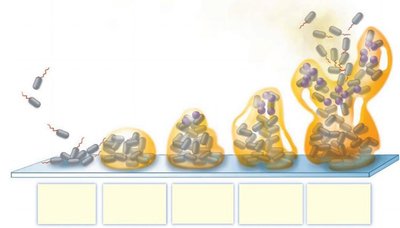
Microorganisms often grow in complex, changing environments, forming communities called biofilms. These are polymer-encased groups of cells attached to surfaces, such as rocks, drains, or teeth.
Biofilms: Cells adhere, multiply, release polymers (EPS), and form channels for nutrient/waste exchange.
Implications: Biofilms are resistant to antibiotics and immune responses, causing persistent infections and industrial issues, but are also useful in bioremediation.
Interactions in Mixed Microbial Communities
Microbes interact cooperatively or competitively. Cooperative interactions can allow survival in otherwise hostile environments, while competitive interactions may involve the production of toxins to inhibit rivals.
Cooperative: Anaerobes survive if others consume O2.
Competitive: Some bacteria inject toxins into competitors using type VI secretion systems.
Microbial Growth in Laboratory Conditions
Pure Culture Techniques
A pure culture is derived from a single cell and allows the study of one species. Obtaining a pure culture requires aseptic technique and a suitable culture medium.
Agar: Used to solidify media; not degraded by most microbes, solidifies below 45°C.
Petri dish: Allows air exchange but prevents contamination.
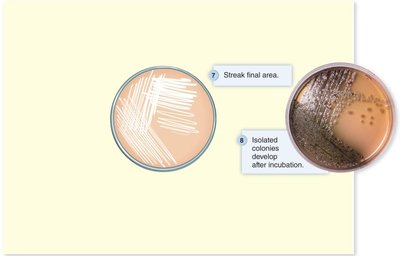
Streak-plate method: Simplest method for isolating pure cultures by reducing cell numbers with each streak.
Maintaining Stock Cultures
Stock cultures are maintained for long-term use, often as agar slants in refrigerators, frozen with glycerol, or freeze-dried.
The Growth Curve
Phases of Growth in a Closed System
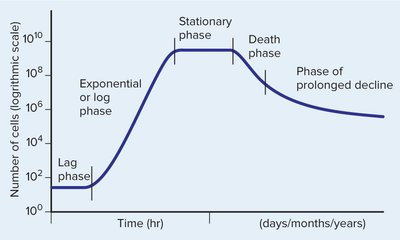
Microbial populations in closed systems (batch cultures) exhibit a characteristic growth curve with distinct phases:
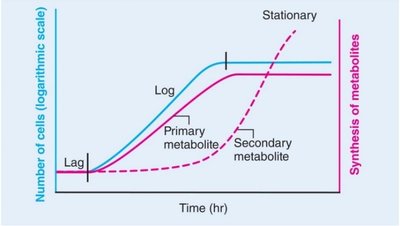
Lag phase: Cells prepare for growth, synthesizing enzymes.
Exponential (log) phase: Cells divide rapidly; primary metabolites produced.
Stationary phase: Nutrients depleted, cell numbers stabilize, secondary metabolites produced.
Death phase: Cells die at a constant rate.
Prolonged decline: Some cells adapt and survive.
Colony Growth on Solid Media
Cells at the edge of a colony have better access to nutrients and oxygen, while those in the center experience depletion and may enter the death phase.
Continuous Culture
In an open system (chemostat), nutrients are continuously supplied and wastes removed, allowing for constant cell density and growth rate. This is useful for studying microbial responses and harvesting products.
Environmental Factors Influencing Microbial Growth
Temperature
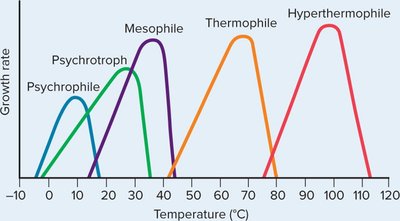
Microorganisms are classified by their optimal growth temperatures:
Psychrophiles: -5°C to 15°C (Arctic/Antarctic)
Psychrotrophs: 15°C to 30°C (food spoilage)
Mesophiles: 25°C to 45°C (human pathogens: 35°C–40°C)
Thermophiles: 45°C to 70°C (hot springs, compost)
Hyperthermophiles: ≥70°C (hydrothermal vents, archaea)
Oxygen Requirements
Microbes differ in their need and tolerance for oxygen:
Obligate aerobe: Requires O2 for respiration.
Facultative anaerobe: Grows best with O2, but can grow without.
Obligate anaerobe: Cannot grow in presence of O2.
Microaerophile: Requires low O2 concentrations.
Aerotolerant anaerobe: Indifferent to O2; obligate fermenter.
Protective enzymes against reactive oxygen species (ROS) include superoxide dismutase and catalase.
pH
Microbes are classified by their pH preferences:
Neutrophiles: pH 5–8 (most bacteria)
Acidophiles: pH < 5.5
Alkaliphiles: pH > 8.5
Most maintain a near-neutral internal pH by pumping protons in or out.
Water Availability
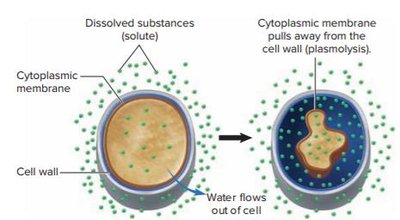
All microbes require water. High solute concentrations can cause water to leave the cell (osmosis), leading to plasmolysis. Some microbes tolerate or require high salt:
Halotolerant: Can grow in up to 10% NaCl.
Halophile: Requires high salt (marine bacteria, extreme halophiles).
Nutritional Factors Influencing Microbial Growth
Major and Trace Elements
Microbes require various elements for cell synthesis:
Major elements: C, O, H, N, S, P, K, Mg, Ca, Fe
Trace elements: Co, Zn, Cu, Mo, Mn
Carbon and Energy Sources
Microbes are classified by their carbon and energy sources:
Heterotrophs: Use organic carbon.
Autotrophs: Use CO2 (carbon fixation).
Phototrophs: Obtain energy from sunlight.
Chemotrophs: Extract energy from chemicals (organic or inorganic).
Type | Energy Source | Carbon Source |
|---|---|---|
Photoautotroph | Sunlight | CO2 |
Photoheterotroph | Sunlight | Organic compounds |
Chemolithoautotroph | Inorganic chemicals | CO2 |
Chemoorganoheterotroph | Organic compounds | Organic compounds |
Growth Factors
Some microbes require growth factors (organic molecules they cannot synthesize) in their environment. Fastidious organisms have extensive growth factor requirements.
Culture Media Types
Complex vs. Chemically Defined Media
Complex media contain a variety of ingredients with variable composition, supporting a wide range of microbes. Chemically defined media have exact amounts of pure chemicals, useful for studying nutritional requirements.
Selective and Differential Media
Selective media inhibit growth of certain species, allowing others to grow. Differential media contain substances that cause microbes to change in identifiable ways.
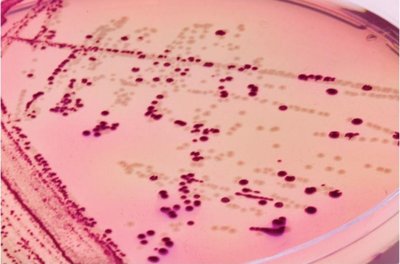
MacConkey agar: Selective for Gram-negative rods; differential for lactose fermentation.
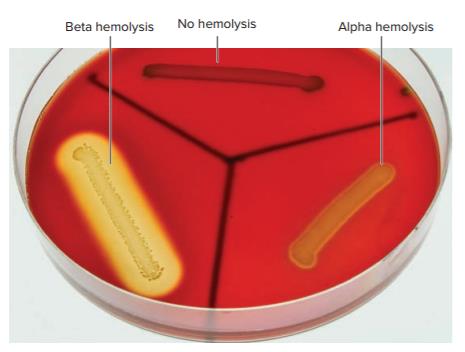
Blood agar: Differential for hemolysis (beta, alpha, none).
Providing Appropriate Atmospheric Conditions
Aerobic, Anaerobic, and Microaerophilic Conditions
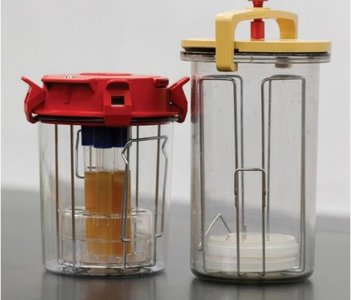
Different microbes require specific atmospheric conditions for growth. Aerobic conditions are provided by air incubation; anaerobic conditions require special containers or chambers; microaerophilic conditions are achieved by reducing O2 concentration.

Enrichment Cultures
Isolation of Specific Microbes
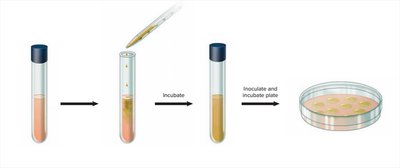
Enrichment cultures provide conditions that favor the growth of a particular species, increasing its concentration relative to others in a mixed sample.
Methods to Detect and Measure Microbial Growth
Direct Cell Counts
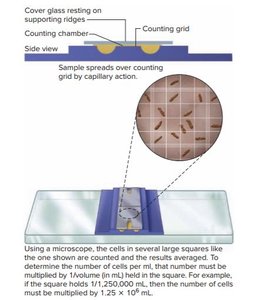
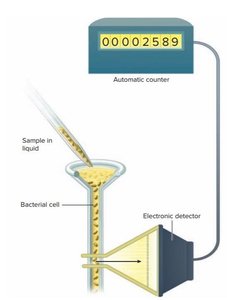
Direct cell counts determine total cell numbers (living and dead) using microscopic methods or cell-counting instruments.
Viable Cell Counts
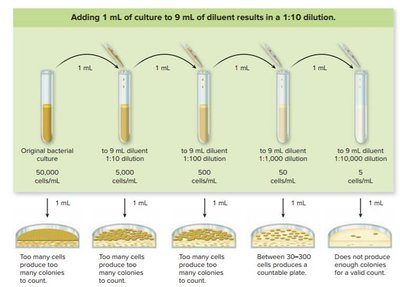
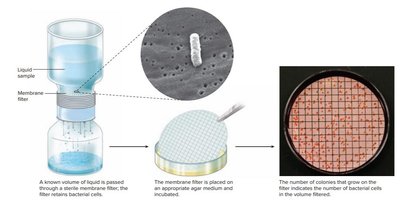
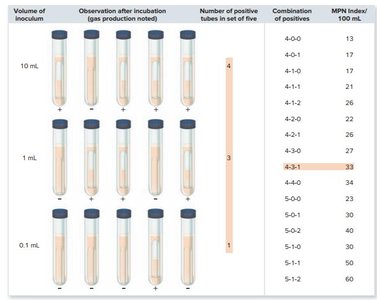
Viable cell counts measure cells capable of multiplying, using plate counts, membrane filtration, or the most probable number (MPN) method.
Measuring Biomass
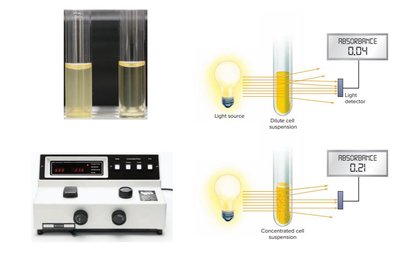
Biomass can be measured by turbidity (optical density) using a spectrophotometer, or by total weight (dry or wet).
Detecting Cell Products
Cell products such as acids or gases can be detected using pH indicators or Durham tubes, providing indirect evidence of microbial growth.
Summary Table: Methods to Measure Microbial Growth
Method | Characteristics and Limitations |
|---|---|
Direct Cell Counts | Counts total cells (living and dead); rapid but requires high cell concentration. |
Viable Cell Counts | Counts only cells capable of growth; requires incubation; selective/differential media can be used. |
Measuring Biomass | Correlates cell mass to cell number; rapid (turbidity) or tedious (total weight). |
Detecting Cell Products | Detects growth via metabolic products; not routinely quantitative. |
