 뒤로
뒤로Microbiology for Majors: Foundations and Applications
스터디 가이드 - 스마트 노트
 자료에 맞춘 맞춤형 노트, 핵심 정의, 예시, 맥락을 확장해 제공합니다.
Introduction to Microbiology for Majors
Course Overview and Re Relevance
This course, Microbiology for Majors (BIO 3054), is a foundational requirement for biology, biomedical science, and medical laboratory science majors. It is also important for students pursuing pre-medical, pre-dental, pre-pharmacy, and pre-physician assistant tracks. The course covers essential topics in microbiology, including microbial diversity, cell structure, metabolism, microbial growth, and the impact of microorganisms on human society.
The Microbial World: The Microbial World and Its Importance
Definition and Scope of Microbiology
Microbiology is the study of microscopic organisms, including bacteria, archaea, fungi, protozoa, and viruses.
Microorganisms are life forms too small to be seen by the naked eye and are found in every environment that supports life.
Microbes are highly diverse in form and function, with many being single-celled, while others form complex multicellular structures.
Microbes live in communities and interact with their environment and other organisms.
Importance of Microbiology
Microorganisms are the oldest form of life and constitute a major fraction of Earth's biomass.
They play critical roles in infectious diseases, agriculture, food and water safety, soil health, animal health, and fuel production.
Microbes have significant impacts on human society, including both beneficial and harmful effects.
Examples of Microbial Impact
Pathogens: Microbes can cause diseases such as COVID-19, influenza, measles, and food poisoning.
Environmental: Microbes are involved in nutrient cycling, bioremediation, and biofuel production.
Applied Microbiology: Microbes are used in biotechnology, industrial microbiology, and food production.
Microbial Diversity and Classification
Microbes are classified into three domains: Bacteria, Archaea, and Eukarya.
Bacteria and Archaea are prokaryotes, while Eukarya includes plants, animals, fungi, and protists.
Viruses are obligate parasites that require a host cell to replicate.
Structure and Function of Microbial Cells
Prokaryotic vs. Eukaryotic Cells
Prokaryotes (Bacteria and Archaea) lack a membrane-bound nucleus and organelles.
Eukaryotes (plants, animals, fungi, algae, protozoa) have a nucleus and membrane-bound organelles.
All cells have a cytoplasmic membrane, cytoplasm, ribosomes, and genetic material.
Some cells have a cell wall, which provides structural support.
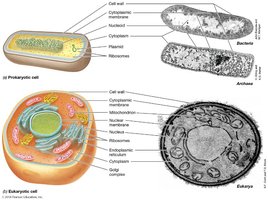
Cell Size and Morphology
Prokaryotic cells range from 0.2 to 600+ µm in diameter; eukaryotic cells are typically 5 to 100 µm long.
Cell shape varies: cocci (spherical), bacilli (rod-shaped), spirilla (spiral), spirochetes (flexible spiral), and more.
Cell size affects metabolism, with smaller cells having a higher surface-to-volume ratio, which supports more efficient nutrient and waste exchange.
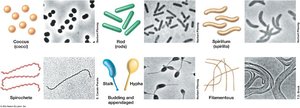
Cellular Activities
Metabolism: Chemical transformation of nutrients
Enzyme activity: Protein catalysts for metabolic reactions
Genetic information flow: DNA → RNA → Protein
Motility: Many cells can move by self-propulsion
Differentiation: Some microbes form specialized cell types
Communication: Cells can interact via chemical signals
Evolution: Genetic changes are passed to offspring
Microbial Diversity and Evolution
Three Domains of Life
Bacteria: Prokaryotes, usually undifferentiated single cells, with 80+ phylogenetic lineages
Archaea: Prokaryotes, historically associated with extreme environments, with 12+ lineages
Eukarya: Includes plants, animals, fungi, and protists, with great diversity in size, shape, and physiology
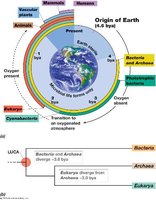
LUCA and Evolution
LUCA: Last Universal Common Ancestor, from which all life descended
Life on Earth began ~3.8–4.3 billion years ago
Atmosphere was originally anoxic; oxygenic photosynthesis evolved later
Microorganisms and the Biosphere
Microbial Habitats
Microbes inhabit a vast range of environments, including extreme ones (hot springs, glaciers, high salt, high acidity/alkalinity, high pressure)
Microbial communities are found in soil, water, air, and within other organisms, including humans
Microbes play key roles in nutrient cycling, decomposition, and other ecological processes
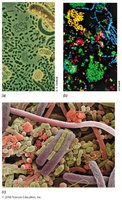
Impact of Microorganisms on Human Society
Microorganisms as Disease Agents
Microbes can cause infectious diseases in humans, animals, and plants
Examples include COVID-19, influenza, measles, MRSA, and food poisoning
Microbes can also be beneficial, e.g. in the production of antibiotics, vaccines, and fermented foods
Microorganisms in Agriculture and Food Production
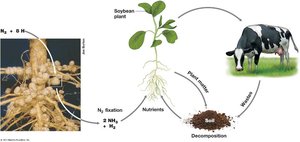
Microbes are involved in nitrogen fixation, decomposition, and nutrient cycling in soils
They are also important in the production of fermented foods (e.g., cheese, yogurt, sauerkraut, kimchi, pickles, beer)
Microbial contamination can cause food spoilage and foodborne diseases
Microorganisms in Industry and Biotechnology
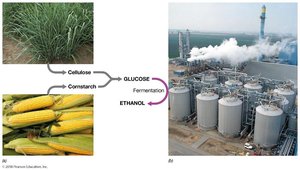
Microbes are used in the production of biofuels (e.g., ethanol from corn), antibiotics, enzymes, and other valuable products
They are also used in bioremediation to clean up pollutants
Microorganisms and Human Health
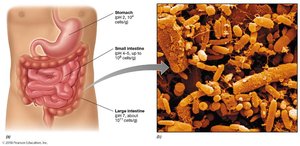
Microbes are part of the normal human microbiome, where they help digest food and synthesize vitamins
They can also cause diseases, but many are beneficial or harmless
Tables and Diagrams
Comparison of Prokaryotic and Eukaryotic Cells
Feature | Prokaryotic Cells | Eukaryotic Cells |
|---|---|---|
Nucleus | Absent | Present |
Organelles | Absent | Present |
Cell Wall | Usually present | Present in plants, fungi; absent in animals |
Size | 0.2–600+ µm | 5–100 µm |
Examples | Bacteria, Archaea | Plants, animals, fungi, protozoa |
Major Morphologies of Prokaryotic Cells
Shape | Description |
|---|---|
Coccus | Spherical |
Bacillus | Rod-shaped |
Spirillum | Spiral |
Spirochete | Flexible spiral |
Vibrio | Comma-shaped |
Key Equations
Surface Area and Volume of a Sphere (Cell Size)
Surface Area:
Volume:
Surface-to-volume ratio:
Microbiology in the News
Pandemics: COVID-19
Epidemics: Influenza, flu
Endemic: RSV
Outbreaks: Measles
Antibiotic resistance: MRSA, MDTB
Food and water contamination: Listeria, Cyclospora
Bioterrorism, vaccines, probiotics, cancer, animal infections, environmental microbiology
Review Questions
List the 4 types of “organisms” that are studied in microbiology and give an example of each.
Besides the pathogen, what are the other 2 categories that affect whether a pathogen may cause disease? Explain how they can affect how/if a pathogen can cause disease.
Name something in the news about microbiology.
What are other subfields in microbiology besides disease?
Looking ahead- what’s one way of studying bacteria?
Additional Academic Context
Microbiology is a required course for many health and biology-related majors.
Microbiology is not required for the new Ecology/Evolution major.
Microbiology is a prerequisite for some advanced biology courses (e.g., path microbiology, immunology, virology).
