 뒤로
뒤로Pathogenic Fungi: Medical Mycology and Fungal Diseases
스터디 가이드 - 스마트 노트
 자료에 맞춘 맞춤형 노트, 핵심 정의, 예시, 맥락을 확장해 제공합니다.
An Overview of Medical Mycology
Introduction to Medical Mycology
Medical mycology is the study of fungi that cause diseases in humans, known as mycoses. These diseases are challenging to diagnose and treat due to their subtle symptoms and the biochemical similarities between fungi and human cells.
Mycoses are often missed or misinterpreted in clinical settings.
Fungi are frequently resistant to standard antimicrobial agents.
Epidemiology of Mycoses
Fungi and their spores are ubiquitous in the environment, making exposure common. Most mycoses are acquired through inhalation, trauma, or ingestion, but are rarely spread from person to person. Dermatophytes are a notable exception, as they can be contagious.
Most mycoses are not reportable, so epidemiological data are often incomplete.
Epidemics can occur due to mass exposure to environmental sources.
Categories of Fungal Agents
Fungal pathogens are classified as either true pathogens or opportunistic fungi. Only four fungi are considered true pathogens, while the rest are opportunists that cause disease primarily in immunocompromised individuals.
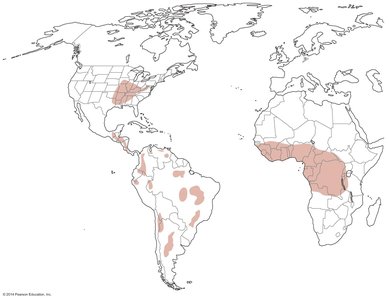
True pathogens are endemic mainly in the Americas.
Opportunistic fungi are distributed worldwide.
Predisposing Factor | Examples |
|---|---|
Medical procedures | Surgery, implants, catheterization |
Medical therapies | Immunosuppressive therapy, cancer treatments, steroids, long-term antibiotics |
Disease conditions | Immune defects, leukemia, AIDS, diabetes, burns, chronic illnesses |
Lifestyle factors | Malnutrition, poor hygiene, IV drug abuse |
Clinical Manifestations of Fungal Diseases
Fungal diseases manifest in three main ways:
Fungal infections: Caused by the presence of true pathogens or opportunists.
Fungal toxicoses: Result from ingestion of poisonous mushrooms or mycotoxins.
Allergies: Usually due to inhalation of fungal spores.
Antifungal Therapies
Treatment of mycoses is difficult due to the similarity between fungal and human cells. Ergosterol, a component of fungal cell membranes, is a common drug target. However, antifungal drugs can also harm human tissues.
Amphotericin B is the gold standard but is highly toxic.
Less toxic alternatives include ketoconazole, itraconazole, and fluconazole.
Other drugs: Griseofulvin (inhibits mitosis), 5-Fluorocytosine (nucleoside analog), echinocandins (inhibit cell wall synthesis).
Opportunistic infections often require high-dose initial therapy followed by maintenance therapy.
Antifungal Vaccines
Development of antifungal vaccines is challenging due to the rarity of severe fungal infections and the high cost of vaccine production. Some experimental vaccines protect mice, but efficacy in humans is unknown.
Systemic Mycoses Caused by True Pathogenic Fungi
General Features
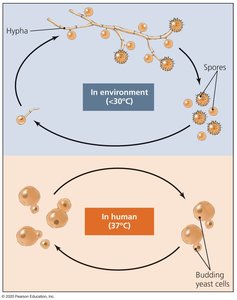
Systemic mycoses are infections that spread throughout the body, typically beginning as pulmonary infections after inhalation of spores. The four main pathogenic fungi are Histoplasma, Blastomyces, Coccidioides, and Paracoccidioides. All are dimorphic, growing as mycelia in the environment and as yeasts in the human body.
Histoplasmosis
Histoplasma capsulatum is the most common fungal pathogen in humans, found in moist soils with high nitrogen content. Infection occurs mainly through inhalation of spores, which are then phagocytized by macrophages and can disseminate via blood and lymph.
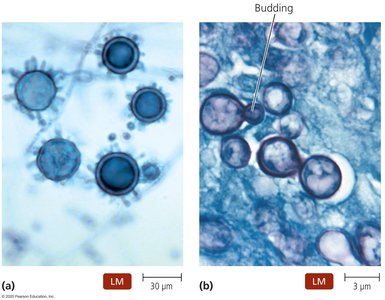
Most infections are asymptomatic and self-resolving.
Clinical forms: chronic pulmonary, chronic cutaneous, systemic, and ocular histoplasmosis.
Diagnosis: Identification of yeast in patient samples.
Treatment: Amphotericin B or ketoconazole if needed.
Blastomycosis
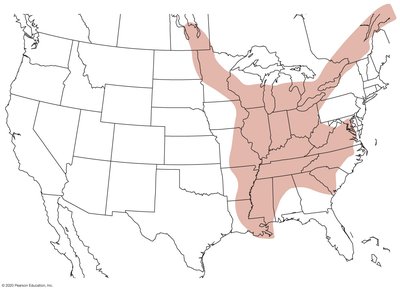
Blastomyces dermatitidis is endemic in the southeastern U.S. and Canada, found in soils rich in organic matter. Pulmonary blastomycosis is the most common form, often asymptomatic or with nonspecific symptoms. The disease can become chronic or disseminate to skin, bones, or the CNS.
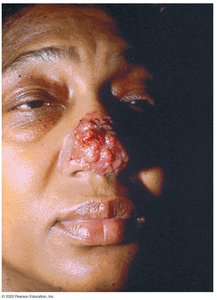
Diagnosis: Identification of fungi in culture or samples.
Treatment: Oral itraconazole or amphotericin B; relapse is common in AIDS patients.
Coccidioidomycosis
Coccidioides immitis is found in the southwestern U.S. and northern Mexico, especially in desert soils. Infection occurs via inhalation of arthroconidia, which germinate into spherules in the lungs and release spores.
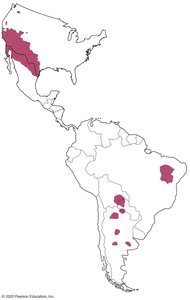
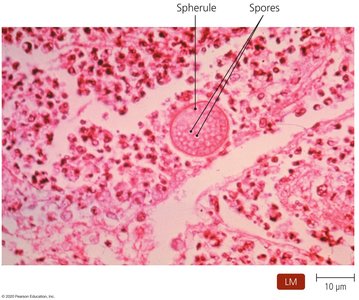
Most cases are pulmonary and self-limited; severe cases occur in immunocompromised individuals.
Diagnosis: Spherules in samples or positive skin test.
Treatment: Amphotericin B; maintenance therapy for AIDS patients.
Paracoccidioidomycosis
Paracoccidioides brasiliensis is found in southern Mexico and South America, mainly affecting farm workers. The infection starts in the lungs and can spread, forming characteristic "steering wheel" yeast formations.
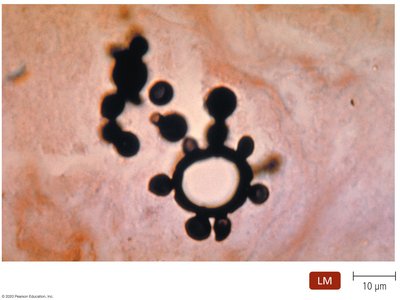
Treatment: Itraconazole, ketoconazole, or amphotericin B.
Systemic Mycoses Caused by Opportunistic Fungi
General Features
Opportunistic mycoses primarily affect immunocompromised individuals or those with disrupted microbiomes. These infections are increasingly important due to the rise in AIDS and other immunosuppressive conditions.
Candidiasis
Candida albicans is the most common cause of candidiasis, which can affect the mouth, skin, nails, vagina, and internal organs. It is part of the normal microbiota but can cause disease when host defenses are compromised.
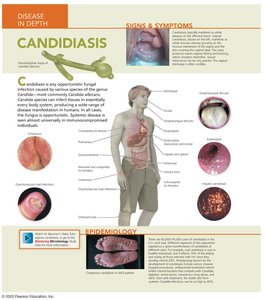
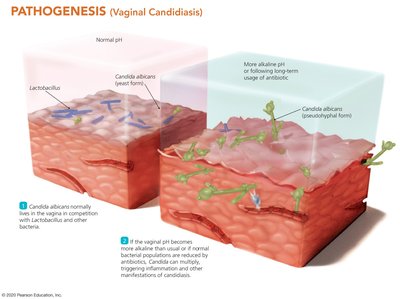
Transmission can occur between individuals.
Clinical manifestations include thrush, diaper rash, onychomycosis, vulvovaginal candidiasis, and systemic infections.
Type | Clinical Signs and Symptoms | Predisposing Factors |
|---|---|---|
Oropharyngeal (thrush) | White plaques in mouth | Diabetes, AIDS, cancer therapy |
Cutaneous | Red rash in skin folds, diaper rash, onychomycosis | Moisture, heat, immunocompromised |
Vulvovaginal | Creamy discharge, burning, redness | Antibiotics, pregnancy, diabetes |
Chronic mucocutaneous | Lesions on skin, nails, mucosa | Impaired immunity |
Neonatal/congenital | Meningitis, rash | Low birth weight, maternal antibiotics |
Esophageal | Pain, nausea, vomiting | AIDS, immunocompromised |
Gastrointestinal | Ulceration | Hematological cancers |
Pulmonary | Nonspecific symptoms | Spread from other candidiasis |
Aspergillosis
Caused by Aspergillus species, aspergillosis is acquired by inhaling spores. It most commonly causes allergies but can also lead to pulmonary diseases, aspergillomas, and invasive infections.
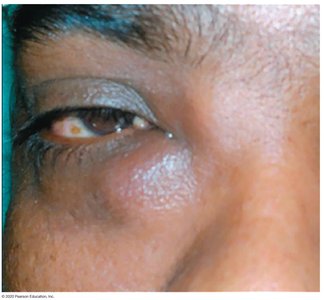
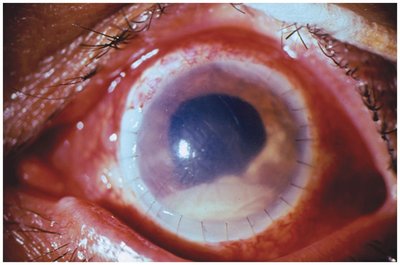
Three main pulmonary forms: hypersensitivity, noninvasive aspergillomas, and acute invasive aspergillosis.
Pneumocystis Pneumonia
Pneumocystis jiroveci is an obligate parasite, causing pneumonia primarily in AIDS patients. Most people are exposed in childhood, but disease occurs mainly in immunocompromised hosts.
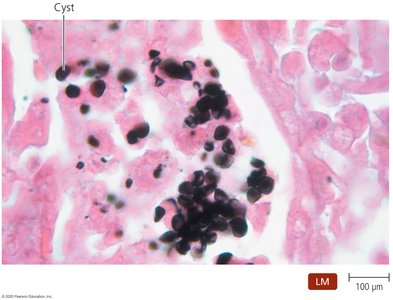
Diagnosis: Clinical and microscopic findings.
Treatment: Trimethoprim and sulfamethoxazole.
Cryptococcosis
Cryptococcus neoformans causes cryptococcosis, acquired by inhaling spores or dried yeast in bird droppings. It can resist phagocytosis and has a predilection for the CNS, causing meningitis, cryptococcomas, and cutaneous lesions.
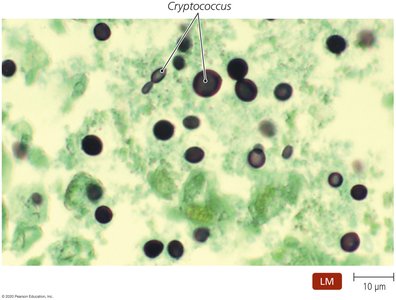
Two varieties: C. neoformans gattii (immunocompetent) and C. neoformans neoformans (AIDS patients).
Superficial, Cutaneous, and Subcutaneous Mycoses
General Features
These are the most common fungal diseases, usually localized to the skin, nails, or hair. They are acquired by direct contact and are not life-threatening but can be chronic or recurrent.
Superficial Mycoses: Dermatophytoses
Dermatophytoses are infections of the skin, nails, or hair caused by dermatophytes, which use keratin as a nutrient source. They can trigger immune responses and are spread by contact with infected individuals, soil, or animals.
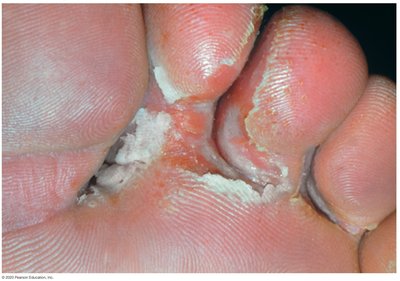
Diagnosis: Identification of hyphae or arthroconidia in samples.
Treatment: Topical or oral antifungals; griseofulvin for chronic cases.
Disease | Agents | Common Signs | Source |
|---|---|---|---|
Tinea pedis (athlete’s foot) | Trichophyton rubrum, T. mentagrophytes, Epidermophyton floccosum | Red, raised lesions on toes/soles | Human reservoirs, carpeting |
Tinea cruris (jock itch) | T. rubrum, T. mentagrophytes, E. floccosum | Red lesions on groin/buttocks | Spreads from feet |
Tinea unguium (onychomycosis) | T. rubrum, T. mentagrophytes | Patches/pits on nails, thickening | Humans |
Tinea corporis | T. rubrum, Microsporum gypseum, M. canis | Ringlike lesions on skin | Other body sites, soil, animals |
Tinea capitis | M. canis, M. gypseum, T. equinum, etc. | Arthroconidia on/in hair shafts | Humans, soil, animals |
Fungal Intoxications and Allergies
Mycotoxicoses and Mycetismus
Some fungi produce mycotoxins that cause toxicosis when ingested. Mycotoxicosis results from eating contaminated food, while mycetismus is mushroom poisoning. Aflatoxins are notable mycotoxins, being carcinogenic and hepatotoxic.
Mushroom poisoning can cause neurological dysfunction, organ damage, or death.
The "death cap" mushroom (Amanita phalloides) produces deadly toxins that inhibit mRNA synthesis and cause liver damage.

Fungal Allergies
Fungal allergens are common and can cause type I hypersensitivity reactions, resulting in asthma, eczema, and hay fever. Type III hypersensitivity reactions are less frequent.
