Ch. 10 - Controlling Microbial Growth in the Body: Antimicrobial Drugs
Bauman - Microbiology with Diseases by Taxonomy 6th Edition
Bauman6th EditionMicrobiology with Diseases by TaxonomyISBN: 9780134832302당신이 사용하는 게 아니라요?교과서 변경
10장, 문제 4

Given that both human cells and pathogens synthesize proteins at ribosomal sites, how can antimicrobial agents that target this process be safe to use in humans?

검증된 단계별 안내
1
Understand that both human cells and many pathogens synthesize proteins using ribosomes, but the structure and composition of ribosomes differ between prokaryotic pathogens (like bacteria) and eukaryotic human cells.
Recognize that antimicrobial agents targeting protein synthesis are designed to specifically bind to bacterial ribosomes (70S ribosomes, composed of 50S and 30S subunits) without affecting human ribosomes (80S ribosomes, composed of 60S and 40S subunits).
Identify that this selective binding is possible because of differences in ribosomal RNA sequences and protein components between bacterial and human ribosomes, allowing drugs to inhibit bacterial protein synthesis selectively.
Consider that some antimicrobial agents may also target unique steps or factors involved in bacterial translation that are absent or significantly different in human cells, further increasing specificity and safety.
Conclude that the safety of these antimicrobial agents in humans arises from their ability to discriminate between pathogen and human ribosomes, thereby inhibiting protein synthesis in pathogens while sparing human cells.

비슷한 문제에 대한 검증된 영상 답변:

이 영상 해법은 위 문제에 도움이 된다고 튜터들이 추천한 것입니다.
영상 길이:
2m
도움이 되었나요?

주요 개념

질문에 올바르게 답하기 위해 반드시 이해해야 하는 핵심 개념들은 다음과 같습니다.

Differences Between Prokaryotic and Eukaryotic Ribosomes

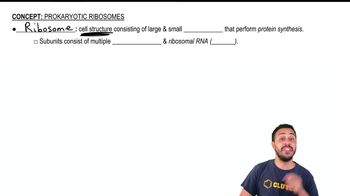
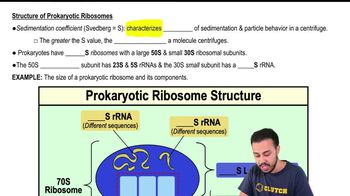
Human cells have 80S ribosomes (60S and 40S subunits), while many pathogens, like bacteria, have 70S ribosomes (50S and 30S subunits). Antimicrobial agents target the structural and functional differences in bacterial ribosomes, allowing selective inhibition of protein synthesis in pathogens without affecting human ribosomes.
추천 영상:
01:51
Prokaryotic Ribosomes

Mechanism of Action of Ribosome-Targeting Antibiotics

Antibiotics such as tetracyclines, aminoglycosides, and macrolides bind specifically to bacterial ribosomal subunits, blocking critical steps in protein synthesis like initiation, elongation, or translocation. This selective binding disrupts bacterial growth while sparing human cells due to ribosomal differences.
추천 영상:
08:39
Structure of Prokaryotic Ribosomes

Selective Toxicity in Antimicrobial Therapy

Selective toxicity refers to the ability of a drug to target microbial cells without harming host cells. By exploiting unique features of microbial ribosomes, antimicrobial agents achieve this selectivity, making them safe for human use despite targeting a process also present in human cells.
추천 영상:
03:27
Selective Media
관련 실천
교과서 질문

What specific test for antimicrobial efficacy is shown? What does this test measure? Draw an oval to predict the size and shape of the zone of inhibition if the drug concentration on the strip were increased twofold.

<IMAGE>

747
views

교과서 질문

Which of the following statements is relevant in explaining why sulfonamides are effective?

a. Sulfonamides attach to sterol lipids in the pathogen, disrupt the membranes, and lyse the cells.

b. Sulfonamides prevent the incorporation of amino acids into polypeptide chains.

c. Humans and microbes use PABA differently in their metabolism.

d. Sulfonamides inhibit DNA replication in both pathogens and human cells.

712
views
교과서 질문

Support or refute the following statement: Antimicrobial agents make cells become resistant.

720
views
교과서 질문

Why is the fact that drug Z destroys the NAM portions of a cell’s wall structure an important factor in considering the drug for chemotherapy?

708
views
교과서 질문

Cross resistance is __________ .

a. The deactivation of an antimicrobial agent by a bacterial enzyme

b. Alteration of the resistant cells so that an antimicrobial agent cannot attach

c. The mutation of genes that affect the cytoplasmic membrane channels so that antimicrobial agents cannot cross into the cell’s interior

d. Resistance to one antimicrobial agent because of its similarity to another antimicrobial agent

759
views
교과서 질문

The key to successful chemotherapy is __________ .

a. Selective toxicity

b. A diffusion test

c. The minimum inhibitory concentration test

d. The spectrum of action

861
views