Ch. 12 - Characterizing and Classifying Eukaryotes
Bauman - Microbiology with Diseases by Taxonomy 6th Edition
Bauman6th EditionMicrobiology with Diseases by TaxonomyISBN: 9780134832302당신이 사용하는 게 아니라요?교과서 변경
12장, 문제 4

Multiple nuclear divisions without cytoplasmic divisions result in cells called _________.
a. Mycoses
b. Coenocytes
c. Haustoria
d. A pseudohypha

검증된 단계별 안내
1
Understand the key terms in the question: 'multiple nuclear divisions without cytoplasmic divisions' means the nucleus divides several times but the cell's cytoplasm does not split, resulting in a multinucleate cell.
Recall that in microbiology, when a cell undergoes nuclear division multiple times without cytokinesis (cytoplasmic division), the resulting structure is called a coenocyte.
Review the options given: a) mycoses are fungal infections, b) coenocytes are multinucleate cells formed by multiple nuclear divisions without cytoplasmic division, c) haustoria are specialized fungal structures for nutrient absorption, and d) pseudohyphae are chains of elongated yeast cells.
Match the definition from the question to the correct term: since the question describes multinucleate cells formed by nuclear division without cytoplasmic division, the correct term is 'coenocytes'.
Conclude that the answer is option b, coenocytes, based on the definition and elimination of other options.

비슷한 문제에 대한 검증된 영상 답변:

이 영상 해법은 위 문제에 도움이 된다고 튜터들이 추천한 것입니다.
영상 길이:
1m
도움이 되었나요?

주요 개념

질문에 올바르게 답하기 위해 반드시 이해해야 하는 핵심 개념들은 다음과 같습니다.

Nuclear Division vs. Cytoplasmic Division

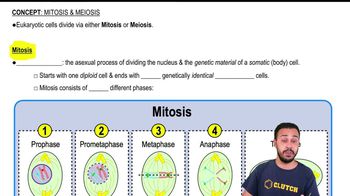
Nuclear division (karyokinesis) is the process where the nucleus divides, while cytoplasmic division (cytokinesis) divides the cell's cytoplasm. When nuclear division occurs repeatedly without cytokinesis, it leads to multinucleated cells, which is key to understanding the question.
추천 영상:

Coenocytes

Coenocytes are multinucleated cells formed by multiple rounds of nuclear division without cytokinesis. They are common in certain fungi, algae, and protists, where the cytoplasm remains continuous despite multiple nuclei.

Other Cell Structures in Fungi and Microorganisms

Mycoses are fungal infections, haustoria are specialized structures for nutrient absorption in parasitic fungi, and pseudohyphae are chains of elongated yeast cells. Understanding these terms helps differentiate them from coenocytes.
추천 영상:
가이드 코스
05:59
Overview of Prokaryotic Cell Structure