Describe the five phases of a generalized lytic replication cycle.
Ch. 13 - Characterizing and Classifying Viruses, Viroids, and Prions
13장, 문제 3
Why is it difficult to treat viral infections?
검증된 단계별 안내1
Understand that viruses are intracellular parasites, meaning they replicate inside host cells, which makes targeting them without harming the host cells challenging.
Recognize that viruses use the host's cellular machinery for replication, so antiviral drugs must selectively inhibit viral processes without disrupting normal host cell functions.
Consider that viruses have fewer unique metabolic pathways compared to bacteria, limiting the number of viral-specific targets for drug development.
Acknowledge that viruses can rapidly mutate, leading to the development of drug resistance and making treatment more difficult.
Note that the immune system plays a crucial role in controlling viral infections, and antiviral treatments often aim to support or enhance immune responses rather than directly eliminate the virus.

비슷한 문제에 대한 검증된 영상 답변:
이 영상 해법은 위 문제에 도움이 된다고 튜터들이 추천한 것입니다.
영상 길이:
2m도움이 되었나요?
주요 개념
질문에 올바르게 답하기 위해 반드시 이해해야 하는 핵심 개념들은 다음과 같습니다.
Viral Replication Inside Host Cells
Viruses replicate by invading and using the host's cellular machinery, making it challenging to target the virus without harming the host cells. Unlike bacteria, viruses are intracellular parasites, so treatments must distinguish between viral and host processes.
추천 영상:
가이드 코스
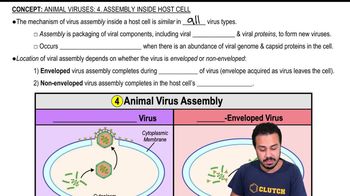
Animal Viruses: 4. Assembly Inside Host Cell
Lack of Metabolic Pathways in Viruses
Viruses lack their own metabolism and rely entirely on the host cell for energy and replication. This absence of independent metabolic pathways limits the number of viral-specific targets for antiviral drugs, unlike antibiotics that target bacterial metabolism.
추천 영상:
가이드 코스
Introduction to Metabolism
High Mutation Rates of Viruses
Many viruses, especially RNA viruses, mutate rapidly, leading to frequent changes in their genetic makeup. This high mutation rate can result in drug resistance and evasion of the immune system, complicating the development of effective and lasting antiviral treatments.
추천 영상:
가이드 코스
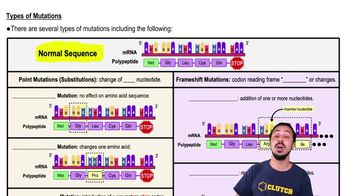
Types of Mutations
관련 실천
교과서 질문
1221
views
교과서 질문
Describe four different ways that viral nucleic acid can enter a host cell.
920
views
교과서 질문
Which of the following statements is true?
a. Viruses move toward their host cells.
b. Viruses are capable of metabolism.
c. Viruses lack a cytoplasmic membrane.
d. Viruses grow in response to their environmental conditions.
804
views
교과서 질문
A virus that is specific for a bacterial host is called a __________ .
a. Phage
b. Prion
c. Virion
d. Viroid
845
views
교과서 질문
A naked virus __________ .
a. Lacks a membranous envelope
b. Has injected its DNA or RNA into a host cell
c. Is devoid of capsomeres
d. Is one that is unattached to a host cell
1141
views
교과서 질문
Identify the viral capsid shapes.
a. ___________ <IMAGE>
b. ___________ <IMAGE>
c. ___________ <IMAGE>
d. ___________ <IMAGE>
717
views