The total number of cases of a disease in a given area is its __________.
Ch. 14 - Infection, Infectious Diseases, and Epidemiology
14장, 문제 9
Contrast the terms infection and morbidity.
검증된 단계별 안내1
Step 1: Define the term 'infection' as the invasion and multiplication of microorganisms such as bacteria, viruses, fungi, or parasites within a host organism, which may or may not cause disease symptoms.
Step 2: Define 'morbidity' as the state of being diseased or the incidence of illness in a population, often referring to the presence of symptoms or the impact of a disease on health.
Step 3: Explain that infection refers specifically to the presence and growth of a pathogen in the body, which can be asymptomatic or symptomatic.
Step 4: Clarify that morbidity relates to the clinical consequences or health effects resulting from an infection or other health conditions, including the severity and duration of illness.
Step 5: Summarize by contrasting that infection is about the microbial presence, while morbidity is about the health impact or disease burden experienced by the host.

비슷한 문제에 대한 검증된 영상 답변:
이 영상 해법은 위 문제에 도움이 된다고 튜터들이 추천한 것입니다.
영상 길이:
3m도움이 되었나요?
주요 개념
질문에 올바르게 답하기 위해 반드시 이해해야 하는 핵심 개념들은 다음과 같습니다.
Infection
Infection refers to the invasion and multiplication of pathogenic microorganisms such as bacteria, viruses, or fungi within a host's body, which may or may not cause symptoms. It is the biological process where microbes establish themselves and potentially cause disease.
추천 영상:
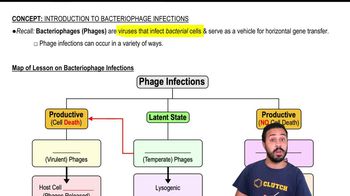
Map of Lesson on Bacteriophage Infections
Morbidity
Morbidity describes the state of being diseased or the incidence of illness within a population. It measures how often a disease occurs and the impact it has on health, including the presence of symptoms and complications.
Difference Between Infection and Morbidity
While infection is the presence of microorganisms in the body, morbidity refers to the actual occurrence of disease symptoms and health impairment. Not all infections lead to morbidity, as some infections can be asymptomatic or subclinical.
추천 영상:
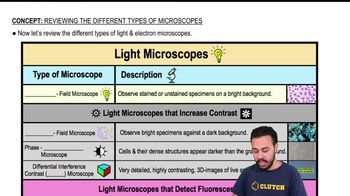
Reviewing the Different Types of Microscopes
관련 실천
교과서 질문
1185
views
교과서 질문
The nature of bacterial capsules ___________ .
a. Causes widespread blood clotting
b. Allows phagocytes to readily engulf these bacteria
c. Affects the virulence of these bacteria
d. Has no effect on the virulence of bacteria
1349
views
교과서 질문
Bacteria that convert nitrogen gas into ammonia are:
a. Nitrifying bacteria
b. Nitrogenous
c. Nitrogen fixers
d. Nitrification bacteria
1587
views
교과서 질문
In general, contrast transient microbiota with resident microbiota.
1551
views
교과서 질문
An animal that carries a pathogen and also serves as host for the pathogen is a ___________ vector.
988
views
교과서 질문
When pathogenic bacterial cells lose the ability to make adhesins, they typically .
a. Become avirulent
b. Produce endotoxin
c. Absorb endotoxin
d. Increase in virulence
1231
views