Ch. 14 - Infection, Infectious Diseases, and Epidemiology
Bauman - Microbiology with Diseases by Taxonomy 6th Edition
Bauman6th EditionMicrobiology with Diseases by TaxonomyISBN: 9780134832302당신이 사용하는 게 아니라요?교과서 변경
14장, 문제 1

In which type of symbiosis do both members benefit from their interaction?
a. Mutualism
b. Parasitism
c. Commensalism
d. Pathogenesis

검증된 단계별 안내
1
Understand the definition of symbiosis: it refers to a close and long-term biological interaction between two different biological organisms.
Review the types of symbiotic relationships: Mutualism, Parasitism, Commensalism, and Pathogenesis.
Recall that in Mutualism, both organisms involved benefit from the interaction.
Recognize that in Parasitism, one organism benefits at the expense of the other.
Note that in Commensalism, one organism benefits while the other is neither helped nor harmed, and Pathogenesis refers to disease-causing interactions.

비슷한 문제에 대한 검증된 영상 답변:

이 영상 해법은 위 문제에 도움이 된다고 튜터들이 추천한 것입니다.
영상 길이:
2m

주요 개념

질문에 올바르게 답하기 위해 반드시 이해해야 하는 핵심 개념들은 다음과 같습니다.

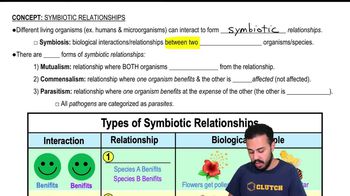
Mutualism

Mutualism is a type of symbiotic relationship where both organisms involved benefit from the interaction. This cooperation enhances survival, reproduction, or resource acquisition for both parties, such as bees pollinating flowers while obtaining nectar.
추천 영상:
05:59
Symbiotic Relationships

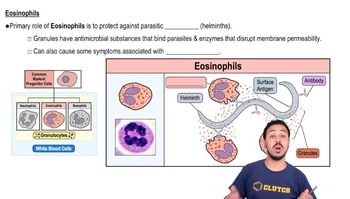
Parasitism

Parasitism is a symbiotic relationship where one organism (the parasite) benefits at the expense of the other (the host), often causing harm. The parasite derives nutrients or shelter, while the host may suffer reduced fitness or disease.
추천 영상:
02:08
Eosinophils

Commensalism

Commensalism is a symbiotic interaction where one organism benefits while the other is neither helped nor harmed. An example is barnacles attaching to whales; barnacles gain mobility and food access, while whales remain unaffected.
추천 영상:
05:59
Symbiotic Relationships