
교과서 질문
Mark each statement as either true or false. Rewrite false statements to make them true by changing the underlined words.
__________ Apoptosis is the term used to describe cellular suicide.
756
views

 검증된 단계별 안내
 07:17
07:17
 04:11
04:11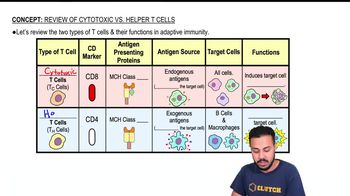 04:27
04:27Mark each statement as either true or false. Rewrite false statements to make them true by changing the underlined words.
__________ Apoptosis is the term used to describe cellular suicide.
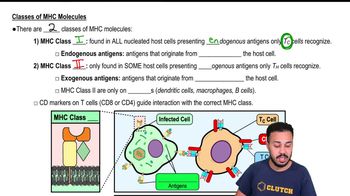
The nearby image is a transmission electron micrograph of a dendritic cell. Indicate where a scientist could find molecules of MHCI and MHC II. Label a pseudopod and a vesicle.
<IMAGE>
Match each cell in the numbered list with its associated protein from the lettered list.
1. ___ Plasma cell
2. ___ Cytotoxic T cell
3. ___ Th2 cell
4. ___ Dendritic cell
A. MHC II molecule
B. Interleukin 4
C. Perforin and granzyme
D. Immunoglobulin
Match each type of immunity in the numbered list with its associated example from the lettered list.
1. ___ Artificially acquired passive immunotherapy
2. ___ Naturally acquired active immunity
3. ___ Naturally acquired passive immunity
4. ___ Artificially acquired active immunity
A. Production of IgE in response to pollen
B. Acquisition of maternal antibodies in breast milk
C. Administration of tetanus toxoid
D. Administration of antitoxin
Why does the body have both antibody and cell-mediated immune responses?
Rejection of a foreign skin graft is an example of:
a. Destruction of virus-infected cells
b. Tolerance
c. Antibody-mediated immunity
d. A secondary immune response
e. A cell-mediated immune response