Ch. 17 - Immunization and Immune Testing
Bauman - Microbiology with Diseases by Taxonomy 6th Edition
Bauman6th EditionMicrobiology with Diseases by TaxonomyISBN: 9780134832302당신이 사용하는 게 아니라요?교과서 변경
17장, 문제 7

How does nephelometry differ from turbidimetry?

검증된 단계별 안내
1
Understand that both nephelometry and turbidimetry are techniques used to measure the concentration of particles in a solution by analyzing light interaction with those particles.
Recognize that turbidimetry measures the decrease in intensity of light transmitted straight through a sample due to scattering and absorption by suspended particles. It quantifies how much light is blocked or absorbed.
Know that nephelometry, on the other hand, measures the intensity of light scattered at an angle (usually 90 degrees) from the incident light beam as it passes through the sample. It focuses on the scattered light rather than the transmitted light.
Note that turbidimetry is generally used for higher concentrations of particles where the transmitted light intensity decreases significantly, while nephelometry is more sensitive and useful for detecting lower concentrations by measuring scattered light.
Summarize the key difference: turbidimetry measures the reduction in transmitted light intensity, whereas nephelometry measures the intensity of scattered light at an angle.

비슷한 문제에 대한 검증된 영상 답변:

이 영상 해법은 위 문제에 도움이 된다고 튜터들이 추천한 것입니다.
영상 길이:
2m
도움이 되었나요?

주요 개념

질문에 올바르게 답하기 위해 반드시 이해해야 하는 핵심 개념들은 다음과 같습니다.

Nephelometry

Nephelometry measures the intensity of light scattered at an angle by suspended particles in a solution. It is sensitive to small particles and is commonly used to quantify proteins or immune complexes in fluids by detecting scattered light rather than transmitted light.

Turbidimetry

Turbidimetry measures the decrease in intensity of light transmitted straight through a sample due to the presence of suspended particles. It quantifies cloudiness or turbidity, often used to estimate bacterial growth or particulate concentration by assessing light absorption and scattering combined.

Differences in Measurement Principles

The main difference lies in the detection angle: nephelometry measures scattered light at an angle, enhancing sensitivity to small particles, while turbidimetry measures the reduction of transmitted light in a straight path. This affects their applications and sensitivity in analyzing particle concentration.
추천 영상:
가이드 코스
03:27
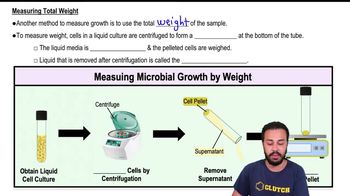
Measuring Total Weight