Ch. 2 - The Chemistry of Microbiology
Bauman - Microbiology with Diseases by Taxonomy 6th Edition
Bauman6th EditionMicrobiology with Diseases by TaxonomyISBN: 9780134832302당신이 사용하는 게 아니라요?교과서 변경
2장, 문제 18

In DNA, adenine forms ___________ hydrogen bonds with ____________.
a. Three / uracil
b. Two / uracil
c. Two / thymine
d. Three / thymine

검증된 단계별 안내
1
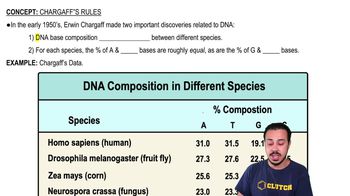
Recall the base pairing rules in DNA, where adenine (A) pairs specifically with thymine (T), and guanine (G) pairs with cytosine (C).
Understand that adenine and thymine form hydrogen bonds to stabilize the DNA double helix structure.
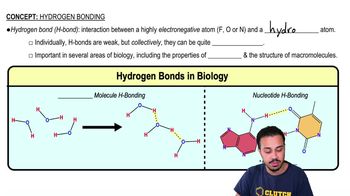
Remember the number of hydrogen bonds between base pairs: adenine and thymine form two hydrogen bonds, while guanine and cytosine form three.
Note that uracil is found in RNA, not DNA, so it does not pair with adenine in DNA.
Combine these facts to conclude that adenine forms two hydrogen bonds with thymine in DNA.

비슷한 문제에 대한 검증된 영상 답변:

이 영상 해법은 위 문제에 도움이 된다고 튜터들이 추천한 것입니다.
영상 길이:
1m
도움이 되었나요?

주요 개념

질문에 올바르게 답하기 위해 반드시 이해해야 하는 핵심 개념들은 다음과 같습니다.

Base Pairing Rules in DNA

In DNA, nitrogenous bases pair specifically: adenine (A) pairs with thymine (T), and cytosine (C) pairs with guanine (G). This complementary base pairing is essential for DNA structure and replication.
추천 영상:
04:33
Chargaff's Rules

Hydrogen Bonding Between Bases

Hydrogen bonds stabilize the DNA double helix by connecting complementary bases. Adenine and thymine form two hydrogen bonds, while cytosine and guanine form three, influencing DNA stability.
추천 영상:
05:03
Hydrogen Bonding

Difference Between DNA and RNA Bases

DNA contains thymine as a base, whereas RNA contains uracil instead of thymine. This distinction is important when identifying correct base pairing in DNA versus RNA molecules.
추천 영상:
02:30
Introduction to DNA-Based Technology