
Ch. 2 - The Chemistry of Microbiology
Bauman - Microbiology with Diseases by Taxonomy 6th Edition
Bauman6th EditionMicrobiology with Diseases by TaxonomyISBN: 9780134832302당신이 사용하는 게 아니라요?교과서 변경
2장, 문제 7

Reactions that release energy are called __________ reactions.

검증된 단계별 안내
1
Identify the type of reaction that releases energy in biological systems.
Recall that reactions releasing energy often involve breaking down complex molecules into simpler ones.
Understand that these reactions are known as catabolic reactions because they break down molecules and release energy.
Recognize that the specific term for reactions that release energy is 'exergonic' reactions, which means they release free energy.
Conclude that the blank should be filled with 'exergonic' or 'catabolic' reactions, depending on the context.

비슷한 문제에 대한 검증된 영상 답변:

이 영상 해법은 위 문제에 도움이 된다고 튜터들이 추천한 것입니다.
영상 길이:
2m
도움이 되었나요?

주요 개념

질문에 올바르게 답하기 위해 반드시 이해해야 하는 핵심 개념들은 다음과 같습니다.

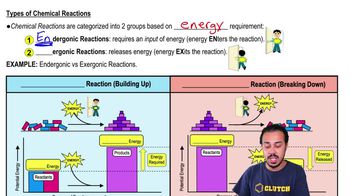
Exergonic Reactions

Exergonic reactions are chemical processes that release energy, usually in the form of heat or light. These reactions occur spontaneously because the products have lower free energy than the reactants, making energy available for cellular activities.
추천 영상:
05:48
Types of Chemical Reactions

Energy in Chemical Reactions

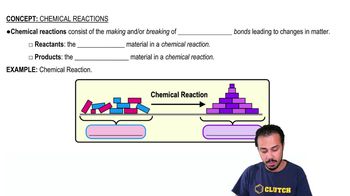
Chemical reactions involve breaking and forming bonds, which requires or releases energy. Understanding how energy changes during reactions helps explain why some reactions release energy (exergonic) while others require energy input (endergonic).
추천 영상:
01:56
Chemical Reactions

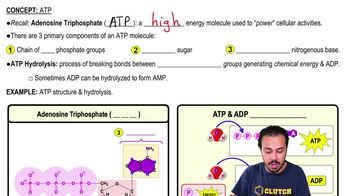
Role of ATP in Energy Transfer

ATP (adenosine triphosphate) acts as the main energy currency in cells, storing and transferring energy released from exergonic reactions to power various biological processes, such as metabolism and active transport.
추천 영상: