Ch. 23 - Parasitic Protozoa, Helminths, and Arthropod Vectors
Bauman - Microbiology with Diseases by Taxonomy 6th Edition
Bauman6th EditionMicrobiology with Diseases by TaxonomyISBN: 9780134832302당신이 사용하는 게 아니라요?교과서 변경
23장, 문제 9

Mark each statement as true or false. Rewrite the false statements to make them true by changing the underlined word(s).


__________ The number of cases of schistosomiasis has increased worldwide because of improved technology and economic stability in endemic areas.

검증된 단계별 안내
1
Step 1: Understand the statement and the disease context. Schistosomiasis is a parasitic disease caused by blood flukes (trematodes) of the genus Schistosoma, typically prevalent in tropical and subtropical regions, often linked to poor sanitation and water contact with contaminated freshwater.
Step 2: Analyze the claim about the number of cases increasing due to improved technology and economic stability. Consider whether improved technology and economic stability would logically lead to an increase or decrease in disease incidence.
Step 3: Recall that improved technology and economic stability usually lead to better sanitation, access to clean water, and effective control measures, which tend to reduce the number of schistosomiasis cases rather than increase them.
Step 4: Conclude that the statement as given is false because the number of cases typically decreases with improved technology and economic stability in endemic areas.
Step 5: Rewrite the false statement by replacing 'increased' with 'decreased' to make it true: 'The number of cases of schistosomiasis has decreased worldwide because of improved technology and economic stability in endemic areas.'

비슷한 문제에 대한 검증된 영상 답변:

이 영상 해법은 위 문제에 도움이 된다고 튜터들이 추천한 것입니다.
영상 길이:
2m
도움이 되었나요?

주요 개념

질문에 올바르게 답하기 위해 반드시 이해해야 하는 핵심 개념들은 다음과 같습니다.

Epidemiology of Schistosomiasis

Schistosomiasis is a parasitic disease caused by blood flukes, primarily affecting tropical and subtropical regions. Its prevalence depends on environmental, social, and economic factors, including water contact and sanitation. Understanding how these factors influence disease spread is key to interpreting changes in case numbers.

Impact of Socioeconomic and Technological Factors on Disease Incidence

Economic stability and technological improvements generally lead to better sanitation, healthcare access, and disease control measures, which reduce infectious disease incidence. Conversely, poor infrastructure and poverty often increase disease risk by facilitating transmission.
추천 영상:
02:30
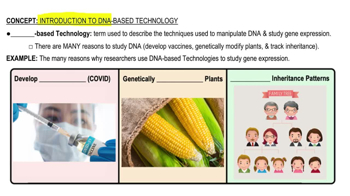
Introduction to DNA-Based Technology

True/False Question Correction Strategy

When correcting false statements, identify the inaccurate term and replace it with the correct one to reflect factual information. This approach helps clarify misconceptions and reinforces accurate understanding of microbiological and epidemiological principles.
추천 영상:
08:22
Predictions, Hypotheses, & Theories