
교과서 질문
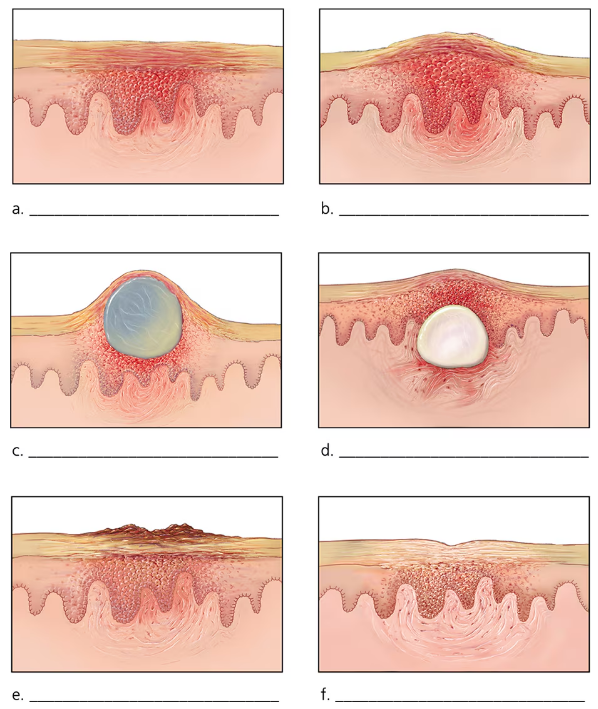
Name the disease shown in each photo.
a. <IMAGE>
b. <IMAGE>
c. <IMAGE>
d. <IMAGE>
e. <IMAGE>
f. <IMAGE>
1126
views

 검증된 단계별 안내
 03:16
03:16
 04:08
04:08 03:29
03:29Name the disease shown in each photo.
a. <IMAGE>
b. <IMAGE>
c. <IMAGE>
d. <IMAGE>
e. <IMAGE>
f. <IMAGE>
If the envelope of a particular virus were unstable outside the host's body, which of the following statements would you expect to be true concerning this virus?
a. It would be a dsRNA virus.
b. It would be transmitted by intimate contact.
c. Touching a doorknob would easily transmit it.
d. That virus would eventually cease to be a threat to the population.
The Smith family seems to get fever blisters regularly. Suggest an explanation for this observation.
Identify the viral family causing or implicated in each of the following diseases. A viral family name may be used more than once.
1. ____ Chickenpox
2. ____ Smallpox
3. ____ Cowpox
4. ____ Molluscum contagiosum
5. ____ HHV-1 infection
6. ____ Whitlow
7. ____ Shingles
8. ____ Burkitt's lymphoma
9. ____ Infectious mononucleosis
10. ____ Chronic fatigue syndrome
11. ____ Cytomegalovirus infection
12. ____ Genital warts
13. ____ Roseola
14. ____ Plantar warts
15. ____ Progressive multifocal leukoencephalopathy
16. ____ Common cold
17. ____ Hepatitis B
18. ____ Fifth disease
A. Poxviridae
B. Herpesviridae
C. Papillomaviridae
D. Adenoviridae
E. Hepadnaviridae
F. Parvoviridae
G. Polyomaviridae