Ch. 5 - Microbial Metabolism
Bauman - Microbiology with Diseases by Taxonomy 6th Edition
Bauman6th EditionMicrobiology with Diseases by TaxonomyISBN: 9780134832302당신이 사용하는 게 아니라요?교과서 변경
5장, 문제 20

A major difference between anaerobic respiration and anaerobic fermentation is _______.
a. in the use of oxygen
b. that the former requires breathing
c. that the latter uses organic molecules within the cell as final electron acceptors
d. that fermentation only produces alcohol

검증된 단계별 안내
1
Step 1: Understand the definitions of anaerobic respiration and anaerobic fermentation. Anaerobic respiration is a type of respiration that occurs without oxygen but uses an electron transport chain with a final electron acceptor other than oxygen.
Step 2: Recognize that anaerobic fermentation does not use an electron transport chain. Instead, it regenerates NAD+ by transferring electrons to organic molecules within the cell, which act as final electron acceptors.
Step 3: Analyze the options given: (a) refers to oxygen use, which is absent in both anaerobic respiration and fermentation; (b) mentions 'breathing,' which is not a scientific term in this context; (c) states that fermentation uses organic molecules as final electron acceptors; (d) claims fermentation only produces alcohol, which is not always true as fermentation products vary.
Step 4: Compare the key difference: anaerobic respiration uses inorganic final electron acceptors (like nitrate or sulfate), while fermentation uses organic molecules inside the cell as final electron acceptors.
Step 5: Conclude that the correct distinguishing feature is that fermentation uses organic molecules within the cell as final electron acceptors, which corresponds to option (c).

비슷한 문제에 대한 검증된 영상 답변:

이 영상 해법은 위 문제에 도움이 된다고 튜터들이 추천한 것입니다.
영상 길이:
4m
도움이 되었나요?

주요 개념

질문에 올바르게 답하기 위해 반드시 이해해야 하는 핵심 개념들은 다음과 같습니다.

Anaerobic Respiration

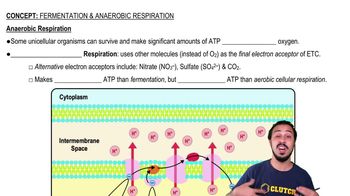
Anaerobic respiration is a type of cellular respiration that occurs without oxygen, where molecules other than oxygen (such as nitrate or sulfate) serve as the final electron acceptors in the electron transport chain to generate energy.
추천 영상:
가이드 코스
03:35
Anaerobic Respiration

Anaerobic Fermentation

Fermentation is a metabolic process that converts sugars into acids, gases, or alcohol in the absence of oxygen, using organic molecules within the cell as final electron acceptors instead of an electron transport chain.
추천 영상:
가이드 코스
03:35
Anaerobic Respiration

Final Electron Acceptors in Metabolism

In cellular metabolism, the final electron acceptor is the molecule that receives electrons at the end of the electron transport chain; in anaerobic respiration, this is an inorganic molecule other than oxygen, while in fermentation, it is an organic molecule produced within the cell.
추천 영상:
가이드 코스
02:17
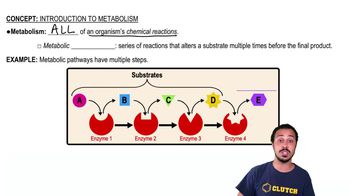
Introduction to Metabolism