Insertions and deletions in the genetic code are also called ___________ mutations.
Ch. 7 - Microbial Genetics
7장, 문제 4
Polypeptide synthesis requires large amounts of energy. How do cells regulate synthesis to conserve energy? Describe one specific example.
검증된 단계별 안내1
Understand that polypeptide synthesis is an energy-intensive process because it involves multiple steps such as initiation, elongation, and termination, each requiring energy molecules like GTP and ATP.
Recognize that cells regulate polypeptide synthesis primarily at the level of transcription and translation to conserve energy, preventing unnecessary production of proteins.
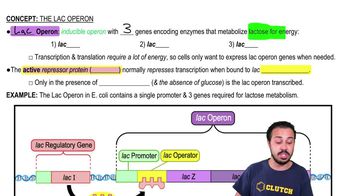
One specific example is the use of the lac operon in bacteria, where the presence or absence of lactose controls the transcription of genes needed for lactose metabolism, thus regulating protein synthesis based on environmental conditions.
In the lac operon system, when lactose is absent, a repressor protein binds to the operator region, blocking RNA polymerase and preventing transcription of the operon's genes, thereby conserving energy by not producing unneeded enzymes.
When lactose is present, it binds to the repressor, causing it to release from the operator, allowing transcription and subsequent translation to proceed, ensuring energy is used only when the proteins are necessary.

비슷한 문제에 대한 검증된 영상 답변:
이 영상 해법은 위 문제에 도움이 된다고 튜터들이 추천한 것입니다.
영상 길이:
2m도움이 되었나요?
주요 개념
질문에 올바르게 답하기 위해 반드시 이해해야 하는 핵심 개념들은 다음과 같습니다.
Energy Requirements of Polypeptide Synthesis
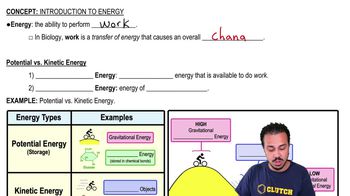
Polypeptide synthesis, or translation, consumes significant energy primarily through ATP and GTP molecules used in amino acid activation, initiation, elongation, and termination steps. This high energy demand necessitates tight regulation to prevent wasteful protein production when not needed.
추천 영상:
가이드 코스
Introduction to Energy
Regulation of Protein Synthesis
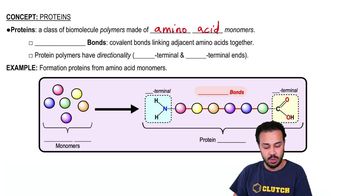
Cells regulate protein synthesis at multiple levels, including transcriptional control, mRNA stability, and translational control, to conserve energy. By controlling when and how much protein is made, cells avoid unnecessary energy expenditure on producing unneeded proteins.
추천 영상:
가이드 코스
Proteins
Example: The lac Operon in Bacteria
The lac operon in E. coli is a classic example where protein synthesis is regulated based on environmental conditions. When lactose is absent, the operon is repressed, preventing synthesis of enzymes like β-galactosidase, thus conserving energy by not producing proteins unnecessary for the current environment.
추천 영상:
가이드 코스
The Lac Operon
관련 실천
교과서 질문
1406
views
교과서 질문
Nucleotides used in the replication of DNA __________ .
a. Carry energy
b. Are found in four forms, each with a deoxyribose sugar, a phosphate, and a base
c. Are present in cells as triphosphate nucleotides
d. All of the above are correct.
1521
views
교과서 질문
An operon consists of __________ , ___________ , and __________ , and is associated with a regulatory gene.
1260
views
교과서 질문
A plasmid is __________ .
a. a molecule of RNA found in bacterial cells
b. distinguished from a chromosome by being circular
c. a structure in bacterial cells formed from plasma membrane
d. extrachromosomal DNA
1561
views
교과서 질문
Which of the following forms ionic bonds with eukaryotic DNA and stabilizes it?
a. Chromatin
b. Bacteriocin
c. Histone
d. Nucleoid
1351
views
교과서 질문
Describe the operon model of gene regulation.
1839
views