
교과서 질문
Which of the following are considered cytokines? Select all that apply.
a. Eicosanoids
b. TNF- α
c. Interferon β
d. Histamine
e. Chemokines
1422
views

 검증된 단계별 안내
 02:30
02:30
 05:47 02:30
Which of the following are considered cytokines? Select all that apply.
a. Eicosanoids
b. TNF- α
c. Interferon β
d. Histamine
e. Chemokines
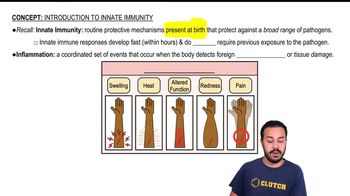
Which of the following would you not expect to see in the first stage of inflammation?
a. Histamine
b. Kinins
c. Macrophages
d. Increased blood vessel permeability
e. Eicosanoids
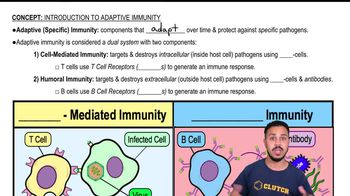
Which of the following is not a feature of innate immunity?
a. Better protection upon later exposure to a given pathogen
b. Recognition of diverse pathogens
c. Discrimination between self and foreign
d. Killing of identified invaders
e. Stimulation of adaptive immunity
Label the following as granulocytes or agranulocytes and classify them as innate or adaptive cellular responders.
Basophil
Monocyte
Macrophage
Lymphocyte
Neutrophil
Eosinophil
Mast cell
NK cell
T cell
The ____________ cascade of complement activation is initiated by antibodies. In contrast, the ____________ cascade is activated by a direct interaction with complement proteins, and the ____________ cascade is activated by MBL associating with a pathogen.
Which of the following would be the most likely immediate consequence of an aseptic tissue injury?
a. Monocytosis
b. Complement activation
c. Eosinophilia
d. Fever
e. Inflammation