Ch. 11 - Innate Immunity
Norman-McKay- Microbiology: Basic and Clinical Principles 2nd Edition
Norman-McKay2nd EditionMicrobiology: Basic and Clinical PrinciplesISBN: 9780137661619당신이 사용하는 게 아니라요?교과서 변경
7장, 문제 10

Which of the following would be the most likely immediate consequence of an aseptic tissue injury?
a. Monocytosis
b. Complement activation
c. Eosinophilia
d. Fever
e. Inflammation

검증된 단계별 안내
1
Step 1: Understand the context of the question, which asks about the immediate consequence of an aseptic tissue injury. 'Aseptic' means that the injury is not caused by infection or pathogens.
Step 2: Recall the body's typical responses to tissue injury without infection. The immune system initiates a local response to repair damage and prevent further harm.
Step 3: Evaluate each option in terms of timing and relevance to aseptic injury: Monocytosis (increase in monocytes) and eosinophilia (increase in eosinophils) are more related to infections or allergic responses and usually take longer to develop.
Step 4: Complement activation is part of the immune response to pathogens, so it is less likely in aseptic injury. Fever is a systemic response usually triggered by infection or inflammation mediators circulating in the body, but it is not immediate.
Step 5: Inflammation is the body's immediate local response to tissue injury, characterized by redness, swelling, heat, and pain, aimed at containing damage and initiating repair. Therefore, inflammation is the most likely immediate consequence.

비슷한 문제에 대한 검증된 영상 답변:

이 영상 해법은 위 문제에 도움이 된다고 튜터들이 추천한 것입니다.
영상 길이:
3m
도움이 되었나요?

주요 개념

질문에 올바르게 답하기 위해 반드시 이해해야 하는 핵심 개념들은 다음과 같습니다.

Aseptic Tissue Injury

Aseptic tissue injury refers to damage to body tissues without the presence of infection or pathogens. This type of injury triggers the body's innate immune response to repair damage and maintain homeostasis, primarily through inflammation rather than infection-fighting mechanisms.
추천 영상:
02:38
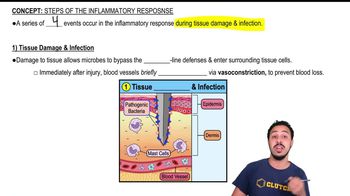
1) Tissue Damage & Infection

Inflammation as an Immediate Response

Inflammation is the body's first and immediate response to tissue injury, characterized by redness, swelling, heat, and pain. It involves the release of chemical mediators that increase blood flow and recruit immune cells to the injury site to promote healing and prevent further damage.
추천 영상:
03:09
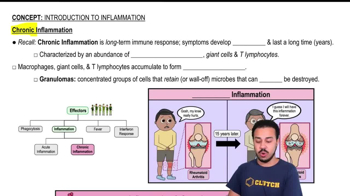
Chronic Inflammation

Immune Cell Responses and Their Timing

Different immune responses occur at varying times after injury or infection. Monocytosis and eosinophilia involve specific white blood cells and usually develop later, while complement activation is more related to infection. Fever is a systemic response that typically follows inflammation and infection.
추천 영상:
02:57
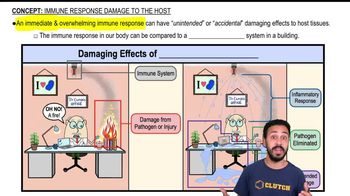
Intro to Immune Response Damage