Ch. 11 - Innate Immunity
Norman-McKay- Microbiology: Basic and Clinical Principles 2nd Edition
Norman-McKay2nd EditionMicrobiology: Basic and Clinical PrinciplesISBN: 9780137661619당신이 사용하는 게 아니라요?교과서 변경
7장, 문제 13

Which would be expected to contribute to chronic inflammation? Select all that apply.
a. A reduced innate defense
b. Fever
c. Persistent tissue injury
d. Glucocorticosteroids
e. Antihistamines

검증된 단계별 안내
1
Step 1: Understand the definition of chronic inflammation. Chronic inflammation is a prolonged inflammatory response that can last for months or years, often due to persistent injury, infection, or an inability to resolve the initial cause of inflammation.
Step 2: Analyze each option to determine if it contributes to chronic inflammation. For example, consider whether the factor causes ongoing tissue damage or impairs the resolution of inflammation.
Step 3: Evaluate option (a) 'A reduced innate defense.' A weakened innate immune system may allow infections or injuries to persist, potentially contributing to chronic inflammation.
Step 4: Evaluate option (c) 'Persistent tissue injury.' Continuous tissue damage is a classic cause of chronic inflammation because the body is constantly trying to repair the injury, maintaining the inflammatory response.
Step 5: Consider options (b) 'Fever,' (d) 'Glucocorticosteroids,' and (e) 'Antihistamines.' Fever is typically an acute response, glucocorticosteroids and antihistamines are anti-inflammatory agents that reduce inflammation rather than contribute to its chronicity.

비슷한 문제에 대한 검증된 영상 답변:

이 영상 해법은 위 문제에 도움이 된다고 튜터들이 추천한 것입니다.
영상 길이:
3m
도움이 되었나요?

주요 개념

질문에 올바르게 답하기 위해 반드시 이해해야 하는 핵심 개념들은 다음과 같습니다.

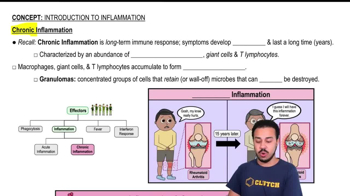
Chronic Inflammation

Chronic inflammation is a prolonged inflammatory response that can last weeks to years, often caused by persistent infections, ongoing tissue injury, or autoimmune reactions. It involves continuous activation of immune cells, leading to tissue damage and repair simultaneously.
추천 영상:
가이드 코스
03:09
Chronic Inflammation

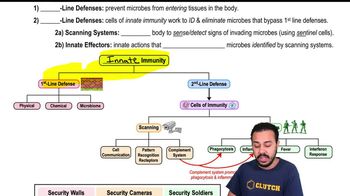
Innate Immune Defense

The innate immune system provides the first line of defense against pathogens through barriers, phagocytes, and inflammatory responses. A reduced innate defense can impair pathogen clearance, potentially allowing infections or injuries to persist and contribute to chronic inflammation.
추천 영상:
가이드 코스
06:42
Map of Lesson on Innate Immunity

Anti-inflammatory Agents and Their Effects

Glucocorticosteroids and antihistamines are medications that reduce inflammation by suppressing immune responses or blocking histamine effects. While they help control acute inflammation, their use can influence the progression or resolution of chronic inflammation depending on timing and dosage.
추천 영상:
가이드 코스
02:10
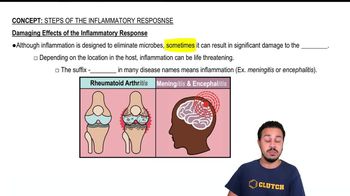
Damaging Effects of the Inflammatory Response