
Ch. 17 - Skin and Eye Infections
Norman-McKay- Microbiology: Basic and Clinical Principles 2nd Edition
Norman-McKay2nd EditionMicrobiology: Basic and Clinical PrinciplesISBN: 9780137661619당신이 사용하는 게 아니라요?교과서 변경
13장, 문제 11

Conjunctivitis is caused by the following agent types (select ALL that apply):
a. bacteria.
b. viruses.
c. protozoa.
d. fungi.
e. helminths.

검증된 단계별 안내
1
Step 1: Understand that conjunctivitis, commonly known as pink eye, is an inflammation of the conjunctiva, the membrane covering the white part of the eye and the inner eyelids.
Step 2: Recognize that conjunctivitis can be caused by various infectious agents, primarily bacteria and viruses, which are the most common causes.
Step 3: Consider that while protozoa, fungi, and helminths can cause infections in humans, they are not typical causative agents of conjunctivitis.
Step 4: Recall that bacterial conjunctivitis is often caused by species like Staphylococcus aureus and Streptococcus pneumoniae, and viral conjunctivitis is frequently caused by adenoviruses.
Step 5: Conclude that the correct agent types causing conjunctivitis include bacteria and viruses, corresponding to options a and b.

비슷한 문제에 대한 검증된 영상 답변:

이 영상 해법은 위 문제에 도움이 된다고 튜터들이 추천한 것입니다.
영상 길이:
2m

주요 개념

질문에 올바르게 답하기 위해 반드시 이해해야 하는 핵심 개념들은 다음과 같습니다.

Etiology of Conjunctivitis

Conjunctivitis, or pink eye, is inflammation of the conjunctiva caused by various infectious agents. Understanding which microorganisms commonly cause conjunctivitis helps identify appropriate treatments and preventive measures.

Common Infectious Agents: Bacteria and Viruses

Bacteria and viruses are the primary infectious agents responsible for conjunctivitis. Bacterial conjunctivitis often involves species like Staphylococcus or Streptococcus, while viral conjunctivitis is frequently caused by adenoviruses.
추천 영상:
02:54
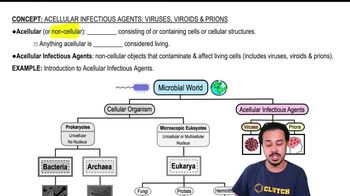
Acellular Infectious Agents: Viruses, Viroids & Prions

Role of Protozoa, Fungi, and Helminths in Eye Infections

Protozoa, fungi, and helminths rarely cause conjunctivitis. While some fungi and protozoa can infect the eye, they typically cause other ocular diseases rather than conjunctivitis, and helminth infections of the conjunctiva are extremely uncommon.
추천 영상:
03:28
Introduction to Eukarya
관련 실천
교과서 질문

Select ALL the true statements about dermatophytes:

a. They are a group of bacteria that cause cutaneous infections.

b. They may be treated with antifungals without knowing the exact causative agent.

c. They are easily treated with antibiotics.

d. They are commonly acquired from the soil, environment, or animals.

e. They produce enzymes that digest keratin found in hair, nails, and skin.

1141
views
교과서 질문

Select the false statement about trachoma:

a. The causative agent is bacterial.

b. It is the leading cause of infectious blindness in the United States.

c. It is transmitted by unhygienic items, such as flies, fingers, and fomites.

d. Uncomplicated cases can be resolved with antibiotics.

e. Severe cases require surgery.

1091
views
교과서 질문

Acanthamoeba protozoa species are associated with:

a. keratitis.

b. conjunctivitis.

c. river blindness.

d. trachoma.

e. all of the above.

1528
views
교과서 질문

Which of the following is not a virulence factor of P. aeruginosa?

a. Protein A

b, Exotoxins

c. Enzymes that damage host tissues

d. Endotoxins

e. Factors that enhance biofilm formation

1099
views
교과서 질문

Select the false statement about cutaneous candidiasis:

a. The most common causative species is Candida albicans.

b. Candida albicans can be part of normal microbiota.

c. Usage of antibiotics can increase the chance of cutaneous candidiasis.

d. Changes in pH can permit overgrowth.

e. The causative agents are naturally found as mold filaments.

1139
views
교과서 질문

Which best describes conjunctivitis (select ALL that apply)?

a. Itchy eyes

b. Scarred cornea

c. Red eyes

d. Inverted eyelashes

e. Scarred conjunctiva

1094
views