Ch. 4 - Introduction to Eukaryotic Cells
Norman-McKay- Microbiology: Basic and Clinical Principles 2nd Edition
Norman-McKay2nd EditionMicrobiology: Basic and Clinical PrinciplesISBN: 9780137661619당신이 사용하는 게 아니라요?교과서 변경
2장, 문제 14

Which of the following characteristics regarding eukaryotic organelles supports the endosymbiotic theory? Select all that apply.
a. Eukaryotic ribosomes are 70S just like prokaryotic ribosomes.
b. Mitochondria and chloroplasts have 70S ribosomes like prokaryotes.
c. Mitochondria and chloroplasts are double-membrane organelles similar in size to bacteria.
d. Mitochondria and chloroplasts have their own circular chromosome.
e. Eukaryotes can have cell walls like prokaryotes.

검증된 단계별 안내
1
Understand the endosymbiotic theory: it proposes that certain organelles in eukaryotic cells, specifically mitochondria and chloroplasts, originated from free-living prokaryotes that were engulfed by ancestral eukaryotic cells.
Identify key features of mitochondria and chloroplasts that resemble prokaryotes, such as the type of ribosomes they contain. Prokaryotic ribosomes are 70S, while eukaryotic cytoplasmic ribosomes are 80S.
Consider the membrane structure of these organelles. Both mitochondria and chloroplasts have a double membrane, which supports the idea that they were once independent organisms engulfed by a host cell.
Look at the genetic material: mitochondria and chloroplasts contain their own circular DNA, similar to bacterial chromosomes, which is distinct from the linear chromosomes found in the eukaryotic nucleus.
Evaluate each option based on these criteria: options mentioning 70S ribosomes in mitochondria and chloroplasts, double membranes, and their own circular chromosomes support the endosymbiotic theory, while features like eukaryotic ribosomes being 70S or eukaryotes having cell walls do not directly support this theory.

비슷한 문제에 대한 검증된 영상 답변:

이 영상 해법은 위 문제에 도움이 된다고 튜터들이 추천한 것입니다.
영상 길이:
3m

주요 개념

질문에 올바르게 답하기 위해 반드시 이해해야 하는 핵심 개념들은 다음과 같습니다.

Endosymbiotic Theory

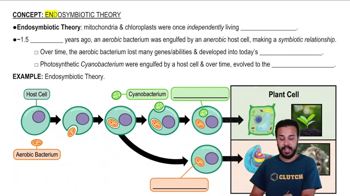
The endosymbiotic theory proposes that mitochondria and chloroplasts originated from free-living prokaryotes that were engulfed by ancestral eukaryotic cells. This explains why these organelles have features similar to bacteria, such as their own DNA and ribosomes, supporting their evolutionary origin as symbiotic organisms.
추천 영상:
07:29
Endosymbiotic Theory

Organelle Ribosomes

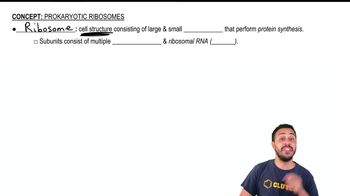
Mitochondria and chloroplasts contain 70S ribosomes, which are characteristic of prokaryotes, unlike the 80S ribosomes found in the eukaryotic cytoplasm. This similarity supports the idea that these organelles evolved from prokaryotic ancestors and retained their original protein synthesis machinery.
추천 영상:
01:51
Prokaryotic Ribosomes

Organelle Structure and DNA

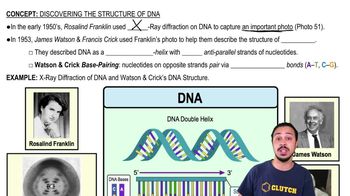
Mitochondria and chloroplasts have double membranes and their own circular DNA, resembling bacterial cells. These structural features provide strong evidence for the endosymbiotic origin, as they suggest these organelles were once independent prokaryotic organisms that became integrated into eukaryotic cells.
추천 영상:
04:41
Discovering the Structure of DNA