Ch. 4 - Introduction to Eukaryotic Cells
Norman-McKay- Microbiology: Basic and Clinical Principles 2nd Edition
Norman-McKay2nd EditionMicrobiology: Basic and Clinical PrinciplesISBN: 9780137661619당신이 사용하는 게 아니라요?교과서 변경
2장, 문제 1

Which of the following include eukaryotic cells? Select all that apply.
a. Fungi
b. Yeasts
c. Protista
d. Bacteria
e. Helminths
f. Animalia
g. Archaea
h. Plantae

검증된 단계별 안내
1
Step 1: Understand the difference between prokaryotic and eukaryotic cells. Eukaryotic cells have a true nucleus enclosed by a membrane and membrane-bound organelles, while prokaryotic cells lack a nucleus and membrane-bound organelles.
Step 2: Identify which groups listed are composed of eukaryotic organisms. Recall that fungi, protists, helminths, animals, and plants are all eukaryotic.
Step 3: Recognize that yeasts are a type of fungi, so they are also eukaryotic.
Step 4: Note that bacteria and archaea are prokaryotic domains, meaning they do not have eukaryotic cells.
Step 5: Based on this classification, select all options that represent eukaryotic groups: fungi (including yeasts), protista, helminths, animalia, and plantae.

비슷한 문제에 대한 검증된 영상 답변:

이 영상 해법은 위 문제에 도움이 된다고 튜터들이 추천한 것입니다.
영상 길이:
2m
도움이 되었나요?

주요 개념

질문에 올바르게 답하기 위해 반드시 이해해야 하는 핵심 개념들은 다음과 같습니다.

Eukaryotic vs Prokaryotic Cells

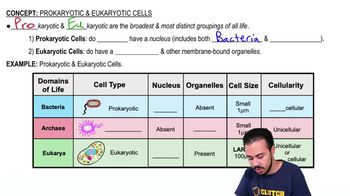
Cells are classified as eukaryotic or prokaryotic based on their structure. Eukaryotic cells have a true nucleus enclosed by a membrane and contain membrane-bound organelles, while prokaryotic cells lack a nucleus and organelles. This distinction is fundamental for identifying which organisms belong to each category.
추천 영상:
05:54
Prokaryotic & Eukaryotic Cells

Kingdoms Containing Eukaryotic Organisms

The major kingdoms that consist of eukaryotic organisms include Fungi, Protista, Animalia, and Plantae. These groups have cells with nuclei and complex structures. Understanding which kingdoms are eukaryotic helps in correctly classifying organisms like fungi, plants, animals, and protists.
추천 영상:
05:22
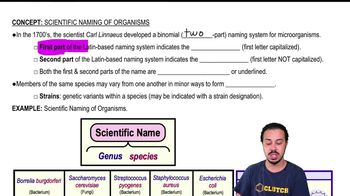
Scientific Naming of Organisms

Characteristics of Specific Microbial Groups

Certain groups like yeasts (a type of fungi) and helminths (parasitic worms in Animalia) are eukaryotic, while bacteria and archaea are prokaryotic. Recognizing these characteristics aids in distinguishing between microbial types and their cellular organization.
추천 영상:
03:37
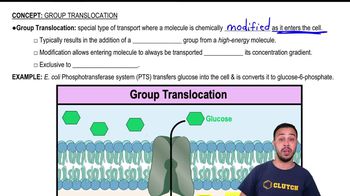
Group Translocation