
Ch. 10 - Classification of Microorganisms
Tortora - Microbiology: An Introduction 14th Edition
Tortora14th EditionMicrobiology: An IntroductionISBN: 9780138200398당신이 사용하는 게 아니라요?교과서 변경
6장, 문제 5

Use the key in the Clinical Focus box to identify the gram-negative, oxidase-positive rod causing pneumonia in a sea otter. It is H2S-positive, indole-negative, and urease-positive.

검증된 단계별 안내
1
Review the Clinical Focus key to understand the characteristics used for bacterial identification: gram-negative, oxidase-positive rods.
Note the biochemical test results given: H₂S-positive, indole-negative, and urease-positive. These tests help differentiate among gram-negative rods.
Recall that H₂S production is detected by black precipitate formation on specific media, indicating the bacterium produces hydrogen sulfide.
Indole-negative means the bacterium does not produce indole from tryptophan, which helps exclude certain genera like Proteus (which is indole-positive).
Urease-positive indicates the bacterium can hydrolyze urea to ammonia and carbon dioxide, which is a key trait to narrow down the identification to a specific genus or species.

비슷한 문제에 대한 검증된 영상 답변:

이 영상 해법은 위 문제에 도움이 된다고 튜터들이 추천한 것입니다.
영상 길이:
3m
도움이 되었나요?

주요 개념

질문에 올바르게 답하기 위해 반드시 이해해야 하는 핵심 개념들은 다음과 같습니다.

Gram-negative, Oxidase-positive Rods

Gram-negative rods are bacteria that do not retain the crystal violet stain and appear pink after Gram staining. Oxidase-positive indicates the presence of cytochrome c oxidase enzyme, which helps differentiate certain bacteria. Recognizing these traits narrows down the bacterial identification to specific genera such as Pseudomonas or certain Enterobacteriaceae.
추천 영상:
04:46
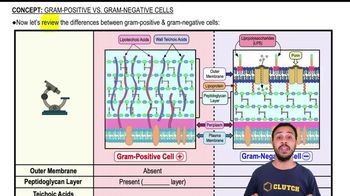
Gram-Positive vs. Gram-Negative Cell Walls

Biochemical Tests: H₂S, Indole, and Urease

Biochemical tests detect bacterial enzyme activities: H₂S production indicates sulfur reduction; indole test detects tryptophanase enzyme; urease test identifies the ability to hydrolyze urea. The combination of positive H₂S and urease but negative indole helps differentiate closely related bacteria species.
추천 영상:
06:59
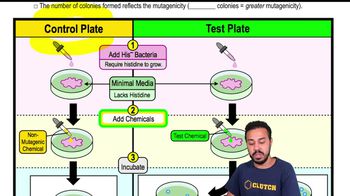
The Ames Test

Clinical Relevance and Host Specificity

Understanding the clinical context, such as pneumonia in a sea otter, helps link bacterial identification to disease. Certain bacteria are associated with specific hosts or environments, aiding diagnosis. This ecological and pathological knowledge complements lab results for accurate identification.
추천 영상:
01:50
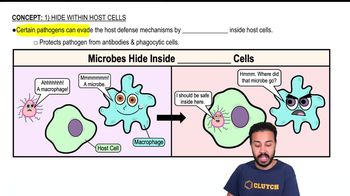
Hide Within Host Cells
관련 실천
교과서 질문

Which of the following is false about scientific nomenclature?

a. Each name is specific.

b. Names vary with geographical location.

c. The names are standardized.

d. Each name consists of a genus and specific epithet.

e. It was first designed by Linnaeus.

1652
views
교과서 질문

Use the following choices to answer questions 7 and 8.

a. Animalia

b. Fungi

c. Plantae

d. Bacillota (gram-positive bacteria)

e. Pseudomonadota (gram-negative bacteria)

Into which group would you place a multicellular organism that has a mouth and lives inside the human liver?

846
views
교과서 질문

The wall-less mycoplasmas are considered to be related to gram-positive bacteria. Which of the following would provide the most compelling evidence for this?

a. They share common rRNA sequences.

b. Some gram-positive bacteria and some mycoplasmas produce catalase.

c. Both groups are prokaryotic.

d. Some gram-positive bacteria and some mycoplasmas have coccus-shaped cells.

e. Both groups contain human pathogens.

1539
views
교과서 질문

You could identify an unknown bacterium by all of the following except

a. hybridizing a DNA probe from a known bacterium with the unknown’s DNA.

b. making a fatty acid profile of the unknown.

c. specific antiserum agglutinating the unknown.

d. ribosomal RNA sequencing.

e. percentage of guanine + cytosine.

1599
views
교과서 질문

DRAW IT Use the following rRNA information to construct a cladogram for some of the organisms used in question 4. What is the purpose of a cladogram? How does your cladogram differ from a dichotomous key for these organisms?

1361
views
교과서 질문

Use the information in the following table to complete the dichotomous key to these organisms. What is the purpose of a dichotomous key? Look up each genus in Chapter 11, and provide an example of why this organism is of interest to humans.

1502
views