Ch. 11 - The Prokaryotes: Domains Bacteria and Archaea
Tortora - Microbiology: An Introduction 14th Edition
Tortora14th EditionMicrobiology: An IntroductionISBN: 9780138200398당신이 사용하는 게 아니라요?교과서 변경
7장, 문제 2

Compare and contrast each of the following:
a. Cyanobacteria and algae
b. Actinomycetes and fungi
c. Bacillus and Lactobacillus
d. Pseudomonas and Escherichia
e. Leptospira and Spirillum
f. Escherichia and Bacteroides
g. Rickettsia and Chlamydia
h. Mycobacterium and Mycoplasma

검증된 단계별 안내
1
For each pair, start by identifying their taxonomic classification (e.g., bacteria, algae, fungi) to understand their biological grouping and evolutionary relationships.
Next, compare their cellular structure and morphology, such as cell wall composition, presence or absence of organelles, shape, and size.
Then, examine their metabolic characteristics and ecological roles, including modes of nutrition (photosynthetic, heterotrophic), oxygen requirements, and typical habitats.
After that, consider their reproductive methods and life cycles, noting differences in spore formation, binary fission, or other reproductive strategies.
Finally, summarize key differences and similarities for each pair, highlighting unique features that distinguish them and any overlapping traits that might cause confusion.

비슷한 문제에 대한 검증된 영상 답변:

이 영상 해법은 위 문제에 도움이 된다고 튜터들이 추천한 것입니다.
영상 길이:
2m

주요 개념

질문에 올바르게 답하기 위해 반드시 이해해야 하는 핵심 개념들은 다음과 같습니다.

Microbial Classification and Taxonomy

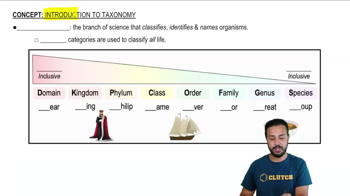
Understanding the classification of microorganisms into groups such as bacteria, fungi, algae, and actinomycetes is essential. Taxonomy helps differentiate organisms based on characteristics like cell structure, metabolism, and genetic relationships, enabling clear comparisons between genera like Bacillus and Lactobacillus or Rickettsia and Chlamydia.
추천 영상:
02:23
Introduction to Taxonomy

Morphological and Physiological Characteristics

Morphology (shape, size, cell wall structure) and physiology (metabolic pathways, oxygen requirements) are key to distinguishing microbes. For example, cyanobacteria are photosynthetic prokaryotes, while algae are eukaryotic; similarly, Mycobacterium has a waxy cell wall unlike Mycoplasma, which lacks a cell wall.
추천 영상:
02:44
Types of Bacterial Cell Morphology

Ecological Roles and Pathogenicity

Microorganisms differ in their ecological niches and roles, such as nitrogen fixation, decomposition, or causing disease. Comparing organisms like Pseudomonas and Escherichia involves understanding their habitats and pathogenic potential, while Rickettsia and Chlamydia are obligate intracellular pathogens with distinct life cycles.
추천 영상:
03:40
Introduction to Pathogenic Toxins