Ch. 20 - Antimicrobial Drugs
Tortora - Microbiology: An Introduction 14th Edition
Tortora14th EditionMicrobiology: An IntroductionISBN: 9780138200398당신이 사용하는 게 아니라요?교과서 변경
16장, 문제 5

The most selective antimicrobial activity would be exhibited by a drug that:
a. Inhibits cell wall synthesis
b. Inhibits protein synthesis
c. Injures the plasma membrane
d. Inhibits nucleic acid synthesis
e. All of the above

검증된 단계별 안내
1
Step 1: Understand the concept of selective antimicrobial activity, which refers to a drug's ability to target microbial cells specifically without harming the host's cells.
Step 2: Analyze each option by considering whether the target process or structure is unique to microbes or also found in host cells. For example, cell wall synthesis is unique to bacteria, as human cells do not have cell walls.
Step 3: Evaluate option (a) 'inhibits cell wall synthesis' because bacterial cell walls contain peptidoglycan, which human cells lack, making this a highly selective target.
Step 4: Consider option (b) 'inhibits protein synthesis'—while both bacteria and humans synthesize proteins, bacterial ribosomes differ in structure (70S vs. 80S in humans), allowing some selectivity but less than targeting cell walls.
Step 5: Review options (c) and (d) which involve plasma membrane injury and nucleic acid synthesis inhibition; these processes are more conserved between microbes and host cells, potentially causing more host toxicity and less selectivity.

비슷한 문제에 대한 검증된 영상 답변:

이 영상 해법은 위 문제에 도움이 된다고 튜터들이 추천한 것입니다.
영상 길이:
1m
도움이 되었나요?

주요 개념

질문에 올바르게 답하기 위해 반드시 이해해야 하는 핵심 개념들은 다음과 같습니다.

Selective Toxicity

Selective toxicity refers to an antimicrobial drug's ability to target microbial cells without harming the host's cells. This principle is crucial for effective treatment, as drugs must exploit differences between microbial and human cells to minimize side effects.
추천 영상:
03:27
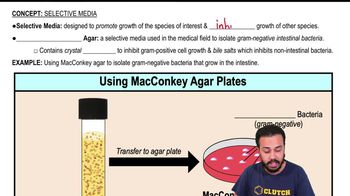
Selective Media

Mechanisms of Antimicrobial Action

Antimicrobial drugs act by targeting essential microbial processes such as cell wall synthesis, protein synthesis, plasma membrane integrity, or nucleic acid synthesis. Understanding these mechanisms helps determine which targets are unique to microbes and thus more selective.
추천 영상:
02:43
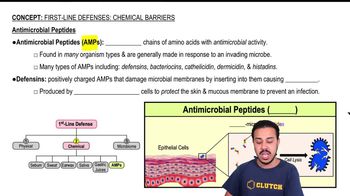
Antimicrobial Peptides

Differences Between Prokaryotic and Eukaryotic Cells

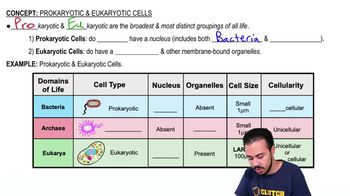
Microbial cells (prokaryotes) differ structurally and biochemically from human (eukaryotic) cells, such as having a cell wall and different ribosomes. Drugs targeting features unique to prokaryotes, like cell wall synthesis, tend to be more selective and less toxic to humans.
추천 영상:
05:54
Prokaryotic & Eukaryotic Cells