Ch. 22 - Microbial Diseases of the Nervous System
Tortora - Microbiology: An Introduction 14th Edition
Tortora14th EditionMicrobiology: An IntroductionISBN: 9780138200398당신이 사용하는 게 아니라요?교과서 변경
18장, 문제 9

Use the following choices to answer the question given below:
a. Cryptococcus
b. Haemophilus
c. Listeria
d. Naegleria
e. Neisseria
Microscopic examination of cerebrospinal fluid reveals gram-positive rods.

검증된 단계별 안내
1
Step 1: Identify the key information given in the problem, which is that the microscopic examination of cerebrospinal fluid (CSF) reveals gram-positive rods.
Step 2: Recall the characteristics of the organisms listed in the choices, focusing on their Gram stain reaction and morphology: whether they are gram-positive or gram-negative, and whether they are rods or cocci.
Step 3: Eliminate organisms that do not match the description of gram-positive rods. For example, Cryptococcus is a yeast (not a rod), Haemophilus and Neisseria are gram-negative cocci or coccobacilli, and Naegleria is a protozoan, not a bacterium.
Step 4: Recognize that Listeria is a gram-positive rod and is known to cause meningitis, which would be consistent with its presence in cerebrospinal fluid.
Step 5: Conclude that the organism observed in the CSF as gram-positive rods is most likely Listeria, based on the process of elimination and matching characteristics.

비슷한 문제에 대한 검증된 영상 답변:

이 영상 해법은 위 문제에 도움이 된다고 튜터들이 추천한 것입니다.
영상 길이:
1m

주요 개념

질문에 올바르게 답하기 위해 반드시 이해해야 하는 핵심 개념들은 다음과 같습니다.

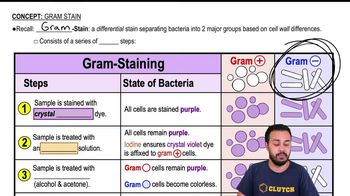
Gram Staining and Gram-Positive Rods

Gram staining differentiates bacteria by cell wall structure, with gram-positive bacteria retaining the crystal violet stain and appearing purple. Gram-positive rods are rod-shaped bacteria that stain purple, indicating a thick peptidoglycan layer. Identifying the shape and gram reaction helps narrow down possible bacterial species in infections.
추천 영상:
04:57
Gram Stain

Common Gram-Positive Rod Pathogens in Cerebrospinal Fluid

Certain gram-positive rods, like Listeria monocytogenes, are known to cause meningitis and can be found in cerebrospinal fluid. Recognizing these pathogens is crucial for diagnosis and treatment, as they differ from gram-negative or other microbial causes of CNS infections.
추천 영상:
02:59
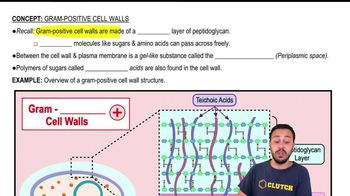
Gram-Positive Cell Walls

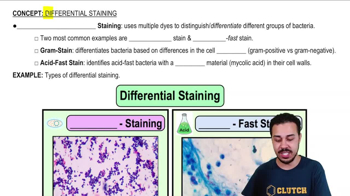
Differentiation of Microorganisms Based on Morphology and Staining

Microorganisms can be distinguished by their shape (cocci, rods), gram reaction, and other features like motility or capsule presence. For example, Neisseria is gram-negative cocci, Haemophilus is gram-negative coccobacilli, and Naegleria is a protozoan, not bacteria. This helps exclude unlikely pathogens when interpreting lab results.
추천 영상:
04:07
Differential Staining