
교과서 질문
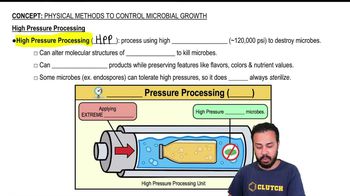
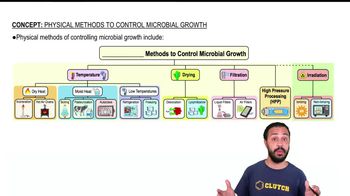
How do autoclaving, hot air, and ultra-high-temperature pasteurization illustrate the concept of equivalent treatments?
807
views

 검증된 단계별 안내
 02:37
02:37
 01:46
01:46 06:30
06:30How do autoclaving, hot air, and ultra-high-temperature pasteurization illustrate the concept of equivalent treatments?
A large hospital washes burn patients in a stainless steel tub. After each patient, the tub is cleaned with a quat. It was noticed that 14 of 20 burn patients acquired Pseudomonas infections after being bathed. Provide an explanation for this high rate of infection.
Use the following information to answer questions 6 and 7. The data were obtained from a use-dilution test comparing four disinfectants against Salmonella Choleraesuis.
G = growth, NG = no growth
Which disinfectant is the most effective?
Which of the following is not a characteristic of quaternary ammonium compounds?
a. Bactericidal against gram-positive bacteria
b. Sporicidal
c. Amebicidal
d. Fungicidal
e. Kills enveloped viruses
The use-dilution values for two disinfectants tested under the same conditions are as follows:
Disinfectant A—1:2
Disinfectant B—1:10,000.
If both disinfectants are designed for the same purpose, which would you select?
Use the following information to answer questions 6 and 7. The data were obtained from a use-dilution test comparing four disinfectants against Salmonella Choleraesuis.
G = growth, NG = no growth
Which disinfectant(s) is (are) bactericidal?
a. A,B,C, and D
b. A,C, and D
c. A only
d. B only
e. None of the above