 뒤로
뒤로Elasticity of Demand and Supply: Microeconomics Study Notes
스터디 가이드 - 스마트 노트
 자료에 맞춘 맞춤형 노트, 핵심 정의, 예시, 맥락을 확장해 제공합니다.
Elasticity of Demand and Supply
Introduction to Elasticity
Elasticity measures the responsiveness of one variable to changes in another variable. In microeconomics, elasticity is crucial for understanding how consumers and producers react to changes in prices, income, and the prices of related goods.
Elasticity: The percentage change in one variable resulting from a percentage change in another variable.
Price Elasticity of Demand (PED): The percentage change in quantity demanded resulting from a percentage change in price.
Price Elasticity of Demand
Definition and Calculation Methods
Price elasticity of demand quantifies how much the quantity demanded of a good responds to a change in its price. It is calculated using several methods:
Percentage (Proportionate) Method:
Point Method: Measures elasticity at a specific point on the demand curve.
Arc Elasticity: Used to measure elasticity between two points on a demand curve, especially when price changes are large.
Example: If the price of a commodity decreases from Rs.6 to Rs.4 and quantity demanded increases from 10 to 15 units, the coefficient of price elasticity can be calculated using the percentage method.
Note: Elasticity is often expressed as a positive number for convenience, but the mathematical value is negative due to the inverse relationship between price and quantity demanded.
Types of Price Elasticity of Demand
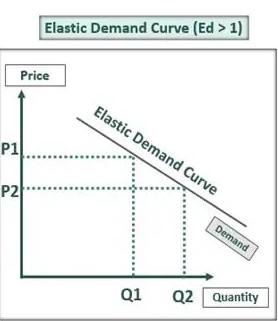
Elastic Demand (E > 1): Quantity demanded changes by a larger percentage than the price change.
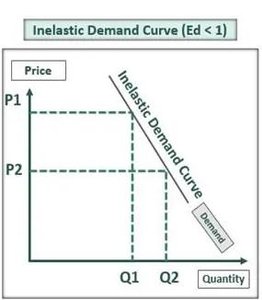
Inelastic Demand (E < 1): Quantity demanded changes by a smaller percentage than the price change.
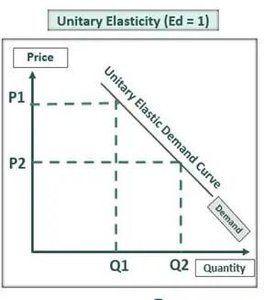
Unitary Elastic Demand (E = 1): Quantity demanded changes by the same percentage as the price change.
Extremes of Elasticity
Perfectly Inelastic Demand (E = 0): Quantity demanded does not change with price (vertical demand curve). Example: Life-saving drugs.
Perfectly Elastic Demand (E = ∞): Any price increase causes demand to fall to zero (horizontal demand curve).
Examples of Elastic and Inelastic Goods
Elastic: Airline tickets, luxury goods, food delivery apps (many substitutes, non-essential).
Inelastic: Petrol/diesel, life-saving medicines (few substitutes, essential).
Relatively Inelastic: Apple iPhone (brand loyalty, ecosystem).
Applications and Real-World Scenarios
Elasticity is used to analyze market behavior, such as the impact of price changes in the telecom sector (e.g., Jio vs. Airtel) or ride-hailing markets (Uber & Ola).

Determinants of Elasticity
Factors Affecting Price Elasticity of Demand
Availability of Substitutes: More substitutes make demand more elastic.
Necessity vs. Luxury: Necessities tend to have inelastic demand; luxuries are more elastic.
Proportion of Income Spent: Goods that take a large share of income have more elastic demand.
Time Horizon: Demand is more elastic in the long run as consumers adjust their behavior.
Brand Loyalty: Strong loyalty makes demand less elastic.
Income Elasticity of Demand
Definition and Types of Goods
Income elasticity of demand measures the responsiveness of quantity demanded to changes in consumer income.
Formula:
Type of Good | Income Elasticity | Example | Consumer Behavior |
|---|---|---|---|
Normal Goods | Positive | Smartphones, branded clothes | Demand rises as income rises |
Luxury Goods | Highly Positive (>1) | Foreign vacations, luxury cars | Demand rises more than income |
Necessities | Positive but <1 | Milk, electricity | Demand rises slowly with income |
Inferior Goods | Negative | Local buses | Demand falls as income rises |
Zero Income Elasticity | Around 0 | Salt, matchboxes | Income changes have little effect |
Cross-Price Elasticity of Demand
Definition and Interpretation
Cross-price elasticity of demand measures the responsiveness of quantity demanded for one good to changes in the price of another good.
Formula:
If cross-price elasticity > 0, goods are substitutes.
If cross-price elasticity < 0, goods are complements.
Example: If the cross-price elasticity of demand for bread with respect to the price of jam is -0.3, a 15% decline in the price of jam will increase the quantity demanded for bread by 4.5%.
Elasticity of Supply
Definition and Calculation
Price elasticity of supply measures the responsiveness of quantity supplied to a change in price.
Formula:
Example: If the price elasticity of gasoline supply in the U.S. is 0.4 and the price rises by 8%, the quantity supplied increases by 3.2%.
Short-Run vs. Long-Run Elasticities
Elasticities can differ in the short run and long run due to adjustment lags in consumer and producer behavior.
Demand: More elastic in the long run for most goods, as consumers have more time to adjust.
Supply: More elastic in the long run, as producers can adjust capacity and resources.
Fitting Linear Supply and Demand Curves
Estimating Parameters from Data
Given equilibrium price and quantity, and elasticities, we can estimate the parameters of linear supply and demand curves:
Demand curve: , where and
Supply curve: , where and
Effects of Price Controls
Price Ceilings
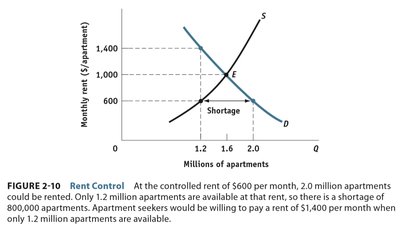
A price ceiling is a maximum price set below the equilibrium price, leading to shortages as quantity demanded exceeds quantity supplied.
Examples: Essential commodities, medicines, rental housing, LPG, public transport fares.
Price Floors
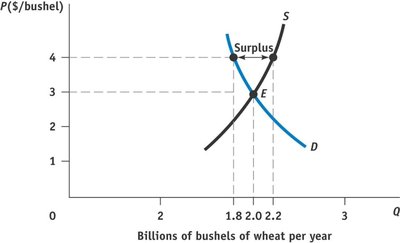
A price floor is a minimum price set above the equilibrium price, leading to surpluses as quantity supplied exceeds quantity demanded.
Examples: Minimum Support Price (MSP) for agricultural products, minimum wage laws, price floors for milk and handicrafts.
Summary Table: Key Elasticity Concepts
Elasticity Type | Formula | Interpretation |
|---|---|---|
Price Elasticity of Demand | Responsiveness of demand to price changes | |
Income Elasticity of Demand | Responsiveness of demand to income changes | |
Cross-Price Elasticity | Responsiveness of demand for one good to price changes in another | |
Price Elasticity of Supply | Responsiveness of supply to price changes |
Additional info: These notes integrate real-world examples and graphical analysis to reinforce the concepts of elasticity, its determinants, and its implications for market outcomes and government policy.
