 뒤로
뒤로Externalities, Public Goods, and the Environment: Microeconomics Study Notes
스터디 가이드 - 스마트 노트
 자료에 맞춘 맞춤형 노트, 핵심 정의, 예시, 맥락을 확장해 제공합니다.
Externalities and Market Inefficiency
Introduction to Externalities
Externalities are a central concept in microeconomics, referring to the uncompensated impact of one person’s actions on the wellbeing of a bystander. When externalities are present, markets may fail to allocate resources efficiently, resulting in a misallocation of resources and a failure to maximize total surplus.
Negative Externality: An adverse impact on a bystander (e.g., pollution).
Positive Externality: A beneficial impact on a bystander (e.g., education).
Resource Misallocation
Externalities cause markets to be inefficient because the market equilibrium does not reflect the true social costs or benefits of production and consumption. This leads to either overproduction (in the case of negative externalities) or underproduction (in the case of positive externalities).
Negative Externalities
Negative externalities occur when the actions of individuals or firms impose costs on others that are not reflected in market prices. Common examples include air pollution, noise, and traffic congestion.
Market Outcome: The equilibrium quantity is higher than the socially optimal quantity.
Social Cost: The true cost to society, including both private and external costs.


Internalizing Negative Externalities
Internalizing an externality means altering incentives so that people take account of the external effects of their actions. A common method is the use of Pigovian taxes, which are taxes imposed to correct the effects of negative externalities.
Pigovian Tax: A tax equal to the external cost per unit, shifting the supply curve upward by the amount of the tax.
Example: A tax on carbon emissions to reduce pollution.

Positive Externalities
Positive externalities occur when the actions of individuals or firms confer benefits on others that are not reflected in market prices. Examples include education, vaccination, and innovation.
Market Outcome: The equilibrium quantity is lower than the socially optimal quantity.
Social Value: The true value to society, including both private and external benefits.

Internalizing Positive Externalities
Governments can internalize positive externalities by providing subsidies or other incentives to encourage activities that generate external benefits. For example, subsidies for research and development (R&D) or education can help increase the provision of these goods to the socially optimal level.
Subsidy: A payment to producers or consumers to encourage more production or consumption of a good with positive externalities.
Industry Policy: Government intervention to promote technology-enhancing industries, though this can be controversial due to the risk of "picking winners."

Patent Laws and Innovation
Patent laws grant inventors exclusive rights to their inventions for a limited period, encouraging innovation by allowing inventors to profit from their work. However, patents can also create temporary monopolies, which may impose costs on society.
Knowledge as a Public Good: Once created, knowledge can be used by many without reducing its availability to others.
Patent Trolls: Entities that hold patents primarily to sue others, potentially inhibiting innovation.
Private Solutions to Externalities
Private Negotiation and the Coase Theorem
Private parties can sometimes solve the problem of externalities on their own, without government intervention. The Coase theorem states that if private parties can bargain without cost, they can reach an efficient outcome regardless of the initial allocation of property rights.
Transaction Costs: Costs incurred in the process of bargaining and enforcing agreements. High transaction costs can prevent private solutions.
Examples: Moral codes, social sanctions, and integrating businesses (e.g., orchards and beekeepers).

Public Policies Toward Externalities
Command-and-Control Policies
Governments may use regulations to directly control behavior, such as setting limits on pollution or requiring certain actions (e.g., immunizations).
Examples: Emission standards, bans on harmful substances.

Market-Based Policies
Market-based policies use economic incentives to align private incentives with social efficiency. These include Pigovian taxes and tradable pollution permits.
Pigovian Tax: Sets the price of pollution, allowing the market to determine the quantity.
Tradable Permits: Set the quantity of pollution, allowing the market to determine the price.
Public Goods and Common Resources
Types of Goods
Goods can be classified based on excludability and rivalry:
Private Goods: Excludable and rival (e.g., ice cream, clothing).
Public Goods: Non-excludable and non-rival (e.g., national defense, knowledge).
Common Resources: Non-excludable but rival (e.g., fish in the ocean, the environment).
Club Goods: Excludable but non-rival (e.g., cable TV, uncongested toll roads).
The Free-Rider Problem
The free-rider problem occurs when individuals benefit from a good without paying for it, leading to under-provision of public goods. Governments may need to provide public goods and fund them through taxation.
Demand for Public Goods
The optimal provision of a public good is determined by the sum of the reservation prices (willingness to pay) of all users. This is represented by the vertical summation of individual demand curves.
Common Resources and the Tragedy of the Commons
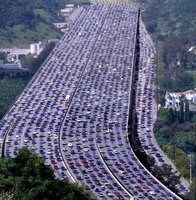
Common resources are rival but not excludable, leading to overuse and depletion—a phenomenon known as the Tragedy of the Commons. Examples include overfishing, overgrazing, and depletion of clean air.

The Importance of Property Rights
Efficient resource allocation requires well-defined property rights. When property rights are absent or unclear, markets may fail, and government intervention may be necessary to establish or enforce these rights (e.g., tradable quotas for fisheries).
Summary Table: Types of Goods
Type of Good | Excludable? | Rival? | Examples |
|---|---|---|---|
Private Goods | Yes | Yes | Ice cream, clothing |
Public Goods | No | No | National defense, knowledge |
Common Resources | No | Yes | Fish in the ocean, the environment |
Club Goods | Yes | No | Cable TV, uncongested toll roads |
Key Equations and Concepts
Social Cost:
Social Value:
Pigovian Tax:
Vertical Summation for Public Goods:
