Skip to main content
Nutrition
나의 코스
배우기
시험 준비
AI 튜터
학습 가이드
플래시카드
앱을 사용해 보세요
나의 코스
배우기
시험 준비
AI 튜터
학습 가이드
플래시카드
앱을 사용해 보세요
뒤로
Water quiz
카드를 뒤집기 위해 탭할 수 있습니다.
What percentage of the human body is made up of water, and what factors influence this percentage?
카드를 뒤집기 위해 탭할 수 있습니다.
👆
What percentage of the human body is made up of water, and what factors influence this percentage?
The human body is 50-70% water, with variation due to body composition, sex, and age.
진행 상황 추적
컨트롤 버튼이 '내비게이션' 모드로 변경되었습니다.
1/15
관련 플래시카드
관련 실천
추천 영상
Water definitions
Water
15 용어
Water exam
Water
30 용어
Water quiz #1
Water
10 용어
Water
8. Water and Minerals
10 문제점
주제
Introduction to Minerals
8. Water and Minerals
10 문제점
주제
8. Water and Minerals
10 주제
15 문제점
장
05:47
Water Requirements
171
views
3
rank
04:15
Osmosis
211
views
4
rank
03:15
Water Example 2
165
views
2
rank
이 집합의 용어 (15)
하이드의 정의
What percentage of the human body is made up of water, and what factors influence this percentage?
The human body is 50-70% water, with variation due to body composition, sex, and age.
Where is most of the water in the body located?
Most water is found in the intracellular fluid, which is the fluid inside the cells and makes up about two-thirds of body fluids.
What is the difference between intracellular and extracellular fluid?
Intracellular fluid is inside the cells, while extracellular fluid is outside the cells, including interstitial fluid, blood, and lymph.
List two major functions of water in the body.
Water acts as a universal solvent for cellular functions and helps transport nutrients and waste.
How does water help regulate body temperature?
Water has a high heat capacity, resisting temperature changes, and sweat (mostly water) cools the body.
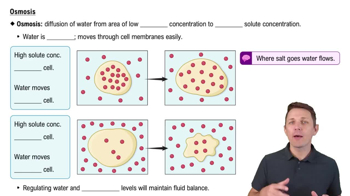
What is osmosis and how does it relate to water movement in the body?
Osmosis is the diffusion of water from areas of low solute concentration to high solute concentration, helping balance fluid inside and outside cells.
What phrase helps remember the relationship between salt and water movement in the body?
"Where salt goes, water flows" means water moves toward areas with higher salt concentration.
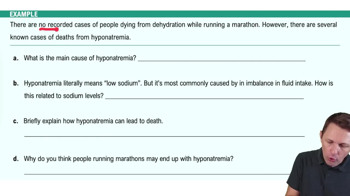
What can happen if you drink too much water in a short period?
Overhydration can cause dangerous electrolyte imbalances, leading to water intoxication (hyponatremia), which may cause brain swelling and even death.
What are some symptoms of dehydration?
Symptoms include dark urine, strong thirst, loss of appetite, discomfort, headaches, and in severe cases, can be fatal.
Which populations are at increased risk for dehydration?
Infants and the elderly are at higher risk for dehydration.
How does the hypothalamus help regulate fluid balance in the body?
The hypothalamus monitors blood sodium and volume, triggering thirst and releasing antidiuretic hormone (ADH) to retain water.
What is the role of antidiuretic hormone (ADH) in water regulation?
ADH signals the kidneys to retain water, reducing urine output and helping maintain fluid balance.
What is a diuretic and how does it affect fluid balance?
A diuretic is a chemical that increases urine production, leading to increased water loss and potential dehydration.
What are the recommended daily water intakes for adult males and females?
Adult males should consume 3.7 liters per day and adult females 2.7 liters per day.
What proportion of daily water intake should come from beverages versus food?
About 80% of daily water intake should come from beverages and 20% from food.
 뒤로
뒤로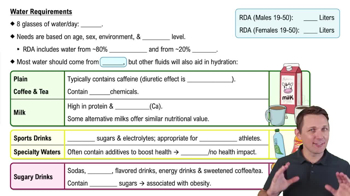
 05:47
05:47