 뒤로
뒤로Nutrients Essential for Bone Health: Structure, Function, and Dietary Sources
스터디 가이드 - 스마트 노트
 자료에 맞춘 맞춤형 노트, 핵심 정의, 예시, 맥락을 확장해 제공합니다.
Nutrients Essential for Bone Health
Bone Structure and Function
Bones are dynamic organs that provide structural support, protect vital organs, store minerals, and facilitate the production of blood cells. Understanding bone composition and the nutrients involved in bone health is essential for preventing diseases such as osteoporosis.
Protection: Bones shield the heart, brain, lungs, and other organs from injury.
Mineral Storage: Bones act as reservoirs for minerals, primarily calcium and phosphorus.
Blood Cell Production: The bone marrow produces red blood cells (hematopoiesis).

Bone Composition
Bones are composed of both inorganic and organic components, which together provide strength, flexibility, and resilience.
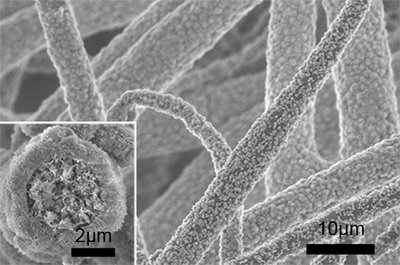
Inorganic Minerals (~65%): Mainly calcium (Ca) and phosphorus (P), forming hydroxyapatite crystals that give bones their hardness.
Organic Structures (~35%): Primarily collagen, a triple-helix fibrous protein that imparts flexibility and tensile strength.
Hydroxyapatite: Crystals of Ca and P that cluster around collagen fibers, contributing to bone's mechanical properties.
Bone Development: Growth, Modeling, and Remodeling
Bone undergoes three main processes throughout life: growth, modeling, and remodeling. These processes are regulated by genetic, hormonal, nutritional, and lifestyle factors.
Bone Growth
Determines the size of bones, beginning in fetal life and continuing through early adulthood.
Rapid growth occurs between ages 2–18 in girls and 2–21 in boys.
Bone Modeling
Shapes bones, especially facial bones, and continues until puberty.
Bone density (compactness) can increase even after bones stop growing in length.
Peak Bone Density: The point at which bones are at their strongest, typically reached by age 17 in women and in the 20s for men.
Factors lowering peak density: late puberty, inadequate calcium, low body weight, physical inactivity during adolescence.
Bone Remodeling
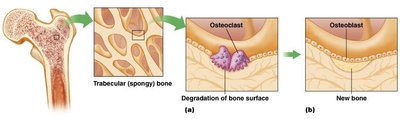
Continuous process of breaking down old bone (resorption) and forming new bone (formation).
Maintains bone integrity and calcium homeostasis.
Involves osteoclasts (bone-resorbing cells) and osteoblasts (bone-forming cells).
Bone Cells: Osteoclasts and Osteoblasts
Bone remodeling is regulated by two main types of cells:
Osteoclasts: Break down bone tissue by secreting lysosomal enzymes and acids, releasing calcium and phosphorus into the bloodstream.
Osteoblasts: Synthesize and lay down new collagen fibers, around which calcium and phosphorus crystallize to form new bone.
Bone Density Across the Lifespan
Adolescents (<20 years): Bone formation exceeds resorption, leading to increased bone mass.
Young Adults (20–30 years): Bone formation and resorption are balanced.
After ~40 years: Bone resorption exceeds formation, resulting in gradual bone loss.
Factors Influencing Peak Bone Density
Gender: Males generally have higher bone density than females.
Race: African American females > Caucasian females; Caucasian individuals ≥ Asian individuals; Hispanic individuals ≥ Caucasian.
Hormones: High thyroid hormone increases bone loss; estrogen inhibits bone resorption (risk increases after menopause).
Nutrition: Adequate intake of calcium, phosphorus, magnesium, fluoride, vitamin C, and vitamin K is essential.
Physical Activity: Regular exercise increases peak bone density.
Lifestyle: Smoking and excessive alcohol consumption weaken bones.
Key Nutrients for Bone Health
Calcium
Calcium is the most abundant mineral in the body, with about 99% stored in bones and teeth. It is essential for bone structure, blood clotting, nerve transmission, muscle contraction, and acid-base balance.
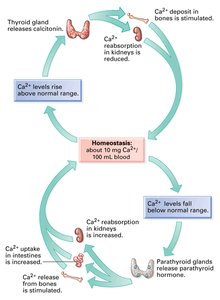
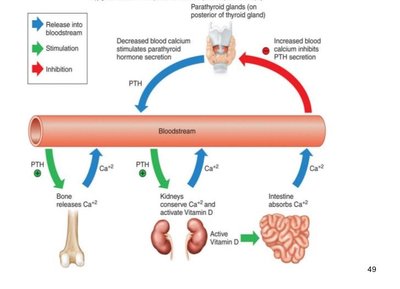
Blood Calcium Regulation: Maintained by parathyroid hormone (PTH) and vitamin D. When blood calcium is low, PTH and vitamin D increase calcium absorption from the intestine, reduce excretion by the kidneys, and stimulate bone resorption.
Calcium Requirements and Sources
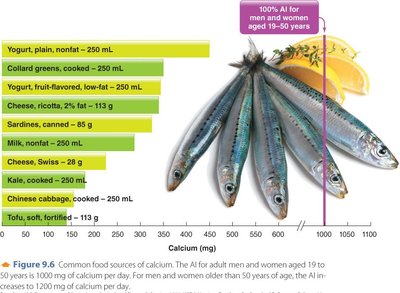
RDA for adults (19–50 years): 1000 mg/day.
RDA increases to 1200 mg/day for women >50 and men >70 years.
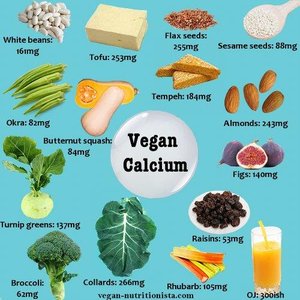
Calcium is found in dairy products, leafy greens, fortified foods, and some fish.
Calcium Bioavailability
Absorption depends on age, physiological need, and dietary factors.
Infants and children absorb up to 60% of dietary calcium; adults absorb about 30%.
Vitamin D is essential for calcium absorption.
Phytates and oxalates (in seeds, nuts, grains, spinach) inhibit absorption.
High salt/protein intake increases calcium excretion.
Calcium Imbalances
Hypercalcemia: Excess calcium, often due to overactive parathyroid glands, can cause kidney stones, bone weakening, and neurological issues.
Hypocalcemia: Deficiency, often due to kidney disease or vitamin D deficiency, leads to increased bone resorption and risk of osteoporosis.
Phosphorus
Phosphorus is the primary intracellular anion and is essential for bone mineralization, fluid balance, enzyme activation, and as a component of ATP, DNA, and RNA.
RDA: 700 mg/day for adults.
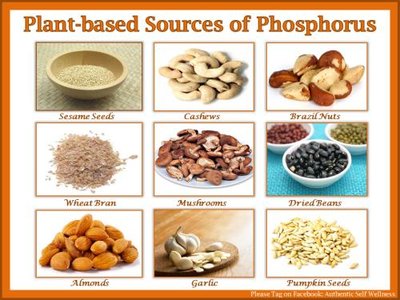
Found in protein-rich foods (milk, meat, eggs), processed foods, and cola beverages.
Magnesium
Magnesium is a major mineral, with 50–60% stored in bones. It acts as a cofactor for over 300 enzymes, is involved in ATP production, DNA/RNA synthesis, and is essential for nerve and muscle function.
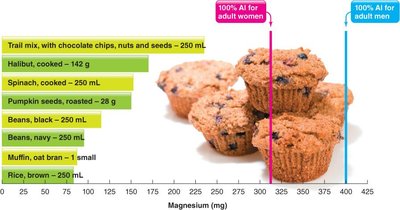
RDA: Men (19–30 years): 400 mg/day; Women (19–30 years): 310 mg/day. Increases slightly with age.
Sources: Green leafy vegetables, legumes, nuts, seeds, whole grains.
Vitamin D
Vitamin D is a fat-soluble vitamin and hormone, synthesized in the skin upon exposure to UV light. It is essential for calcium and phosphorus absorption, bone mineralization, and regulation of blood calcium levels.
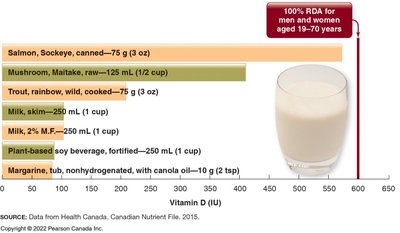
RDA (assuming minimal sun exposure): 15 µg (600 IU) for adults up to 70 years; 20 µg (800 IU) for adults >70 years.
Sources: Fatty fish, cod liver oil, fortified foods (milk, margarine), supplements.
Factors Affecting Vitamin D Synthesis
Sun exposure, latitude, season, skin pigmentation, age, and use of sunscreen all influence vitamin D synthesis.
Vitamin K
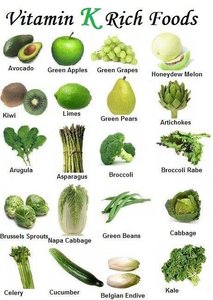
Vitamin K is a fat-soluble vitamin essential for the synthesis of proteins involved in bone turnover and blood clotting. It is produced by gut bacteria and obtained from green leafy vegetables.
No RDA; Adequate Intake (AI) is used.
Sources: Green leafy vegetables, some produced by intestinal bacteria.
Summary Table: Nutrients Essential to Bone Health
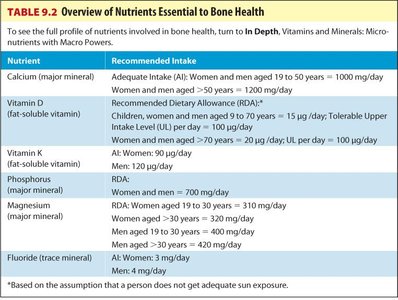
Nutrient | Recommended Intake |
|---|---|
Calcium (major mineral) | AI: Women and men aged 19 to 50 years = 1000 mg/day; Women and men aged >50 years = 1200 mg/day |
Vitamin D (fat-soluble vitamin) | RDA: Children, women and men aged 1 to 70 years = 15 µg/day; UL per day = 100 µg/day |
Vitamin K (fat-soluble vitamin) | AI: Women: 90 µg/day; Men: 120 µg/day |
Phosphorus (major mineral) | RDA: Women and men = 700 mg/day |
Magnesium (major mineral) | RDA: Women aged 19 to 30 years = 310 mg/day; Men aged 19 to 30 years = 400 mg/day |
Additional info: Adequate intake of these nutrients, combined with regular physical activity and healthy lifestyle choices, is critical for achieving and maintaining optimal bone health throughout life.
