Skip to main content
Organic Chemistry
나의 코스
배우기
시험 준비
AI 튜터
학습 가이드
교과서적 해결책
플래시카드
탐험해 보세요
앱을 사용해 보세요
나의 코스
배우기
시험 준비
AI 튜터
학습 가이드
교과서적 해결책
플래시카드
탐험해 보세요
앱을 사용해 보세요
뒤로
Catalytic Allylic Alkylation quiz
카드를 뒤집기 위해 탭할 수 있습니다.
What two types of molecules are coupled in catalytic allylic alkylation?
카드를 뒤집기 위해 탭할 수 있습니다.
👆
What two types of molecules are coupled in catalytic allylic alkylation?
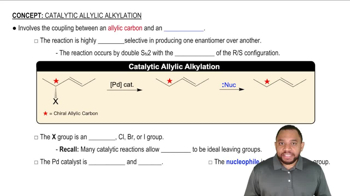
An allylic carbon and an enolate are coupled in catalytic allylic alkylation.
진행 상황 추적
컨트롤 버튼이 '내비게이션' 모드로 변경되었습니다.
1/15
관련 플래시카드
관련 실천
추천 영상
Catalytic Allylic Alkylation definitions
Catalytic Allylic Alkylation
14 용어
Catalytic Allylic Alkylation
35. Transition Metals
5 문제점
주제
Alkene Metathesis
35. Transition Metals
5 문제점
주제
27. Transition Metals - Part 1 of 4
6 주제
14 문제점
장
Johnny
35. Transition Metals - Part 2 of 4
4 주제
12 문제점
장
35. Transition Metals - Part 3 of 4
4 주제
12 문제점
장
35. Transition Metals - Part 4 of 4
3 주제
9 문제점
장
VideoThumbView.guidedCourse
3:13
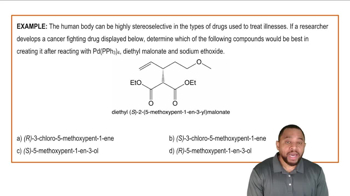
Catalytic Allylic Alkylation Example 1
562
views
VideoThumbView.guidedCourse
3:21
Catalytic Allylic Alkylation Concept 1
562
views
이 집합의 용어 (15)
하이드의 정의
What two types of molecules are coupled in catalytic allylic alkylation?
An allylic carbon and an enolate are coupled in catalytic allylic alkylation.
What is the main stereochemical outcome of catalytic allylic alkylation?
The reaction is highly stereoselective, favoring the formation of one enantiomer over another.
What type of reaction mechanism does catalytic allylic alkylation follow?
It follows a double SN2 mechanism.
How is the configuration of the chiral allylic carbon affected during the reaction?
The configuration is retained due to two consecutive SN2 inversions.
What catalyst is commonly used in catalytic allylic alkylation?
A palladium catalyst is commonly used.
What are common leaving groups in catalytic allylic alkylation?
Common leaving groups include halogens (like chlorine, bromine, or iodine) and esters.
What is the role of the palladium complex in this reaction?
The palladium complex facilitates the reaction and enhances its efficiency and selectivity.
What is the nucleophile in catalytic allylic alkylation?
The nucleophile is an enolate group.
How does the palladium catalyst affect the configuration during nucleophilic attack?
The palladium catalyst causes inversion of configuration during nucleophilic attack.
What happens to the configuration after the second SN2 reaction?
The configuration is inverted back to the original, resulting in overall retention.
How many ligands are typically attached to palladium after the first SN2 reaction?
There are typically two ligands attached to palladium after the first SN2 reaction.
What are examples of palladium catalysts used in this reaction?
Examples include Pd(PPh3)4 and palladium(II) chloride (PdCl2).
Why are esters considered good leaving groups in this reaction?
Esters are good leaving groups due to the catalytic conditions provided by palladium.
What is the significance of the double SN2 mechanism in this reaction?
The double SN2 mechanism ensures retention of the original stereochemistry at the chiral center.
What should you review if you are unsure about enolates?
You should review alpha carbon chemistry reactions, specifically enolates and enols.
 뒤로뒤로
뒤로뒤로
 3:13
3:13