 뒤로
뒤로Atoms, Elements, and Bonding: Foundations of Organic Chemistry
스터디 가이드 - 스마트 노트
 자료에 맞춘 맞춤형 노트, 핵심 정의, 예시, 맥락을 확장해 제공합니다.
Atoms and Atomic Structure
Subatomic Particles and Atomic Models
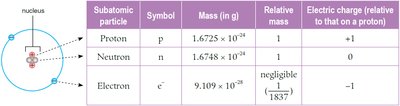
Atoms are the fundamental building blocks of matter, composed of three main subatomic particles: protons, neutrons, and electrons. The arrangement and properties of these particles determine the chemical behavior of elements.
Protons: Positively charged particles found in the nucleus; define the atomic number (Z).
Neutrons: Neutral particles in the nucleus; contribute to atomic mass but not charge.
Electrons: Negatively charged particles orbiting the nucleus in shells; involved in chemical bonding.
The atomic number (Z) is the number of protons in an atom, while the mass number (A) is the sum of protons and neutrons. Atoms are electrically neutral, meaning the number of protons equals the number of electrons.
Isotopes and Atomic Mass
Isotopes are atoms of the same element with the same number of protons but different numbers of neutrons. They have identical chemical properties but slightly different physical properties due to their mass difference.
Relative isotopic mass: The mass of a specific isotope compared to 1/12 the mass of a carbon-12 atom.
Relative atomic mass (Ar): The weighted average of the relative isotopic masses of an element's naturally occurring isotopes.
Example calculation for chlorine:
Electronic Configuration
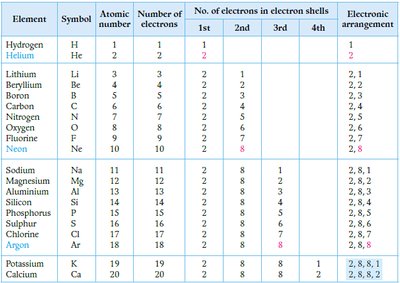
Electrons are arranged in shells around the nucleus. The arrangement (configuration) determines the chemical properties of the element. For the first 20 elements, electrons fill shells in the order 2, 8, 8, 2.

Example: Potassium (K) has the configuration 2,8,8,1.
The Periodic Table
Structure and Classification
The periodic table arranges elements in order of increasing atomic number. Elements are grouped into periods (horizontal rows) and groups (vertical columns) based on their electronic configurations and recurring chemical properties.
Metals: Found on the left and center; good conductors, malleable, ductile.
Non-metals: Found on the right; poor conductors, brittle.
Metalloids: Elements with properties intermediate between metals and non-metals.
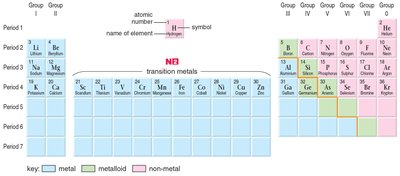
Group number indicates the number of outermost electrons; period number indicates the number of occupied shells.

Group Properties and Trends
Group I (Alkali Metals): Highly reactive, reactivity increases down the group.
Group II (Alkaline Earth Metals): Reactive, but less so than Group I; reactivity increases down the group.
Group VII (Halogens): Reactive non-metals, reactivity decreases down the group.
Group 0 (Noble Gases): Chemically inert due to stable electron configurations (duplet for He, octet for others).
Elements, Compounds, and Mixtures
Definitions and Properties
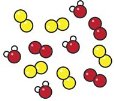
Element: A pure substance consisting of only one type of atom; cannot be broken down by chemical means.
Compound: A pure substance formed by the chemical combination of two or more elements in fixed proportions.
Mixture: A combination of two or more substances not chemically bonded; components retain their individual properties.
Physical properties can be observed without changing the substance's identity, while chemical properties describe the ability to form new substances.
Laboratory Safety and Techniques
Hazard Warning Labels
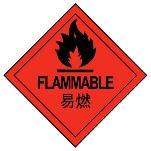
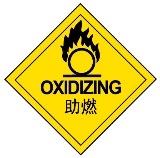
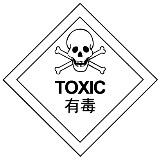
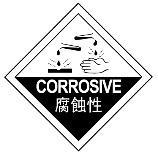
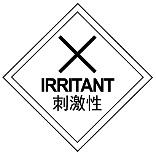
Chemicals are labeled according to their hazards. Understanding these symbols is essential for safe laboratory practice.
Label | Hazard |
|---|---|
| Flammable |
| Explosive |
| Oxidizing |
| Toxic |
| Corrosive |
| Irritant |
| Harmful |


Basic Laboratory Techniques
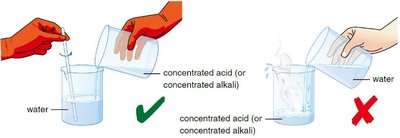
Always add acid to water, not water to acid, to prevent exothermic splashing.
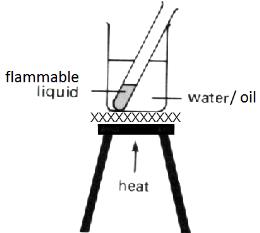
Use indirect heating (water/oil bath) for flammable liquids.
Gas Collection Methods
Over water: For gases insoluble in water (e.g., H2, O2).
Downward delivery: For gases denser than air (e.g., Cl2).
Upward delivery: For gases less dense than air (e.g., NH3).
Gas syringe: For all gases; precise measurement.
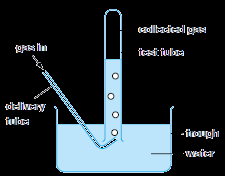
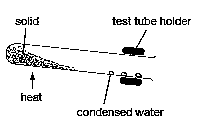
Drying Agents
Drying agents are used to remove moisture from gases or chemicals. Examples include anhydrous calcium chloride and concentrated sulfuric acid.
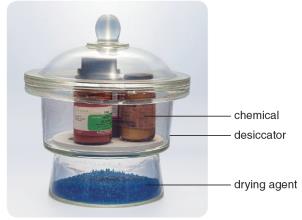
Ions and Bonding
Formation of Ions
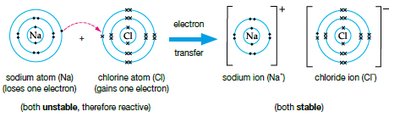
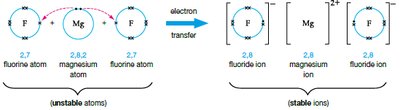
Atoms gain or lose electrons to achieve a stable noble gas configuration, forming ions. Metals lose electrons to form cations, while non-metals gain electrons to form anions.
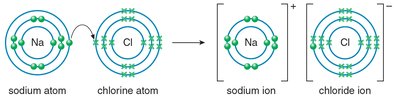
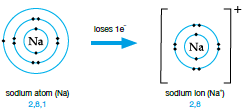
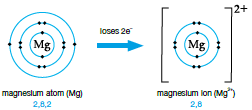
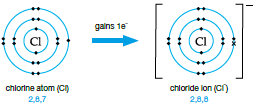
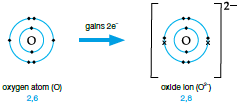
Ionic Bonding
An ionic bond is the strong electrostatic attraction between oppositely charged ions, formed by the complete transfer of electrons from a metal to a non-metal.
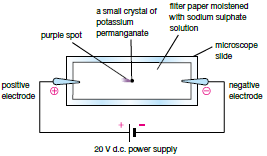
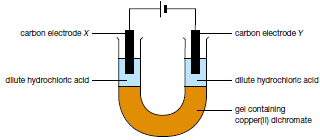
Example: Formation of MgF2:
Properties and Colors of Ions
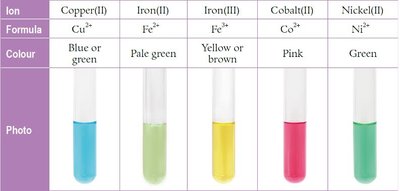
Some transition metal ions are colored in solution, while most main group ions are colorless.
Ion | Color |
|---|---|
Cu2+ | Blue or green |
Fe2+ | Pale green |
Fe3+ | Yellow or brown |
Co2+ | Pink |
Ni2+ | Green |
Covalent Bonding
Formation and Types of Covalent Bonds
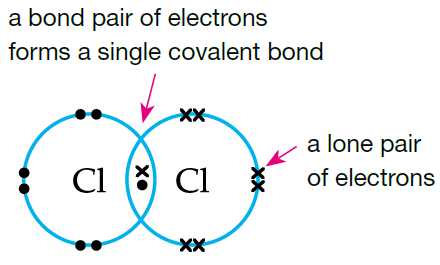
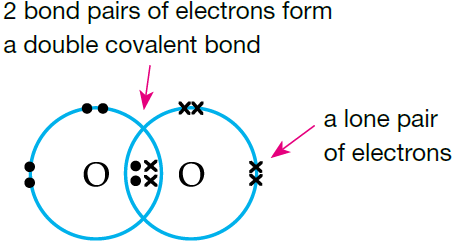
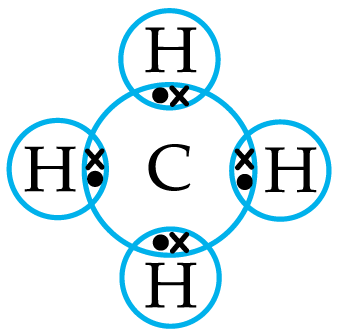
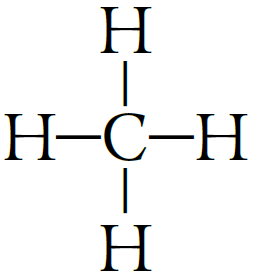
A covalent bond is formed by the sharing of electron pairs between atoms, typically non-metals. The shared electrons are attracted to the nuclei of both atoms, creating a strong directional bond.
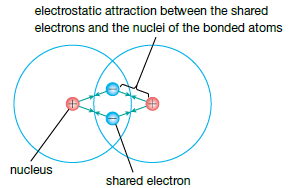
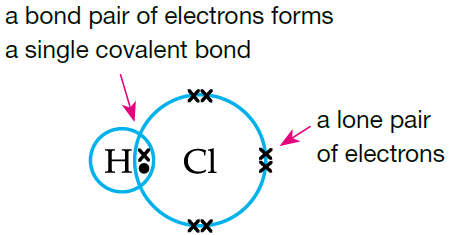
Single bond: One pair of shared electrons (e.g., Cl2).
Double bond: Two pairs of shared electrons (e.g., O2).
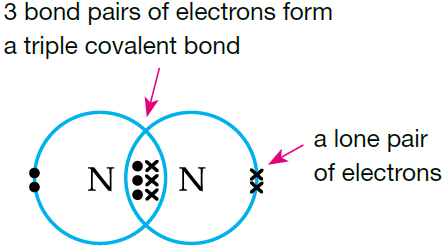
Triple bond: Three pairs of shared electrons (e.g., N2).
Dative Covalent Bonds
A dative covalent bond (coordinate bond) is a covalent bond in which both electrons in the shared pair come from the same atom. Examples include the ammonium ion (NH4+) and the hydronium ion (H3O+).
Summary Table: Common Ions
Ion | Formula | Charge |
|---|---|---|
Sodium | Na+ | +1 |
Magnesium | Mg2+ | +2 |
Chloride | Cl- | -1 |
Oxide | O2- | -2 |
Ammonium | NH4+ | +1 |
Sulphate | SO42- | -2 |
Additional info: This summary covers foundational concepts in atomic structure, the periodic table, laboratory safety, and chemical bonding, which are essential for understanding organic chemistry and its reactions.
